
 Search Articles


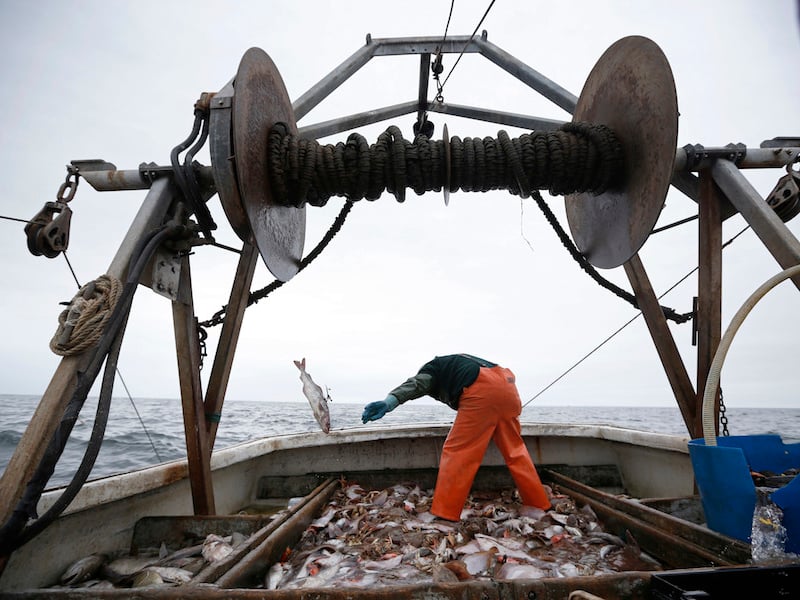
MANHATTAN (CN) — New York’s attempt to up its flounder-catching limits is dead in the water after the Second Circuit Court of Appeals ruled Friday to uphold federal fishing quotas.
In its 17-page decision, the Second Circuit affirmed the Southern District of New York’s ruling that the National Marine Fisheries Service properly applied a fishery management plan to fairly allocate summer flounder, also known as fluke, to the State of New York.
New York initially sued the National Marine Fisheries Services in 2019, along with two of its parent agencies, the National Oceanic and Atmospheric Administration and the U.S. Department of Commerce. The state claimed it was being entitled to an unfairly low amount of fluke compared to surrounding states, because of federal fish regulators’ quotas.
“We disagree,” U.S. Circuit Judge Richard Wesley wrote in the Friday decision, adding, “the NMFS explained why it found it would be unfair to reduce baseline quotas for communities in states who have become economically dependent, over time, on fishing for summer flounder.”
Joining Wesley, a George W. Bush appointee, was the Trump-appointed U.S. Circuit Judge Michael Park. The final judge on the panel was the late U.S. Judge Rosemary S. Pooler, who passed away in August. Pooler “participated in the consideration and decision of this case,” and had been set to pen the ruling herself, Wesley said in a footnote.
In its 2019 lawsuit, New York argued that it was only set to receive 880,000 of the 11.53 million total pounds of summer flounder, or 7.6%, per the 2020 fishing quotas. The state claimed that this percentage ignored the fish’s expected future migration patterns: Fluke were expected to flood into New York waters as they migrated northward.
The judges acknowledged this in their decision, however.
“New York’s quota increases from 7% to 12% during surplus periods, while states now farther away from the summer flounder see corresponding decreases in their quotas,” the ruling said. “Accordingly, the 2020 Allocation Rule is ‘based upon’ the shifted location of the summer flounder—and New York can catch a higher percentage of fish under the current rule than the previous rule—just not to a degree that New York would prefer.”
While ever contentious, the quotas are imperative to the long-term sustainability of popular fish, according to David Sampson, fisheries professor emeritus at Oregon State University.
“The purpose of the quotas is to try to leave enough population in the water to maintain itself going into the future, and produce catches on a sustainable basis,” Sampson told Courthouse News. “You can’t take more than the population can produce in a given time.”
Sampson said that the changing migration patterns of certain fish species, caused in part by climate change, have only heightened tensions between states.
“There are always these big squabbles about how much each party is entitled to the overall quota,” he said. “Those are huge battles.”
As it stands, 11 East Coast states divvy up the total yearly catch of summer flounder. North Carolina is entitled to the most at 27.4%, followed by Virginia at 21.3%, New Jersey at 16.7% and Rhode Island at 15.7%.
New York’s 7.6% is the fifth-highest yield of the 11 states.
Those figures have remained the same since 1993. But in 2020, the National Marine Fisheries Service created a new rule to accommodate fluke’s northern migration. The new rule stated that, during surplus years, the extra fish is divided evenly and each state would receive approximately 12% of the yield during these periods.
New York sued to challenge that that wasn’t enough; the state sought a higher base quota percentage based on the fish’s increased prevalence in its waters.
The appeals court found that the fish’s location isn’t the sole indicator of a state’s cut, though.
“As for the efficiency and cost concerns… the NMFS reasoned that southern states’ operations involve longer trips and larger vessels built in reliance on their higher quotas,” the decision said, adding “it would not necessarily be efficient for a southern state to scrap its existing (longer-range) fleet just for a northern state to expand its (shorter-range) fleet.
Put simply, the federal fisheries service saw no use in paring down southern states’ share of the catch when parts of their fishing economies were built on the existing numbers. Additionally, the court saw the even split of surplus flounder as a fair way to even the playing field.
It’s a controversial topic for anglers up and down the East Coast, and a timely one at that. Just last week, a Long Island fishing captain was convicted for falsifying business records to sell summer flounder that exceeded New York’s quota.
A grand jury convicted the 63-year-old Christopher Winkler of Montauk on charges of conspiracy, mail fraud and obstruction of justice. Prosecutors said Winkler’s supply of over-quota fish was worth up to $900,000.
The National Marine Fisheries Service declined to comment on Friday’s ruling, citing an inability “to comment on matters of litigation.” The U.S. Department of Commerce and the National Oceanic and Atmospheric Administration have not yet responded to requests for comment. Basil Seggos, a co-plaintiff and commissioner of the New York State Department of Environmental Conservation, also has not responded to requests for comment.
 Follow @Uebey
 Follow @uebey.bsky.social
Subscribe to our free newsletters
Our weekly newsletter Closing Arguments offers the latest about ongoing trials, major litigation and rulings in courthouses around the U.S. and the world, while the monthly Under the Lights dishes the legal dirt from Hollywood, sports, Big Tech and the arts.