
 Search Articles


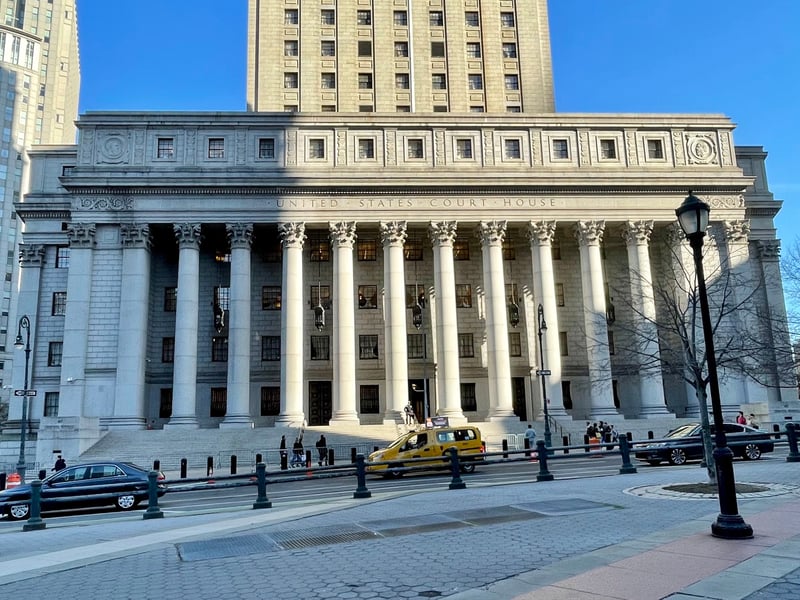
BUENOS AIRES (CNS) - Argentina must turnover 51% of its shares from YPF, the oil and gas company the state seized in 2012, to pay for a part of its $16.1 billion debt to minority investors in the company.
The Monday ruling by Manhattan U.S. District Judge Loretta Preska is an overwhelming move for a country that has been struggling with an economic crisis for years — and coincides with a day when the front pages of Argentine newspapers were filled with news that JPMorgan Chase & Co. advised its investors to take a “breather” in Argentina.
After the ruling went public, Argentine President Javier Milei tweeted that Argentina will appeal and blamed former Economy Minister Axel Kiciloff for the situation of the case, labelling him as “a useless soviet”, among other insults.
YPF is the largest oil and gas company in the country and, although it was originally state-owned, it was privatized during the 1990s neoliberal policies wave in the country.
Preska said in her ruling that Argentina must transfer the shares within 14 days to a BNY Mellon custody account, where it will help resolve the $16.1 billion judgment Preska awarded in 2023 to minority shareholders Petersen Energía Inversora and Eton Park Capital Management, both represented by the U.K.-based Burford Capital.
Though Argentina had argued that the shares fell under the commercial activity exception of the U.S.’s Foreign Sovereign Immunities Act and were therefore immune from turnover, Preska determined what matters is where the resulting commercial activity takes place, not where the shares were used, and that the statute does not require such activity to be carried out solely by the foreign state.
“Thus, by controlling Repsol’s shares, the Republic stranded minority shareholders in a government-run enterprise — the precise outcome against which the bylaws were designed to protect and therefore the crux of the Republic’s breach.”
In 1999, Repsol, a Spanish company, acquired a majority stake in the company, which became Repsol-YPF.
Argentina had argued that for the exception to apply, the “use” of the shares should have occurred within the United States, rather than just the resulting commercial activity. It contended, too, that the commercial activity must be directly conducted by the foreign state itself. These arguments aimed to establish that the YPF shares should be immune from turnover.
Preska noted that YPF lists its shares on the New York Stock Exchange, registers with the U.S. Security and Exchange Commission and sells its debt to United States institutional investors, which the judge says establishes it a commercial use in the United States.
“The FSIA does not supersede NY CPLR § 5225 and prevent the court from ordering the Republic, a judgment debtor over which it has personal jurisdiction, to bring the shares from outside of New York into New York to pay plaintiffs,” Preska wrote.
“The United States has a strong interest in enforcing its judgments, and that interest outweighs any putative Argentine interest in avoiding execution on assets that are fully subject to execution under the FSIA,” she added later.
Under former President Cristina Fernández de Kirchner’s administration, the country expropriated 51% of the stakes of YPF, or Yacimientos Petrolíferos Fiscales, in 2012 — specifically those held by Repsol.
Her administration claimed it was a move towards increasing sovereignty over the Argentine resources. The country relies on oil and gas for over 80% of its primary energy, and petroleum products are relevant to the country’s trade balance, holding a significant place in the country’s exports.
The Burford Capital lawsuit against Argentina began in 2015, after Burford acquired the litigation rights of two former YPF minority shareholders: Petersen Energía and Eton Park Capital. These companies claimed they had lost significant value following the 2012 expropriation of YPF.
Petersen and Eton Park, both holding smaller stakes, claimed they were financially harmed by the way the expropriation was carried out.
The main legal argument centered on YPF’s bylaws, which stated that any party acquiring a majority stake had to make a tender offer to minority shareholders. The plaintiffs argued that Argentina ignored this rule, unlawfully bypassing its obligation to compensate them. Burford, as the funder and controller of the case, brought the lawsuit in U.S. federal court, claiming damages for breach of contract and violation of corporate governance norms.
In her 2023 ruling that levied the $16.1 billion award, Preska determined that the Argentine state did not “automatically” entail the obligation to make an offer to the other shareholders; in practice, Argentina should have done so, because it used those shares to take control of YPF. By having control, it avoided applying the rules that protect minority shareholders, leaving them stuck without the option of selling their shares at a fair price.
Argentina’s national prosecutor’s office declined to comment on the case.
 Follow @luciacholakian
Subscribe to our free newsletters
Our weekly newsletter Closing Arguments offers the latest about ongoing trials, major litigation and rulings in courthouses around the U.S. and the world, while the monthly Under the Lights dishes the legal dirt from Hollywood, sports, Big Tech and the arts.