Search Articles


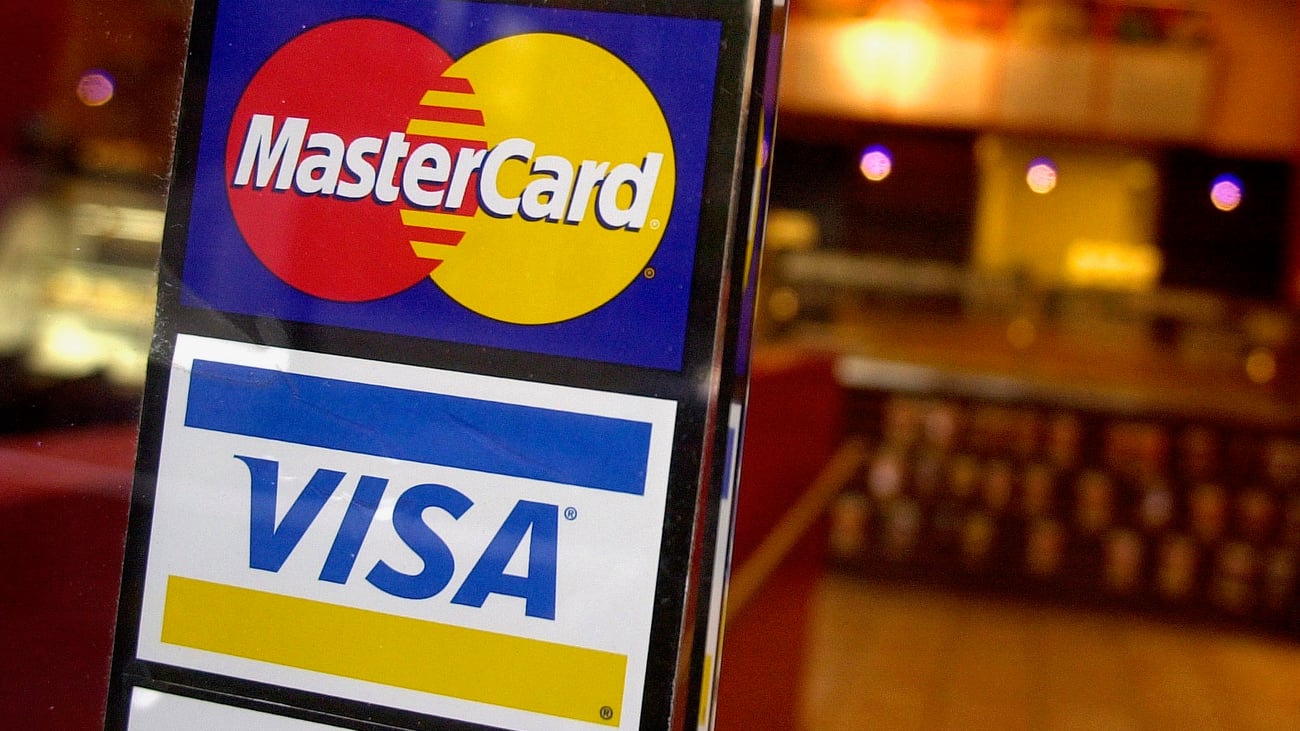
MANHATTAN (CN) — A Westchester County restaurant that blends traditional Kosher Jewish cuisine with Mexican tacos leads a class action against credit card giants Visa and Mastercard, accusing the companies of anticompetitive market dominance that forces businesses to pay excessive processing fees to accept cards.
Falafel Taco, based in Pleasantville, New York, accuses Visa and Mastercard in a civil complaint filed Tuesday of subjecting businesses to “substantial and continuing overcharges” for the interchange swipe fees merchants pay to banks to cover the costs of issuing cards and processing transactions.
“These inflated fees increase merchants’ cost of acceptance, which in turn forces merchants to raise retail prices, reduce services or absorb reduced margins, leading to lost sales and reduced output,” the restaurants say in the complaint.
Represented by New York City attorney Jason Bressler of Bressler LLP, Falafel Taco says the companies’ fee structure constitutes a classic horizontal agreement among competitors to fix prices charged to merchants.
The restaurant — which features crossover dishes like Mexighanoush black bean falafel tacos, chicken schnitzel pitas and matzo ball tortilla soup — seeks compensatory damages for past and future injury for what it says are violations of the Sherman Act.
Quaker Hill Tavern, a neighborhood restaurant in Chappaqua, New York, and Carmine Minardi NYC, a hair salon on Manhattan’s Upper East Side joined the suit.
The businesses claim Visa and Mastercard have maintained the same anticompetitive network fees complained about in an earlier class action — practices that helped generate the credit card companies more than $700 billion in fees since the close of the last class period on Jan. 24, 2019.
They seek a declaration that the future release provision of the 2019 settlement of an underlying long-running antitrust lawsuit against the credit card companies — purporting to bar claims against Mastercard and Visa arising from the same ongoing conduct through Aug. 8, 2028 — is invalid and unenforceable.
They claim the future release wielded by the companies violates Federal Rule of Civil Procedure 23 because it resulted in absent class members being inadequately represented and inequitably treated, and also violates the identical factual predicate doctrine because unasserted future claims held only by some class members were waived to benefit the class as a whole.
The plaintiffs say the potential class numbers in the millions of members “due to the nature of the trade and commerce involved.”
Representatives for Visa and Mastercard did not immediately respond to a request for comment on Wednesday.
Visa and Mastercard announced in March 2024 they had reached another major settlement with U.S. merchants, agreeing to cap the credit interchange fees until 2030, and the companies must negotiate the fees with merchant-buying groups. But U.S. District Judge Margo Brodie in the Eastern District rejected the proposed settlement.
That case, in Brooklyn federal court, is set to have another partial settlement conference on April 27.
The Department of Justice sued Visa in the Southern District of New York in 2024 over the company’s dominance in the debit card market, accusing it of entering into a web of contracts with merchants the feds say unlawfully inhibit competition and stifle innovation.
According to the Justice Department, more than 60% of debit transactions in the United States run on Visa’s network, allowing it to charge over $7 billion in fees each year for processing those transactions.
“Merchants and banks pass along those costs to consumers, either by raising prices or reducing quality or service,” then-U.S. Attorney General Merrick B. Garland said when the suit was filed. “As a result, Visa’s unlawful conduct affects not just the price of one thing — but the price of nearly everything.”
Swipe fees are paid to Visa, Mastercard and other credit card companies in exchange for enabling transactions. Merchants ultimately pass on those fees to consumers who use credit or debit cards. The fees are calculated as a fixed fee plus a percentage of the sales total, typically about 1% to 3%.
Increasingly, small businesses have begun posting signs near the register warning customers they will pay more for items if they don’t use cash.
 Follow @jruss_jruss
Subscribe to our free newsletters
Our weekly newsletter Closing Arguments offers the latest about ongoing trials, major litigation and rulings in courthouses around the U.S. and the world, while the monthly Under the Lights dishes the legal dirt from Hollywood, sports, Big Tech and the arts.