
 Search Articles


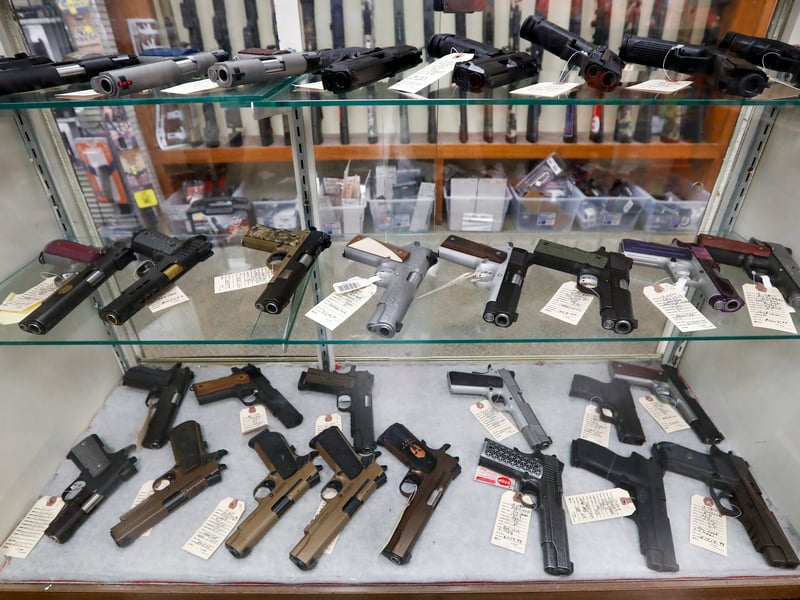
MANHATTAN (CN) — New York City officials on Monday asked the Second Circuit to vacate a lower court’s finding that the city unconstitutionally denied a weapons permit to a man who officials said lacked “good moral character” despite his record being clear of any criminal convictions.
Joseph Srour applied for a permit to possess a rifle or shotgun in 2018. In 2019, he applied for a handgun license. But the New York Police Department’s License Division denied both applications and said Srour’s history — which included two arrests and two dozen driver’s license suspensions, but no criminal convictions — failed the moral character standard in the city’s administrative code for gun purchases.
U.S. District Judge John Cronan took issue with the “good moral character” language, which has been part of city law for over a century, when he ruled in 2023 that the NYPD acted with an “unconstitutional exercise of discretion” when it denied Srour’s permits.
Calling his ruling “deeply flawed,” city officials claim Cronan misapplied the 2022 landmark U.S. Supreme Court ruling New York State Rifle & Pistol Association v. Bruen , a decision that greatly expanded gun rights nationwide, and took “too rigid of an approach” to Bruen ’s requirement that gun regulations be historically consistent with past laws.
City attorney Elina Druker argued Monday that the lower court’s decision could severely limit New York’s ability to regulate gun licenses.
Srour’s lawsuit, she noted, was filed before sweeping changes to New York City’s firearm permit code took effect in the wake of Bruen .
“He had not filed any new application under the new regulatory regime, and he maintained that the 2019 denial of his application gave him standing to seek both damages, retrospective claims — which we don’t dispute — and prospective relief in joining the new regulatory regime under which he had never applied,” Druker told the court.
Additionally, Druker said, Srour has since obtained a permit, meaning he has no ongoing interest in this case.
U.S. Circuit Judge Pierre Leval, a Bill Clinton appointee, acknowledged that Srour “got what he wanted” since he filed his initial challenge and suggested that his injunctive relief may be moot as a result.
Srour’s Scarsdale-based lawyer Amy Bellantoni disagreed.
“This case is not moot and the decision itself should not be vacated,” Bellantoni argued. “This harm to Mr. Srour is capable of repetition, yet evading review.”
Bellantoni and Leval butt heads over whether or not Srour’s situation would actually evade review if the court ruled against him. Leval suggested that Srour would always have the opportunity to go to court if his gun licenses were ever denied or stripped.
“Where’s the evading review here?” Leval asked.
“It’s capable of repetition,” Bellantoni argued. “And if the permanent injunction is not maintained, then Mr. Srour is still likely to suffer harm in the future.”
“Why does it evade review?” Leval shot back once more.
“It’s evading review because he will not have the permanent injunction protecting him going forward, and it’s still capable of repetition,” Bellantoni said.
Bellantoni argued that the lower court found the city code to be facially unconstitutional, so allowing it to be enforced against her client and other New Yorkers carries a substantial risk of harm. The judicial panel remained skeptical.
“But he’s got his license, right?” asked U.S. Circuit Judge Raymond Lohier, a Barack Obama appointee. “What else realistically can happen short of having his license stripped?”
Druker reiterated that the “whole underlying premise” of Srour’s lawsuit is that the law interferes with his ability to get a license. “And he has a license!” Druker exclaimed.
Joining Lohier and Leval on Monday’s panel was the Joe Biden-appointed U.S. Circuit Judge Eunice Lee. The three judges didn’t immediately issue a ruling on Monday, but offered counsel the opportunity to submit a letter to the court to aid them as they deliberate.
 Follow @Uebey
 Follow @uebey.bsky.social
Subscribe to our free newsletters
Our weekly newsletter Closing Arguments offers the latest about ongoing trials, major litigation and rulings in courthouses around the U.S. and the world, while the monthly Under the Lights dishes the legal dirt from Hollywood, sports, Big Tech and the arts.