
 Search Articles


MANCHESTER, England (CN) — While the U.K.’s traditional center-left struggles under unpopular Prime Minister Keir Starmer, a new left-wing party is fighting to steady itself after months of internal disputes, stalled momentum and falling polling numbers.
Your Party — the official name chosen by its members — was launched by former Labour leader Jeremy Corbyn and parliamentarian Zarah Sultana in July with 750,000 people expressing interest in the project.
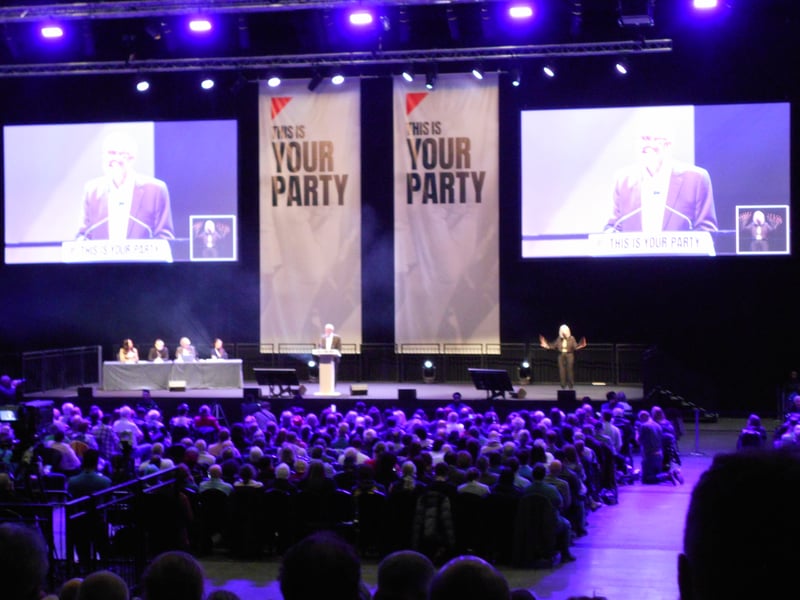
Hoping to avoid personality-driven politics, delegates approved a collective leadership structure instead of a single figurehead at the group’s founding conference in Liverpool on Nov. 29-30. But the vote did little to ease the public clashes among the party’s own personalities.
Internal disputes spill into the open
The project faltered from its first moments.
Sultana, who resigned from the Labour Party after voting against the government line on a number of bills, announced the party’s creation on her own last summer, catching Corbyn by surprise.
Within weeks, factions formed around each of them, and disagreements spread into debates on transgender rights and whether to accept members of other socialist parties.
Tensions further surfaced on Sept. 19 when Sultana unilaterally took the decision to email a membership invitation to supporters who had signed up earlier in the year.
More than 22,000 joined that day, generating an estimated $665,000.
Corbyn and four other independent politicians quickly urged supporters to cancel payments, saying the email was “unauthorized” and that lawyers had been contacted.
Sultana posted a counter-statement saying she followed the plan agreed with supporters and acted to “safeguard grassroots involvement” after being sidelined.
She said the party was becoming a “sexist boys’ club” and claimed Corbyn’s former chief of staff had been given sole control over party finances.
Sultana later said she instructed lawyers to act over “false and defamatory statements.”
Legal hurdles blocked some members from moving their details or funds to the new system. Sultana has not yet transferred all of the money raised in September.
Arguments continued through the fall.
On Nov. 14, lawmaker Adnan Hussain withdrew support, citing “persistent infighting” and “veiled prejudice” toward Muslim lawmakers. He returned to sitting as an Independent Alliance member.
At the Liverpool conference, Sultana boycotted the first day in protest at the removal of members who also belonged to another socialist party.
Sultana said “nameless and faceless bureaucrats” were “working in the shadows” to expel people “without the membership actually voting on it.”
Delegates later voted to allow dual memberships.
Excitement gives way to disappointment
Despite initial enthusiasm around the project, the conference turnout showed how much energy had been lost. Organizers who once aimed for 13,000 delegates later cut that number to 2,500.
The low turnout left Liverpool’s conference halls half-empty. The party says it now has 55,000 paid members.
One of the fundamental votes at the conference centered on its leadership. Delegates narrowly approved a collective leadership model, meaning a Central Executive Committee made of non-members of Parliament will run the party. A chair, vice chair and spokesperson will serve as public figures.
The move was designed to prevent power from concentrating in one individual.
Gregory Claeys, a professor of political thought at Royal Holloway, University of London, said collective leaderships have appeared throughout history as a reaction to charismatic politics.
He warned, however, that such models are “often less attractive at elections, when personality and charisma come to the fore, particularly when the issues of the day are too complex for the electorate to grasp.
“People’s ability to identify with an attractive or persuasive individual often makes a key difference in the end result,” he said
In a political moment of strong personality politics, from U.S. President Donald Trump and New York Mayor-elect Zohran Mamdani to the U.K.’s Nigel Farage of Reform and Zac Polanski of the Green Party, Claeys noted that collective leaderships can still cut through.
“Given the electorate’s evident weariness with ‘politics as usual’ vis-à-vis both the Tories and Labour, collective leadership might prove an attractive alternative, provided it is balanced with some focus on the more charismatic leaders,” said Claeys.
Many who hoped the party would become a new home for left-wing politics say the bitter public disputes have pushed them away, voicing their dissatisfaction on the official Your Party page.
Jon from Liverpool said: “I was really excited when this party was announced. I’m just disappointed now. Why would I vote for a party whose two top leaders can’t get on or sort their problems out in private.” He says he will vote for the Greens.
Chris from Nottingham said: “Well it’s not my party. Not with all the endless squabbling and arguing, boycotting and generally acting like kids in a playground. On present showing, you are not electable.”
Malcolm, a lifelong socialist, said: “I was excited at the chance of being in at the creation of a new party that I thought would be a vehicle for political and social change,” yet “I have found my enthusiasm wasted.”
Will Your Party split the left?
The left-wing vote is up for grabs.
Labour’s leader, Starmer, had a 74% unfavorable rating in November.
The launch of Your Party came as many former Labour voters moved to the Green Party under its new leader, Polanski, who has pushed economic populism and attacked the right-wing Reform party.
When Your Party launched, a YouGov survey found 18% of voters open to considering a Corbyn-led party. After months of internal fighting, by November that number had fallen to 12%.
Corbyn has said he hopes for cooperation with the Greens in future elections, a strategy to keep Reform, which has led in polls for months, out of power.
“Both groups appeal to essentially the same parts of the electorate, but for Your Party to move closer to Green policies would clearly dilute whatever currently distinguishes their identity,” Claeys said.
“Their saving grace might lie in the ability to claim potential electoral success through union backing” he said, or a program to nationalize key industries, once a commitment of Labour.
Your Party’s platform remains unclear. Members voted to describe it as a “member-led socialist party,” yet they have yet to vote on the direction of official party policy.
Courthouse News reporter James Francis Whitehead is based in England.
 Follow @jayfranklinlive
Subscribe to our free newsletters
Our weekly newsletter Closing Arguments offers the latest about ongoing trials, major litigation and rulings in courthouses around the U.S. and the world, while the monthly Under the Lights dishes the legal dirt from Hollywood, sports, Big Tech and the arts.