Search Articles


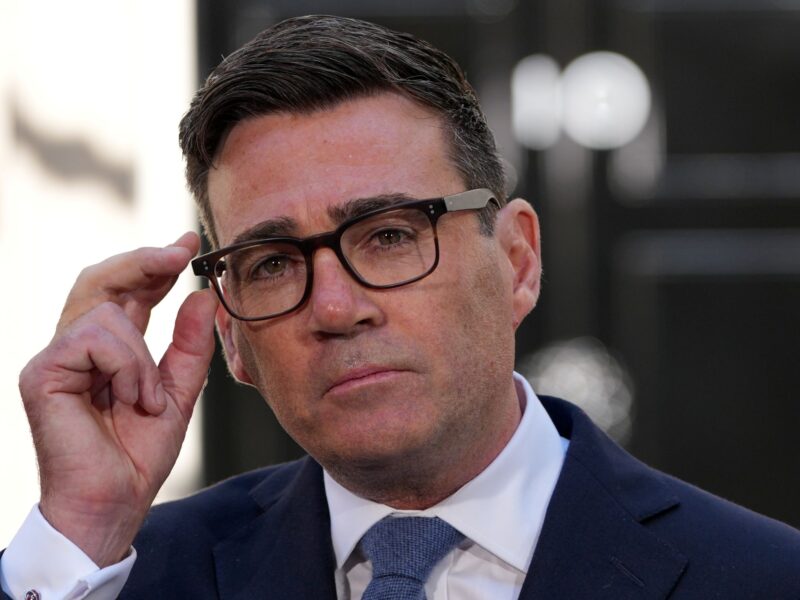
MANCHESTER, England (CN) — Prime Minister Andy Burnham on Wednesday announced a nationwide cap of 2 pounds ($2.70) on single bus fares across England, as he promises a government focused on easing the cost of living.
The fare cap, due to begin in January and run throughout 2027, reverses a decision by former Prime Minister Keir Starmer’s government to raise the maximum fare to 3 pounds.
The policy will apply across England outside London, where buses are run under a separate transport system.
Burnham said cheaper public transport would help families struggling with household bills while making it easier for people to get to work, school and healthcare.
“Good, affordable transport links are an essential. No one should be priced out of those and left behind,” Burnham said. “I’ve done it before and I will do it again now: a 2-pound cap on bus fares for millions across the country.”
Burnham built his political reputation as mayor of Greater Manchester, a city-region in northwest England, where he introduced a 2 pound bus fare cap and brought local bus and tram services under public control.
He has repeatedly argued affordable public transport is central to economic growth outside London.
The government said the scheme will cost around $670 million.
About 80% of that will come from changing part of the U.K.’s international climate finance program from grants to loans. The rest will come from savings across government departments.
Funding will also be provided to Scotland, Wales and Northern Ireland if their devolved governments choose to introduce similar schemes.
The announcement follows Burnham’s first cabinet meeting on Tuesday, when he pledged to lead a “cost of living government."
He also announced plans to remove Britain’s 5% sales tax on household electricity bills, a measure the government says will save the average household about $60 a year and be funded by scrapping a planned national digital identity card program.
The measures offer the clearest indication yet of the direction Burnham intends to take after winning the Labour leadership and becoming prime minister last week.
Burnham’s cabinet takes shape
The early policy rollouts provide the first glimpse of Burnham’s reshaped cabinet, which he has said reflects his promise to shift political and economic power away from London.
Eleven of the 23 cabinet ministers represent constituencies in northern England.
The prime minister appointed John Healey as chancellor, Britain’s finance minister responsible for taxes and public spending. Healey shares Burnham’s support for devolving more power to regional authorities and using government investment to rebuild manufacturing.
Healey was a surprise appointment, with much of the speculation centering around Ed Miliband and Shabana Mahmood.
Ed Miliband became foreign secretary after previously serving as energy secretary, where he defended Britain’s net-zero climate goals and now faces the challenge of overseeing the U.K.’s response to the Ukraine war and managing relations with U.S. President Donald Trump.
Miliband has been outspoken in his criticism of the president, saying “we must do our best at home and abroad to resist the worst of Trumpism,” adding “these are dark days for America and the world,” following the November 2016 presidential election.
One of his predecessors, David Lammy, had also been a vocal critic of Trump before becoming foreign secretary, though he largely muted that criticism after taking office.
Mahmood, meanwhile, remains home secretary, overseeing immigration, policing and national security. She has built a reputation as one of Labour’s toughest voices on immigration, a stance that has made her unpopular with many Labour lawmakers on the left and center.
Wes Streeting, who resigned as health secretary in May, is the new defense secretary after backing Burnham’s leadership campaign instead of launching his own bid.
Elsewhere, Angela Rayner returned as housing secretary after leaving the previous government in September following an investigation into her tax affairs, which she later settled.
In Burnham’s stronghold of Greater Manchester, polling suggests a strong mandate, with 66% of residents believing he did a good job as mayor, including the vast majority of Labour, Liberal Democrat and Green voters as well as 55% of Conservative voters.
Nicola, who’s from the city, told Courthouse News she was “proud to have Andy Burnham as our prime minister,” and that he would help revive the country.
Another Mancunian, Maria, said in an interview the prime minister’s first policy announcement is “a positive move that would help a lot of people,” adding that it is an extension of “some of the positive changes” he made while mayor.
Burnham’s attention now turns to delivering on one of his signature pledges to move parts of government operations up north to Manchester, with a site earmarked as a temporary base for northern Downing Street operations, where the prime minister plans to work regularly while overseeing his devolution agenda.
A permanent location for a “Number 10 North” has been identified in the city center.
The political transition in Burnham’s former stronghold will also continue next week, when voters choose his successor in the Greater Manchester mayoral election on July 30.
Courthouse News reporter James Francis Whitehead is based in England.
 Follow @jayfranklinlive
Subscribe to our free newsletters
Our weekly newsletter Closing Arguments offers the latest about ongoing trials, major litigation and rulings in courthouses around the U.S. and the world, while the monthly Under the Lights dishes the legal dirt from Hollywood, sports, Big Tech and the arts.