
 Search Articles


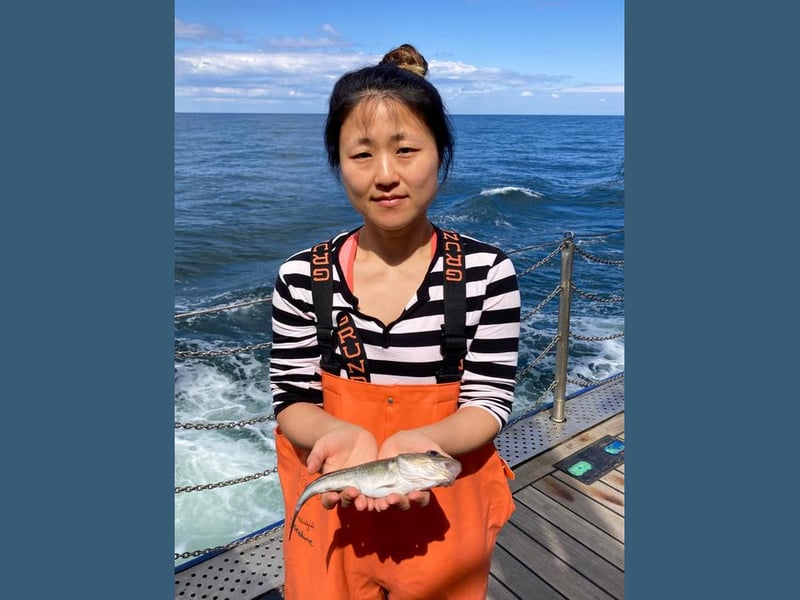
(CN) — Intensive fishing caused the once-mighty cod to shrink by roughly half its size between 1996 and 2019, according to a new paper, published Wednesday in Science Advances. Adult cod once had an average length of 40 centimeters; today, they average 20 centimeters, small enough to fit neatly on a dinner plate.
“Selective overexploitation has altered the genome of Eastern Baltic cod,” explained Dr. Kwi Young Han, lead author of the paper, in a press release. “We see this in the significant decline in average size, which we could link to reduced growth rates. For the first time in a fully marine species, we have provided evidence of evolutionary changes in the genomes of a fish population subjected to intense exploitation, which has pushed the population to the brink of collapse.”
Overfishing, combined with environmental changes such as global warming, has decimated the Eastern Baltic cod population. But fishing has also made the cod smaller, since fishermen tend to target the largest fish, taking them out of the gene pool.
Han and her team studied ear stones, or otoliths, from 152 cod caught between 1996 and 2019 in the Baltic Sea’s Bornholm Basin. Like tree rings, otoliths record annual growth. By combining this archive with high-resolution DNA sequencing, they tracked how cod growth and genetics have changed over 25 years.
They found that fast-growing cod have nearly vanished, while slow-growing, smaller fish now have an evolutionary edge and reproduce more.
Han’s co-author and PhD supervisor, Dr. Thorsten Reusch, said in a press release: “What we are observing is evolution in action, driven by human activity. This is scientifically fascinating, but ecologically deeply concerning.”
The collapse of the Eastern Baltic cod population prompted the European Commission to ban cod fishing in the Baltic.
“Our results demonstrate the profound impact of human activities on wild populations, even at the level of their DNA,” said Dr. Han. “They also highlight that sustainable fisheries are not only an economic issue, but also a matter of conserving biodiversity, including genetic resources.”
 Follow @hillelaron
Subscribe to our free newsletters
Our weekly newsletter Closing Arguments offers the latest about ongoing trials, major litigation and rulings in courthouses around the U.S. and the world, while the monthly Under the Lights dishes the legal dirt from Hollywood, sports, Big Tech and the arts.