
 Search Articles


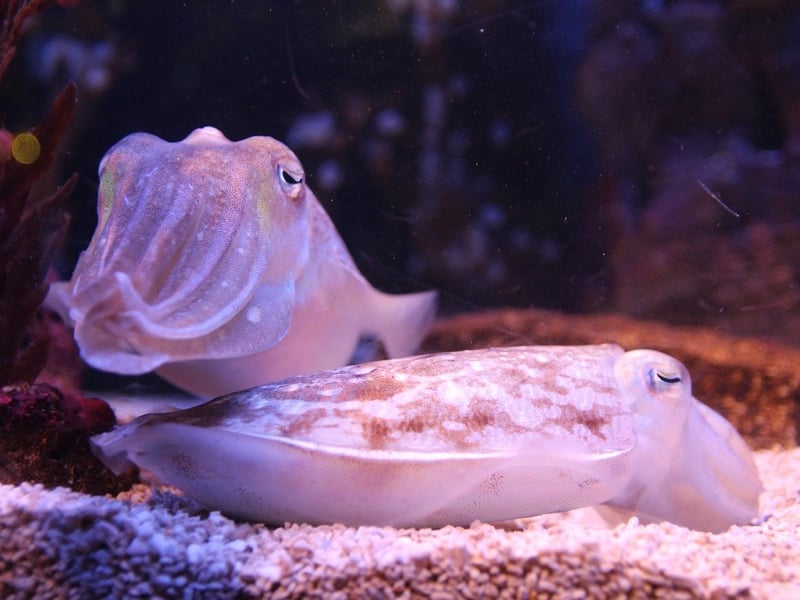
(CN) — Sometimes called the “chameleon of the sea,” the cuttlefish, like the unrelated land-based reptile, can rapidly change the color and pattern of its skin to blend into its surroundings to avoid predation. The peculiar response is enabled by a motor system in the cephalopod’s brain which controls the expansion and contraction of millions of skin pigment cells known as chromatophores.
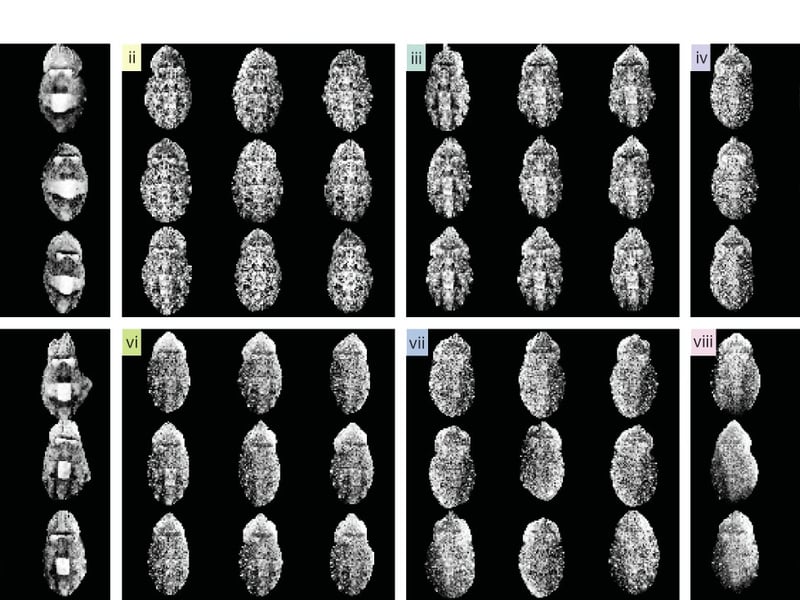
Until recently, scientists have had little understanding about how the camouflaged skin patterns are generated, but a study published in the journal Nature today suggests the process is highly dynamic and dependent upon the instinctive coordination of thousands of neurons which almost instantaneously interpret surrounding visual scenes. The study, led by Gilles Laurent, the director at the Max-Planck-Institute for Brain Research in Germany, included more than 200,000 observations of cuttlefish against different natural and artificial backgrounds and the analysis of the color changing response at a single-cell resolution.
It discovered that almost no two color and texture patterns are alike, with each pattern stabilizing only after a rapid search in which the chromatophores meander through skin-pattern space. Often, the same background would yield different patterns, suggesting the response is highly adaptable and does not follow a known path.
Cuttlefish exhibit a more direct response when threatened however, with a sudden and rather predictable “blanching” mechanism which turns their skin pale in spite of the background.
To enable the observations, scientists placed the cuttlefish above a piece of patterned fabric in a shallow tank, where they could document the color-changing response with 17 high resolution cameras while changing the background pattern every 5-10 minutes.
In response, the chromatophores demonstrated tortuous and intermittent change, indicating the cuttlefish can alter its final color pattern, much like a primate can correct the movement in its hand to correspond with an object in motion. The same backgrounds resulted in many different patterns, some of which were indistinguishable to the human eye, but were evident in camera analysis.
Previous studies indicated the cuttlefish eye and brain are both highly developed, although its optic system’s ability to distinguish color is limited. Rather, Wednesday’s report suggests the camouflage response is built more upon a response to textures and patterns.
“The correlation between skin and background patterns increased as the number of pattern-motion steps increased,” the report states. “At each intermittent motion onset, pattern motion aimed towards the target camouflage, reflecting knowledge of the animal’s instantaneous state rather than the memorization of its initial motion direction at the onset of the behavior.”
The study also concluded the cuttlefish may have some control over its camouflage, as they observed different pattern components defined by variations within the chromatophores, which could be large or small and tight or loose.
Blanching is a deimatic or bluffing behavior, much like frogs that inflate themselves during a threat or butterflies and moths which can open their wings to display eye patterns that appear similar to those of larger animals. Interestingly, the study revealed that cuttlefish can return to the same pattern displayed immediately before and after a blanching episode.
“This suggests that blanching co-occurs with camouflage,” the study concluded. “Blanching represents the shrinking of chromatophores caused by the relaxation of the chromatophore muscles. By contrast, the return to a camouflage pattern requires the differential expansion of chromatophores by the contraction of those same muscles. Thus, blanching could be generated by a transient and general inhibition of the chromatophore motor drive, downstream of the camouflage control level.”
 Follow @gabetynes
Subscribe to our free newsletters
Our weekly newsletter Closing Arguments offers the latest about ongoing trials, major litigation and rulings in courthouses around the U.S. and the world, while the monthly Under the Lights dishes the legal dirt from Hollywood, sports, Big Tech and the arts.