
 Search Articles


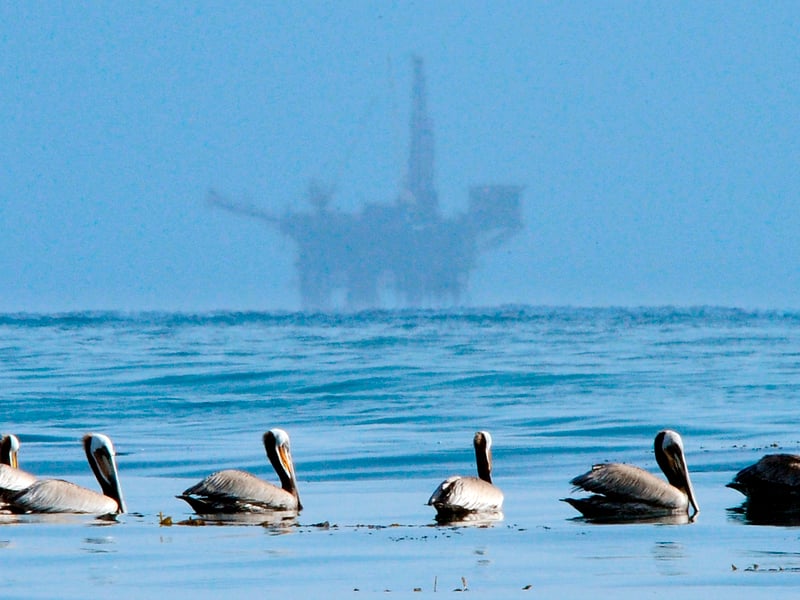
LOS ANGELES (CN) — Environmentalists filed yet another lawsuit on Wednesday to prevent the restart of a group of aging oil platforms off the coast of Central California that have been mothballed since a disastrous spill caused by a corroded pipeline in 2015.
The Center for Biological Diversity and the Wishtoyo Foundation sued the Bureau of Ocean Energy Management claiming it is violating the Outer Continental Shelf Lands Act by purportedly allowing the platforms’ owner, Sable Offshore Corp., to begin production as soon as this spring without updating the “woefully outdated” development and production plans for the facilities.
Those development and production plans, the plaintiffs argue, mostly date back to the 1970s and 1980s, when the three offshore platforms and an onshore processing facility were built and didn’t contemplate the platforms operating beyond their expected production timeline of 25 to 35 years.
The old age and degraded state of the so-called Santa Ynez Unit infrastructure compound the risk of an oil spill, according to the lawsuit, because, as scientists have found, aging poses risks of corrosion, erosion, and fatigue stress to subsea pipelines.
“I’m appalled that Trump officials would even consider allowing these offshore oil platforms to come back from the dead under plans approved decades ago,” said Kristen Monsell, oceans legal director at the Center for Biological Diversity. “Any potentially dangerous infrastructure, especially if it hasn’t been used in a decade, should get close scrutiny, but that’s not happening here."
A Bureau of Ocean Energy Management representative said it’s the bureau’s policy not to comment on litigation.
“The Bureau of Ocean Energy Management reaffirms its unwavering commitment to manage development of the U.S. Continental Shelf energy, mineral, and geological resources in an environmentally and economically responsibly way, while prioritizing fiscal responsibility for the American people,” according to the bureau’s statement.
ExxonMobil, which owned the facilities at the time, had to shut down its three offshore platforms in the Santa Barbara Channel in 2015 after a pipeline that carried the processed oil from an onshore facility to refineries inland ruptured and released 142,000 gallons of oil onto the beach and into the ocean.
Thick, black blobs of oil washed up along the coast for weeks afterward, and hundreds of animals were coated in tar. The pipeline was closed, and a grand jury indicted the owner of the line in 2015, Plains All American Pipeline, on criminal charges.
Plains was forced to pay a stiff fine and sold the pipeline to ExxonMobil in 2022, which then sold it to Sable in 2024. Sable has been trying to restart the pipeline ever since.
The Houston-based oil company has said it wants to resume production as early as the second quarter of this year.
Those plans, not surprisingly, have prompted numerous lawsuits by environmental activists concerned about the risk of another devastating oil spill as well as the impact of air and water pollution from renewed industrial activity on marine and coastal species.
Last year, the same plaintiffs sued after the federal government renewed the 16 offshore oil and gas leases that supply the platforms.
The environmental groups claim regulators violated several laws, including the Outer Continental Shelf Lands Act, the National Environmental Policy Act, and the Administrative Procedure Act by failing to conduct necessary environmental reviews and neglecting to determine whether the lease extensions were in the national interest. They also accused the agencies of ignoring the climate crisis, public health, endangered species recovery, and other environmental concerns.
And just in February, a broad coalition of conservationist nonprofits sued the Trump administration after the president, on his first day in office, signed an executive order rescinding a Joe Biden order that would have protected around over 670 million acres of land and water, including on the California coast, from future oil and natural gas leasing.
Meanwhile, Sable Offshore has gone to court to force the California Coastal Commission to allow it to repair and restart the pipeline. Sable accuses the state agency of “unlawfully preventing repair and maintenance activities along portions of the pipelines.”
 Follow @edpettersson
Subscribe to our free newsletters
Our weekly newsletter Closing Arguments offers the latest about ongoing trials, major litigation and rulings in courthouses around the U.S. and the world, while the monthly Under the Lights dishes the legal dirt from Hollywood, sports, Big Tech and the arts.