
 Search Articles


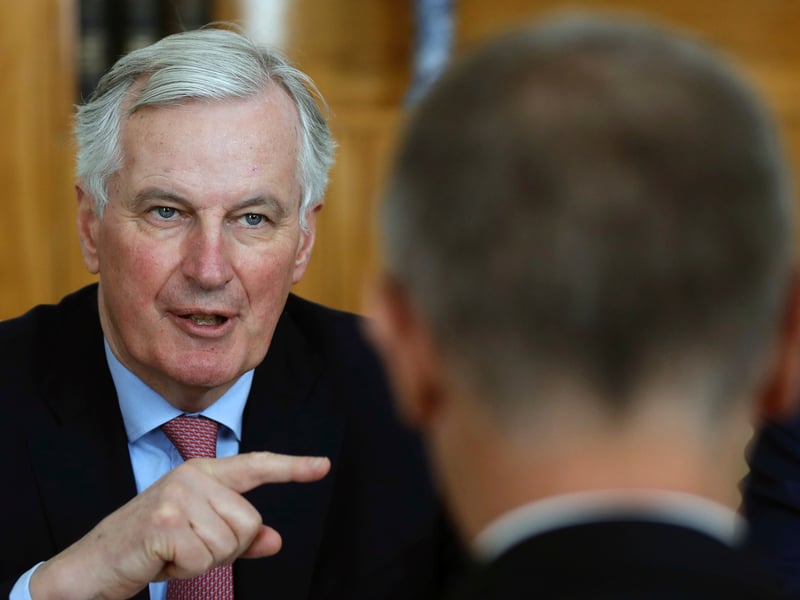
MARSEILLE, France (CN) — Michel Barnier, France’s new right-wing prime minister tasked with forming a government, is about to infuriate a large segment of the country’s political spectrum. The question is which side.
Barnier needs enough political backing to pass legislation, which would translate into the support of 289 out of 577 members of Parliament. Though Barnier has said that he is open to forming a government with both left- and right-wing ministers, those sides do not want to work together, leaving Barnier in a stalemate.
Two weeks into Barnier’s role, there is still no government, and the clock is ticking. The new Parliament must present a comprehensive 2025 budget by Oct. 9 rather than the original Oct. 1 deadline — marking the first time in modern France’s history that the date has been pushed back.
“He’s really in an impossible situation,” Olivier Costa, a director at the Center for Political Research at Sciences Po, told Courthouse News. “I don’t know what strategic choice he’s going to make to get out of it.”
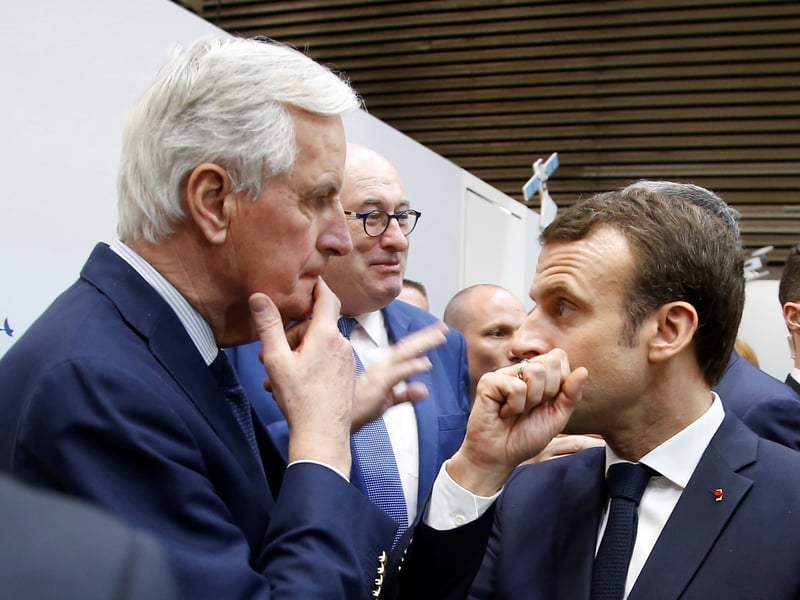
President Emmanuel Macron announced Barnier’s appointment on Sept. 5, over three months after dissolving the country’s government and calling for snap legislative elections.
Although the left-wing coalition New Popular Front won the most seats — followed by Macron’s centrist Ensemble coalition and the extreme-right National Rally party, known as RN — Macron controversially appointed the right-wing Barnier to lead the country out of political chaos.
Barnier, who is known as somewhere between center- to far-right, is in a tough spot.
The New Popular Front maintains that Barnier’s appointment was a violation of democratic values, and raised the question of why elections were held at all if their plurality didn’t translate to the premiership. The coalition has generally said they will not accept ministerial roles in a Barnier-led government. There have been various protests since he took office.
Conversely, the RN — who reportedly approved his appointment in private meetings with Macron — is pressuring Barnier to reimplement hardline immigration policy. There was even talk of reappointing a minister of immigration.
Barnier is modern France’s oldest prime minister at 73, bucking the trend of young politicians who had been taking over the country’s political scene: Macron, former Prime Minister Gabriel Attal, RN PresidentJordan Bardella and others.
“Having a 73-year old prime minister is not insignificant,” Costa said. “It’s appealing to a form of wisdom and respectability to convince people to sit down around a table and talk.”
This is exactly what Barnier is known for.
Despite serving in various French cabinet positions over roughly 50 years, Barnier is most well known on the European stage, where he served as the EU’s chief Brexit negotiator from 2016 to 2021. The general consensus is that this was the biggest success of his career.
“The British are very good negotiators, and they tend to think that everyone is an idiot when it comes to negotiating with them,” Costa said. “They somehow came across someone smarter than them, because all of the tricks they usually used didn’t work with Barnier — and in particular, a bit of the intimidation tricks that the British were specialists in with negotiations at the European level.”
But years later, Barnier tainted that win when he lost the presidential nomination from his party, the right Les Républicains, in 2022’s elections.
Barnier took such an extreme stance on immigration — proposing a five-year moratorium on immigration and boosting other hardline restrictive measures — that it arguably damaged his credibility. During his campaign, Barnier said that if elected, he would evade the jurisdiction of the EU to safeguard France’s interests on immigration.
“That was quite crazy, because Mr. Barnier had spent years explaining to the British that European law is European law, that it must be respected and that we cannot just do whatever we want,” Costa said. “As a candidate, he proposed exactly the same thing by finally saying that the European treaties, the European texts, the decisions of the Court of Justice — we wipe our feet on them, it doesn’t matter, it’s not important.”
Barnier largely receded from the public eye after he failed to secure the party’s nomination. He doesn’t hold a big place in the French imagination.
On Wednesday, Roland Alberton was sitting at the cash register of a bookshop in central Marseille, perched on an alcove. He told Courthouse News that he doesn’t have strong thoughts on Barnier.
“I don’t know him at all,” he said. “I don’t know if he’ll succeed.”
Nearby, Yolande Bonneau was sitting at the Place General de Gaulle, a central square in the city with a carousel. When asked if Barnier would prosper, her answer was point blank: “No.”
Like Alberton, Bonneau said that she didn’t know much about him, besides that he had extreme views on immigration and he was a good deputy at the European level. She then brought back the conversation to Macron’s decision to dissolve the government in the first place.
“Merci, Macron,” she said sarcastically, rolling her eyes while taking a bite from a chocolate croissant.
But experts argue that Barnier’s lack of prominence in French politics and in the media might have informed Macron’s choice.
“He’s not someone who goes into the media a lot, he’s not someone who was a party leader, so people don’t know him well,” Costa said. “I think that the image they have of him is someone who is a leader, which is true, Barnier is not someone who is going to make sensational statements, insult others, go on Twitter to tweet all sorts of horrors.”
Costa argues that Macron likely saw Barnier as someone reassuring who could reach across the political spectrum to talk to either side. This is something that the big personalities in French politics — Macron included — don’t generally have in their skill sets.
“Even Emmanuel Macron is not very good at talking to people, because he’s too focused on himself, he is very egotistical, he doesn’t listen to others,” Costa said. “I think that Barnier has this image of a bit of a wise man.”
 Follow @lilyradz
Subscribe to our free newsletters
Our weekly newsletter Closing Arguments offers the latest about ongoing trials, major litigation and rulings in courthouses around the U.S. and the world, while the monthly Under the Lights dishes the legal dirt from Hollywood, sports, Big Tech and the arts.