
 Search Articles


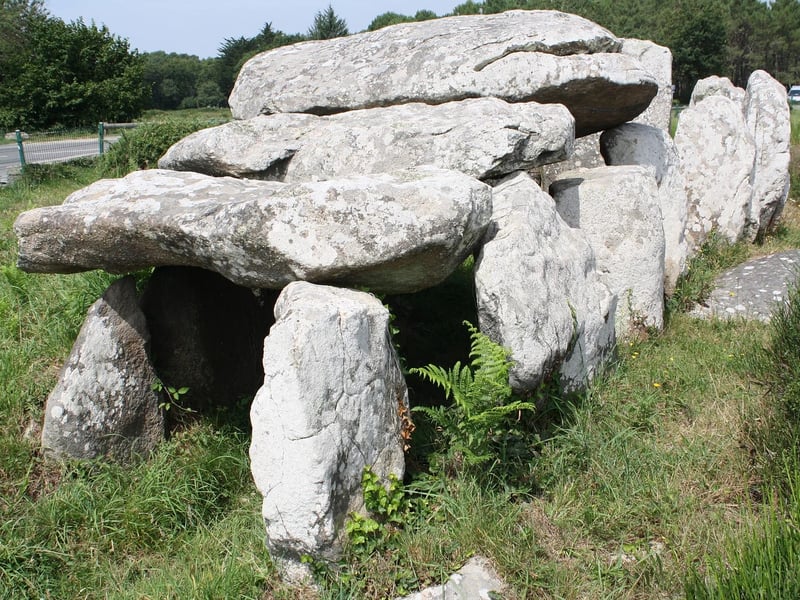
(CN) — Neolithic engineers may not have been given enough credit for their ingenuity and building knowledge finds a new study.
The research was released Friday in the journal Science Advances, and details the methods researchers believe Neolithic engineers employed to build large stone structures called megaliths.
Megaliths are prehistoric monuments or structures built from large stone, and the researchers believe that a complex one such as the Menga dolmen in the Iberian Peninsula, would have required a complex building plan from its Neolithic builders.
“It is impossible to understand how a monument as sophisticated as Menga was built between 3800 and 3600 BCE without resorting to a notion of ‘early science’,” wrote lead author José Antonio Lozano Rodríguez. “Our findings run entirely counter to the idea of ‘primitiveness’ or ‘rudeness’ that for a long time has underpinned both the popular and scientific understanding of Neolithic societies.”
The Menga dolmen is the largest megalith in the Iberian Peninsula, which encompasses modern-day Spain and Portugal, and is made up of 32 giant stones, and includes a roof, interlocking walls and pillars.
The impressive structure is about 24.9 meters long and measures 5.7 meters at its widest point, with a rising height that peaks at about 3.45 meters at the back of a chamber.
To stay standing, the structure boasts three pillars and 10 uprights, although the researchers believe there was likely a fourth pillar that is now gone.
“To build a monument of such extraordinary dimensions and complexity, the Neolithic architects and engineers must have relied on expert craftspeople well versed in the working of timber, wood, basketry and stone, as well as a substantial workforce capable of quarrying, dressing, and transporting the stones from the quarries to the building site,” Rodríguez wrote.
Rodríguez and his team used archaeological, sedimentological, palaeontological, and petrological analysis to study how the Menga dolmen has stood for almost 6000 years.
For instance, the large capstone rocks that make up the structure’s roof would have needed to be moved carefully due to their soft composition.
Researchers hypothesize that the engineers might have used ropes and sledges to precisely move the large stones from a nearby quarry. Moving them would have been an impressive feat, as the 32 stones that create the structure weigh a combined 1,140 tons.
“After selecting and cutting the rocks, the first challenge had to be the transport of such massive stones. This would have been only workable on a previously made and carefully designed road (or “track-way”) that would minimize friction,” Rodríguez wrote.
Additionally, the researchers believe that the interior and facing of the structure show that the builders used other scientific disciplines in the construction.
“The incorporation of advanced knowledge in the fields of geology, physics, geometry, and astronomy shows that Menga represents not only a feat of early engineering but also a substantial step in the advancement of human science, reflecting the accumulation of advanced knowledge,” Rodríguez wrote.
This is not Rodríguez’s first study of the structure, he also authored a 2023 study of the Menga dolmen that used high-resolution geological mapping to study the structure.
That research helped identify that the Cerro de la Cruz quarry was likely the source of the stone used to build the great structure.
Joining Rodríguez as co-author on the paper were, Francisco Jiménez-Espejo, Jesús Arrieta. Antonio M. Álvarez-Valero, Eugenio Fraile-Nuez, Leonardo García Sanjuán, Antonio García-Alix, Raquel Montero Artus and Francisco Martínez-Sevilla.
Subscribe to our free newsletters
Our weekly newsletter Closing Arguments offers the latest about ongoing trials, major litigation and rulings in courthouses around the U.S. and the world, while the monthly Under the Lights dishes the legal dirt from Hollywood, sports, Big Tech and the arts.