Search Articles


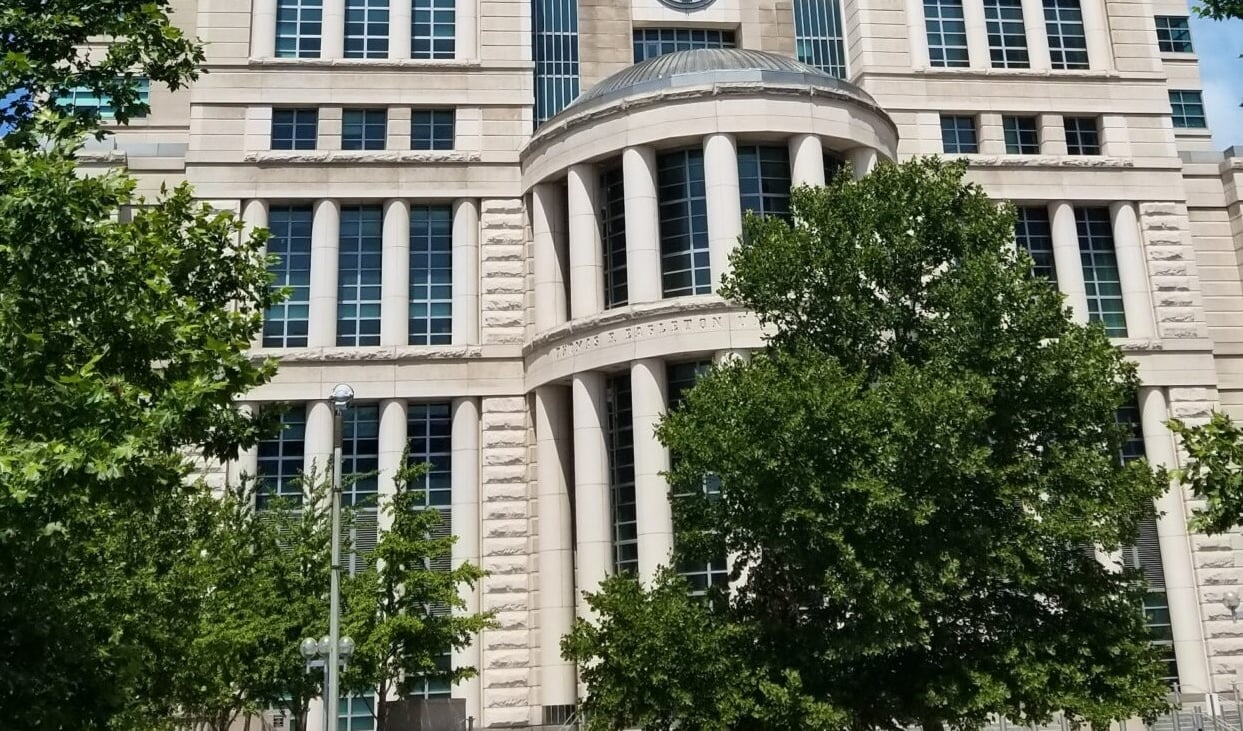
(CN) — An African American couple from Omaha, Nebraska, asked the Eighth Circuit to rule that a children’s museum’s policy offering free admission to members of federally recognized Native American tribes violates federal civil rights law.
Gwladys and Manfred Nare paid full admission for themselves and their minor child to visit the Kiewit Luminarium, a science and art museum for children. When they learned of what they consider illegal discrimination, they sought a refund but were denied on grounds they are not members of a federally recognized Native American tribe.
The couple then filed suit in federal court against the Omaha Discovery Trust, which operates the Kiewit Luminarium, claiming it violated federal civil rights law by discriminating based on race in a place of public accommodation and that the free-ticket policy for tribe members violates the Nares’ rights under the Nebraska Consumer Protection Act. The District Court dismissed the Nares’ claims, holding that membership in a Native American tribe is a political and not a racial classification.
In their appeal to the Eighth Circuit, the Nares argue the Luminarium’s ticket policy treats customers differently based on race because membership in a Native American tribe is a “proxy for race,” which violates civil rights law.
During Wednesday’s oral argument, Omaha attorney David Begley, representing the Nares, characterized the children’s museum policy as “free admission based upon race, show us your papers. And I would submit to the court that that concept is fundamentally un-American.”
Begley said that while the trial court held that membership in a tribe is a political, not a racial classification, he said the issue is whether tribal membership is a proxy for race. “If so, Omaha Discovery Trust’s free admission policy is unlawful racial discrimination.”
U.S. Circuit Judge Jonathan Kobes, a Donald Trump appointee, asked Begley whether he included the claim in his complaint that tribal membership is a proxy for race in this case.
Begley said he did not, but he said U.S. Supreme Court cases have said it can be a proxy for race.
“An argument can be made that the membership in a federally recognized tribe requirement is really a disguise,” he said. “Really, what they’re doing is letting in Native Americans free.” And he noted that, as he had argued in his brief, “What political organization other than the Ku Klux Klan limits its membership to members of a certain race? And that’s really what’s going on here.”
Catherine Cano of Omaha’s Jackson Lewis, representing the children’s museum, said, “This case asks whether that policy is racially discriminatory on its face? It is not.”
However, Kobes said, “There are cases that suggest the policy could be pretextual? Not discriminatory on its face, but a plaintiff might allege it is pretextual. Do you agree that is possible?”
In response, Cano said, “I agree that there are theories of discrimination based on pretext. In this case, though, the complaint is based on just the face of the policy. And the appellants throughout this matter have alleged that it is facially discriminatory.”
The District Court disagreed in a ruling by Senior U.S. District Judge Joseph F. Bataillon, who said tribal membership is a political, not a racial, classification. “The Supreme Court has, on numerous occasions, found Native American tribes to be quasi-sovereign entities rather than racial groups, thereby barring claims based on racial discrimination,” he wrote.
In fact, he wrote, the Eighth Circuit in 1999’s United States v. Eagleboy “rejected a selective-prosecution argument made by a non-tribal member who was charged with violating the Migratory Bird Treaty Act. The policy was not to charge tribal members with similar crimes, which the defendant argued amounted to racial discrimination. The court rejected this argument, noting that the policy’s ’criterion is tribal membership, not race.’”
The Nares argue in their brief that Eagleboy is distinguishable from their case.
“The key to understanding Eagleboyis that the Eighth Circuit noted that the United States has ‘special obligations toward Indians’ and that ‘the government [has] trust obligations to Indians,’” they argue. “Omaha Discovery Trust is not the government of the United States, and it has no historical, special or trust relationship with Indians.”
Bataillon disagreed with that argument in his ruling, saying the Eighth Circuit’s holding in that case was based on tribal membership being distinct from race, not on the fact the U.S. government was involved. “Likewise, here, the membership policy is based on tribal membership exclusively, not race. This case is legally indistinguishable from Eagleboy.”
Omaha Discovery Trust also argues in its brief filed by Cano that free admission to the Luminarium for members of federally recognized tribes is based on a political classification.
“If a Black individual presents Luminarium with evidence that they are a member of a federally recognized Indian tribe, that individual would receive free admission,” Luminarium said in its brief. “Similarly, if an individual who identifies as Indian or Native American but is not a member of a federally recognized Indian tribe requested free admission, the request would be denied. The admission policy also goes a step further by covering household members, which has no connection to race.”
Wednesday’s Eighth Circuit panel also included Chief U.S. Circuit Judge Steven Colloton and U.S. Circuit Judge Bobby Shepherd, both George W. Bush appointees. The panel did not say when a ruling would be issued.
 Follow @roxalaird16
Subscribe to our free newsletters
Our weekly newsletter Closing Arguments offers the latest about ongoing trials, major litigation and rulings in courthouses around the U.S. and the world, while the monthly Under the Lights dishes the legal dirt from Hollywood, sports, Big Tech and the arts.