
 Search Articles


(CN) — Tens of millions of people around the world live with Alzheimer’s disease. Scientists don’t exactly know why people get the disease, or why it affects people differently, but new research suggests that a deficiency of naturally occurring lithium in the human brain might play an essential role.
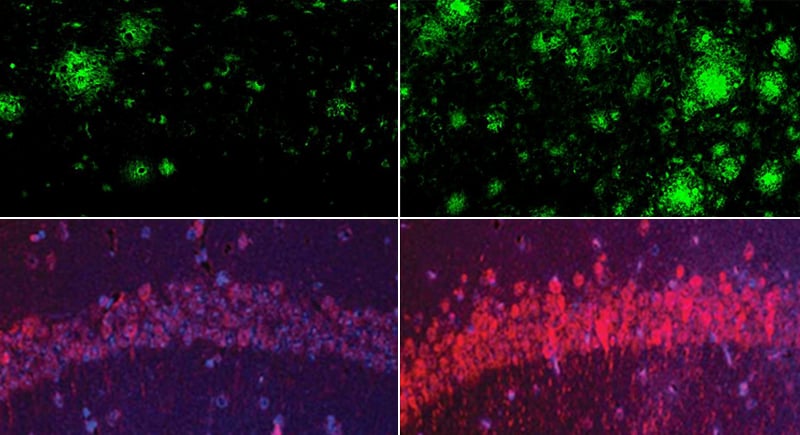
According to a study published in Nature on Wednesday, naturally occurring lithium shields the brain from neurodegeneration. In the early stages of dementia, a protein called amyloid beta begins to form deposits in the brain. The protein binds to lithium, reducing its ability to shield the brain. In mice, researchers found that led to problems associated with Alzheimer’s, like memory loss.
The researchers’ findings suggest that measuring lithium levels in people could help flag early signs of Alzheimer’s.
The study adds weight to previous research that showed higher lithium levels in the environment, like higher levels of lithium in drinking water in Denmark, tracked with lower rates of dementia, the scientists say in the study.
“Lithium turns out to be like other nutrients we get from the environment, such as iron and vitamin C,” said senior author Bruce Yankner, professor of genetics and neurology in the Blavatnik Institute at Harvard Medical School, in a press release. “It’s the first time anyone’s shown that lithium exists at a natural level that’s biologically meaningful without giving it as a drug.”
But don’t rush out to get lithium supplements just yet.
The research described in the study was based on a series of experiments in mice, and the finding needs to be replicated in human clinical trials.
To test its effects on mice, researchers fed mice a lithium-restricted diet, which reduced their lithium levels down to a level similar to that of human patients with Alzheimer’s disease.
The diet alone appeared to have accelerated the aging process and cognitive decline in the mice similar to the effects of Alzheimer’s disease on human brains.
The researchers then laced their water with lithium orotate, which restored their memory function, even in older mice in advanced stages of cognitive decline.
Yankner said he hoped that lithium could one day be able to reverse cognitive decline in human patients and improve their lives.
“You have to be careful about extrapolating from mouse models, and you never know until you try it in a controlled human clinical trial,” Yankner said in a press release. “But so far the results are very encouraging.”
The researchers are following the study up with preclinical studies to eventually bring lithium orotate, or a similar compound, to clinical trials, Yankner said. They’re also interested in studying whether naturally occurring lithium might contribute to other neurodegenerative and psychiatric disorders.
“As a neuroscientist, I am excited about exploring the physiology of lithium in the brain. Our single nucleus RNA sequencing data suggests significant effects on all brain cell types we examined. I suspect we have just scratched the surface of what will be some very interesting biology,” Yankner wrote in an email.
Subscribe to our free newsletters
Our weekly newsletter Closing Arguments offers the latest about ongoing trials, major litigation and rulings in courthouses around the U.S. and the world, while the monthly Under the Lights dishes the legal dirt from Hollywood, sports, Big Tech and the arts.