
 Search Articles


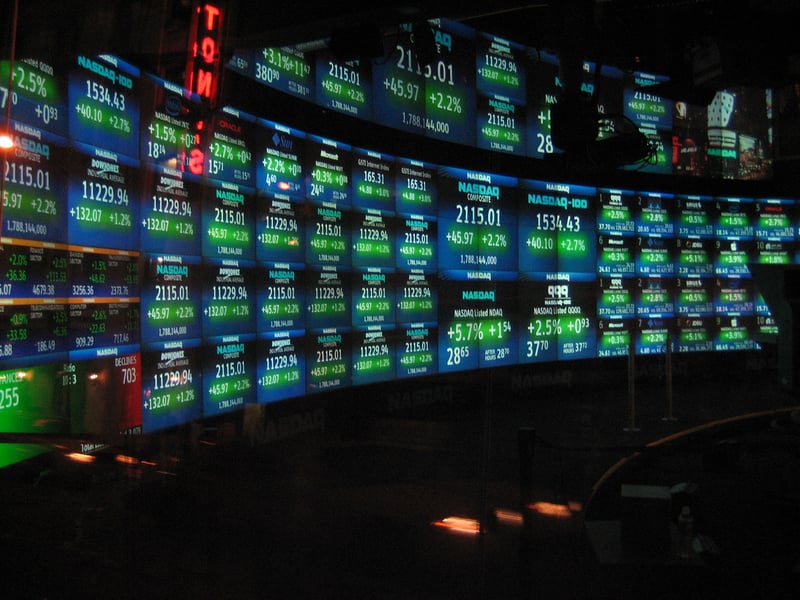
MANHATTAN (CN) — Wall Street ushered in a new wave of winning, as tariff concerns, potential trade deals and the Middle East conflict all continue to simmer.
The Dow Jones Industrial Average gained 1,611 points by the closing bell on Friday. The Nasdaq and S&P 500 both managed to set new record highs: The former gained 826 points to hit 20,273 points, while the latter increased 205 points to settle at 6,172 points by Friday’s close.
The latest inflation data helped markets continue their upward trajectory, as the U.S. Bureau of Economic Analysis’ personal consumption expenditures measure decreased by 0.1%, about what analysts had expected.
However, the core PCE index, which excludes food and energy prices, increased slightly more than expected, gaining 0.2% last month. Further, personal income fell by 0.4%, a far cry from the 0.3% increase many had predicted.
“The decline in personal income in May wasn’t as bad as it looks, since wage and salary income was still solidly higher in the month,” said Bill Adams, chief economist at Comerica Bank. “The surprise in the May income and outlays data was the weakness of services spending, which registered its slowest two-month increase since late 2020.”
Adams added that it is “much harder to brush off weakness in consumer spending on services than lower spending on durable goods,” noting the tariff scare likely caused the increase in goods spending.
The Federal Reserve is also closely watching the PCE and services spending. During his biannual testimony to Congress earlier this week, Fed Chair Jerome Powell said that while inflation has been largely tamed, he worries about the longer-term effects of tariffs.
“I want to be honest. We really don’t know how much of that’s going to be passed through to the consumers,” Powell told members of the House Financial Services Committee on Tuesday. “We just don’t know. And we won’t know until we see it.”
Small businesses seem more confident in the economy than during the first quarter of 2025, according to a quarterly survey by MetLife and the U.S. Chamber of Commerce. The survey still shows confidence among small businesses is lower than it was at the end of last year.
“Small businesses are cautiously navigating a complex economic landscape,” Tom Sullivan, a senior vice president at the U.S. Chamber, said in a statement. “While they are confident in their business operations, especially at the local level, when it comes to long-term planning, there is some hesitation, as inflation concerns linger and new trade policies create economic uncertainty.
Among consumers, sentiment improved for the first time in six months, according to a University of Michigan survey released on Friday. The survey’s “current conditions,” “expectations,” and “consumer sentiment” segments also increased by several points after falling the prior month.
“Consumers feel they have some breathing room given that the historically high tariffs announced earlier this year have not been sustained, and the worst-case scenarios for the economy have not come to fruition,” Joanne Hsu, the survey’s chief economist, said in a statement.
“However, consumers still worry that higher inflation and an economic slowdown are on the horizon, and they remain very cautious,” she continued, pointing to the fact that the survey is still more than 10% lower than it was a year ago.
The consumer confidence index from The Conference Board, released earlier in the week, showed a decline, with the index falling five points in June. The board’s “expectations index” also fell nearly five points and sits well below the 80-point threshold used to determine if a recession is inbound.
“The decline was broad-based across components, with consumers’ assessments of the present situation and their expectations for the future both contributing to the deterioration,” Stephanie Guichard, senior economist at the board, said in a statement. “Consumers were more pessimistic about business conditions and job availability over the next six months, and optimism about future income prospects eroded slightly.”
 Follow @NickRummell
Subscribe to our free newsletters
Our weekly newsletter Closing Arguments offers the latest about ongoing trials, major litigation and rulings in courthouses around the U.S. and the world, while the monthly Under the Lights dishes the legal dirt from Hollywood, sports, Big Tech and the arts.