
 Search Articles


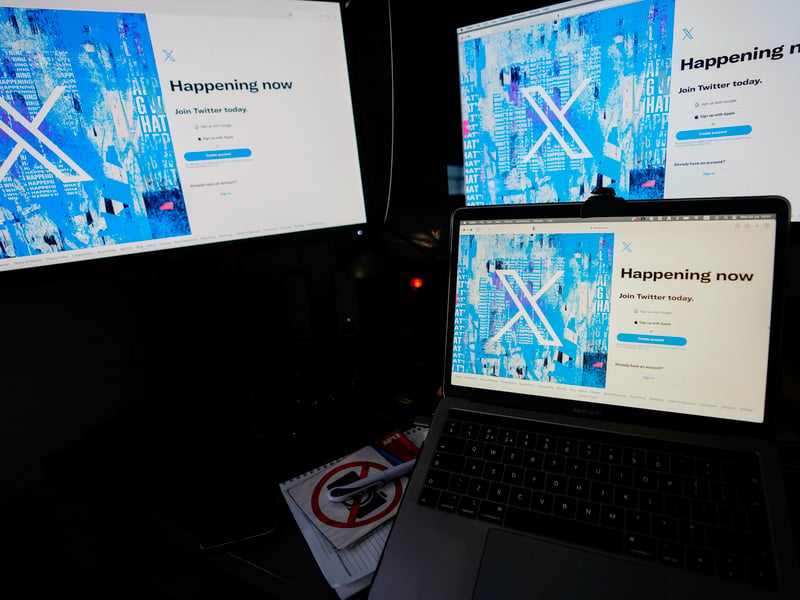
(CN) — Elon Musk’s X Corp. and its AI subsidiary, xAI LLC, are suing Apple and OpenAI over what they call anticompetitive behavior. In a complaint filed in a Texas federal court Monday, the plaintiffs allege Apple and OpenAI have formed an exclusive partnership that unlawfully stifles competition in both the smartphone and generative AI chatbot markets, harming innovators like xAI and its chatbot, Grok.
X Corp. claims Apple’s operating system deeply integrates OpenAI’s ChatGPT in common utilities such as Siri, Apple’s camera app and notes, and excludes competitors such as Grok, Google’s Gemini and Anthropic’s Claude from similar integration despite their availability and high ratings.
The partnership between the defendants results in anticompetitive effects, X claims, including a “scale advantage” gained by ChatGPT due to exclusive access to billions of user prompts from hundreds of millions of iPhones — prompts that are crucial for training and improving AI models.
The plaintiffs say the arrangement is even more advantageous to OpenAI because of resulting “network effects,” where the product with the most users will produce more data to train a better model, therefore attracting even more users. The resulting “feedback loop” entrenches ChatGPT’s dominance, according to the plaintiffs, who also claim OpenAI and ChatGPT currently have a roughly 80% share of the chatbot market.
“In a competitive market for generative AI chatbots, usage of chatbots would be determined by customer choice,” the plaintiffs contend. “Generative AI chatbots would vigorously compete with one another to get customers to use their generative AI chatbot over rival ones. Defendants’ anticompetitive conduct has prevented this competition by handing a substantial portion of the market to ChatGPT. … The result of this scheme is that customers have less choice and receive generative AI chatbots with fewer features and capabilities.”
The plaintiffs also claim that despite the popularity of Grok and other competitors, Apple deprioritizes such apps in its App Store rankings and recommendations, while it also delays approval for Grok updates. They say this arrangement reduces innovation, investment and consumer choice while also preventing super apps (like the one X is building) from competing with iPhone functionality, thereby protecting Apple’s smartphone monopoly.
“This is a tale of two monopolists joining forces to ensure their continued dominance,” the plaintiffs claim. “Working in tandem, defendants Apple and OpenAI have locked up markets to maintain their monopolies and prevent innovators like X and xAI from competing."
The claims in the lawsuit mirror those Musk himself has been recently publicizing on his social media website X, where he frequently promotes Grok and other xAI tools while deriding Apple’s influence. Apple’s iPhone accounts for roughly 65% of the smartphone market, the X companies say.
“Apple benefits from the arrangement’s denial of prompts to rival generative AI chatbots because the resulting hindrance to scale and innovation slows or prevents those generative AI chatbots from emerging as part of AI-powered super apps, which Apple hopes will squeeze out OpenAI’s competitors so the two monopolists can continue to benefit from each other’s monopoly rents," the plaintiffs say in the complaint.
The plaintiffs argue there is no technical, security or business reason for the exclusivity and that internal Apple documents show executives were concerned about OpenAI’s trustworthiness, but the deal proceeded for anticompetitive reasons.
In the complaint, the companies cite Phillip Shoemaker, the former director of app review for Apple’s App Store, who acknowledged that App Store rules are often “arbitrary” and “arguable” and that “Apple has struggled with using the App Store as a weapon against competitors.” Shoemaker also admitted that Apple has favored its own apps over those of competitors and has used pretextual reasons to remove apps from Apple’s competitors.
The plaintiffs argue Apple and OpenAI’s agreement is an unlawful restraint of trade under the Sherman Antitrust Act, amounting to a monopoly or attempted monopoly of both smartphones and chatbots. They also made claims of conspiracy, unfair competition and violations of state competition laws in Texas.
Separately, the U.S. Department of Justice under Joe Biden sued Apple in April 2024 over similar claims in a case that continues under the Trump administration. Even more monopoly claims against Apple were levied by the maker of the popular video game Fortnite in 2021.
There, the case ended in a stalemate with Epic Games largely losing on its federal antitrust claims but winning on its state unfair competition claim. In what was considered a major concession, the court did issue an injunction forcing Apple to allow developers to link to external payment methods.
 Follow @gabetynes
Subscribe to our free newsletters
Our weekly newsletter Closing Arguments offers the latest about ongoing trials, major litigation and rulings in courthouses around the U.S. and the world, while the monthly Under the Lights dishes the legal dirt from Hollywood, sports, Big Tech and the arts.