
 Search Articles


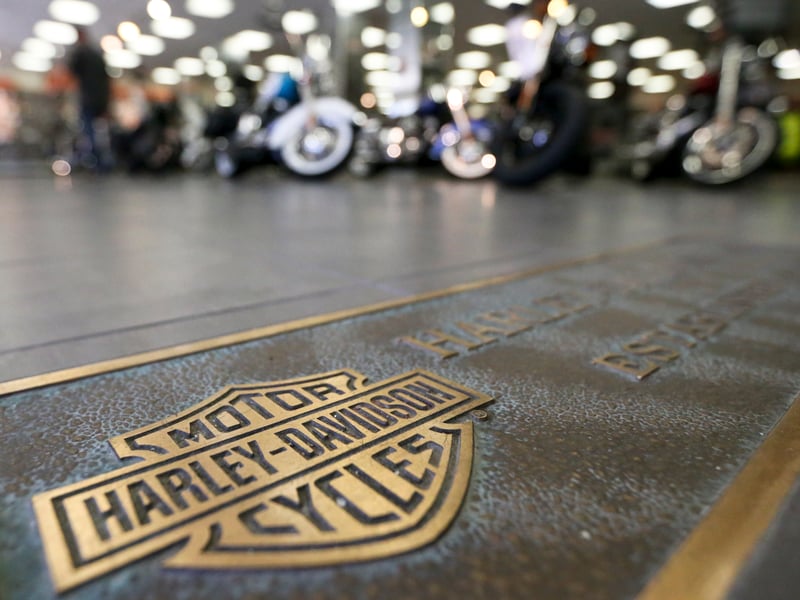
CHICAGO (CN) — Harley-Davidson customers argued on Tuesday that the motorcycle giant’s warranty policy violated antitrust laws when it stipulated that they must use Harley-Davidson replacement parts or risk voiding the warranty.
The customers filed a class action against Harley-Davidson July 2023 in the U.S. District Court Eastern District of Wisconsin, claiming that the company’s limited warranty policy — which says that the use of non-Harley-Davidson parts for bike repairs or modifications could void customers’ warranties — violates U.S. antitrust laws by forcing consumers to buy aftermarket parts only from the motorcycle giant.
But U.S. District Judge William C. Griesbach dismissed the suit in June 2024, saying the motorcycle titan didn’t violate the “tying provision” of Magnuson-Moss Warranty Act or monopolize aftermarket parts as the plaintiffs claimed. A tie-in agreement forces customers to buy a second product to purchase the first product.
Griesbach agreed then with Harley-Davidson that it hadn’t tied the sales of its motorcycles to the parts, which is banned under the act, and that the warranty simply establishes that Harley-Davidson is not responsible for any potential damage done to the motorcycle as a result of third-party parts.
On Tuesday, U.S. Circuit Judge John Lee, a Joe Biden appointee, said it was unclear how exactly the antitrust tie-in claim made sense as it relates to the motorcycle warranty.
Attorneys for Harley-Davidson argued that the tie-in product was just the warranty, and not the motorcycle itself.
“But plaintiffs did not allege they were forced to buy Harley-Davidson parts (the tied product) — or promise not to buy third-party parts — in order to buy a motorcycle (the tying product). They could buy a motorcycle by itself. They could also buy a motorcycle and third-party parts, even under plaintiffs’ theory, if they ‘intended to void’ the warranty or after the warranty expired,” Harley-Davidson said in a brief.
Lee said he had a hard time wrapping his head around what the tie-in product is because there is no market that exists solely for motorcycle warranties.
“Unlike other tie-in claims, here you have a claim where what you lose is not the motorcycle, but what you lose is just part of the package, right, what you lose is the warranty," Lee said.
Lee also asked if there were any accusations that the warranty was material to a customers’ decision on whether to buy a Harley.
The plaintiffs attorney, Thomas Burt, didn’t site any specific examples, but instead pointed to the customer’s complaint that details how Harley-Davidson has been able to extract higher profits from motorcycle repairs.
“By conditioning sales of motorcycles to the limited warranty’s restrictions, authorized Harley-Davidson dealers sell warranty-related services, replacement parts, and accessories at a premium compared to other motorcycle repairers and that Harley-Davidson is able to extract higher-than-usual profits from the repair business,” the plaintiffs wrote in their complaint.
Attorneys for Harley-Davidson maintained that the plaintiffs took the stipulations of the warranty out of context.
The Federal Trade Commission, in part, has previously agreed with some of the sentiment of the plaintiff’s argument as it had in 2022 filed its own complaint, claiming that Harley-Davidson’s warranty policy violated the Magnuson-Moss Act.
U.S. Circuit Judge Thomas Kirsch II, a Donald Trump appointee, questioned whether the Seventh Circuit even had proper jurisdiction over the Magnuson-Moss Act claims.
“How do you get into federal court when you don’t have 100 named plaintiffs?” Kirsch asked Burt, wondering what the proper jurisdiction would be for claims like these.
Burt, an attorney with New York firm Wolf Haldenstein Adler Freeman & Herz, noted that the federal jurisdiction question was not briefed ahead of court and said that “there are certainly 100 plaintiffs out there in the class, and again, I think there are cases that go both ways."
“We set forth seven circuit opinions that have decided you can have supplemental jurisdiction over a Mag-Moss claim when one of the Mag-Moss federal jurisdiction question elements isn’t met. In those cases, they hadn’t addressed the lack of 100 named plaintiffs, but the same reasoning applies to those cases, even if that isn’t met, the court can exercise supplemental jurisdiction,” said Cody D. Rockey, with Michigan’s Dykema Gossett, representing Harley-Davidson.
U.S. Circuit Court Judge Joshua Kolar, a Joe Biden appointee, rounded out the panel, which did not indicate when they might rule on the matter.
 Follow @RosenCaitlyn
Subscribe to our free newsletters
Our weekly newsletter Closing Arguments offers the latest about ongoing trials, major litigation and rulings in courthouses around the U.S. and the world, while the monthly Under the Lights dishes the legal dirt from Hollywood, sports, Big Tech and the arts.