
 Search Articles


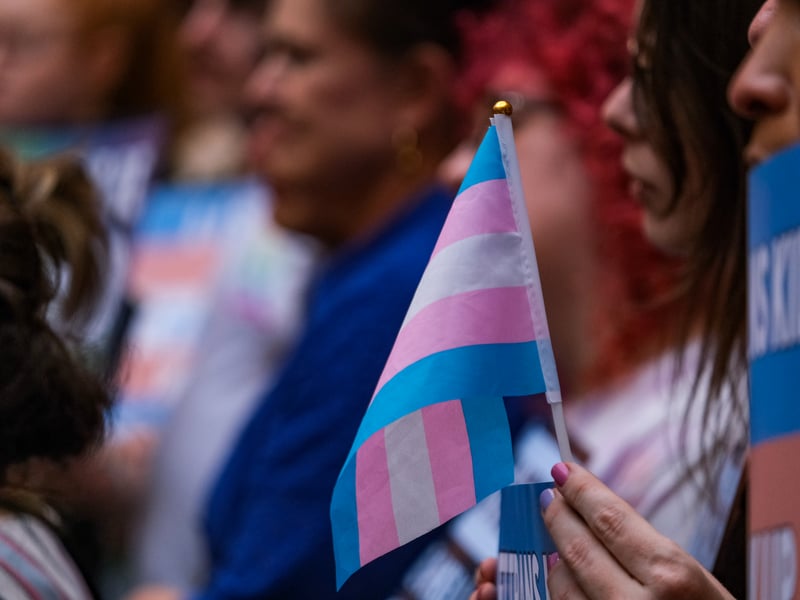
(CN) — Montana’s highest court agreed with a lower court judge Wednesday that a state law banning gender-affirming medical care for transgender minors likely violates the constitutional right to privacy, continuing the temporary block of the enforcement of the law.
“Plaintiffs’ alleged injury — loss of the constitutional privacy right — is irreparable with a monetary remedy, which makes their claim appropriate for a preliminary injunction,” Montana Supreme Court Justice Beth Baker wrote in the 41-page opinion, concurred by five other justices.
Senate Bill 99, passed in 2023, bans puberty blockers, cross-sex hormone treatments, surgical procedures and other forms of gender-affirming care to treat minors experiencing gender dysphoria. Doctors who violate the law are subject to discipline, including having their license suspended for at least one year.
“I will never understand why my representatives are working to strip me of my rights and the rights of other transgender kids,” lead plaintiff Phoebe Cross, a 17-year-old transgender boy, said in a statement. “Just living as a trans teenager is difficult enough, the last thing me and my peers need is to have our rights taken away.”
The state Supreme Court found that Cross and his fellow plaintiffs demonstrated a likelihood of irreparable harm, particularly with evidence that the most permanent and long-lasting forms of gender-affirming care, like surgery, are rarely performed on minors.
“The legislature did not make gender-affirming care unlawful. Nor did it make the treatments unlawful for all minors,” Baker wrote. “Instead, it restricted a broad swath of medical treatments only when sought for a particular purpose.”
“Plaintiffs’ declarations further convinced the district court that SB 99’s prohibitions would likely lead to increased depression, anxiety, suicidal ideation, and suicide attempts for provider plaintiffs’ patients,” Baker added.
Two justices filed a concurrence, arguing that the court should address the plaintiffs’ state’s equal protection claim, arguing that discrimination on the basis of transgender status is a form of sex discrimination.
“At least two fundamental rights are implicated here: the right to be free from discrimination based on sex which necessarily includes transgender status as explained below, and the right to privacy already addressed by the court,” Justice Laurie McKinnon wrote in the concurrence, joined by Justice Ingrid Gustafson.
Justice Jim Rice concurred with the lower court’s preliminary injunction but dissented to the blocking of the funding prohibition of the law, which prohibited public funds from being used for gender-affirming healthcare for minors, arguing that funding decisions fall squarely within the legislature’s responsibility.
Akilah Deernose, executive director of the ACLU of Montana said the ruling will allow Cross and the others to “breathe a sigh of relief.”
“But the fight for trans rights is far from over," Deernose said in a statement. “We will continue to push for the right of all Montanans, including those who are transgender, to be themselves and live their lives free of intrusive government interference.”
Chase Scheuer, spokesperson for the Montana Attorney General’s Office, said the office looks forward to defending the case.
“In upholding the district court’s flawed decision to temporarily block a duly enacted law, the Supreme Court put the wellbeing of children — who have yet to reach puberty — at risk by allowing experimental treatments that could leave them to deal with serious and irreversible consequences for the rest of their lives to continue,” Scheuer said in an emailed statement.
In May 2023, Cross, his parents, the anonymous parents of a different transgender minor and two healthcare providers sued the state with representation from the American Civil Liberties Union of Montana, accusing the law of violating state constitutional rights — the right to privacy and equal protection.
District Court Judge Jason Marks in Missoula found that the plaintiffs had shown a likelihood of success on the merits and issued a preliminary injunction, blocking the law just days before it was set to take effect in September 2023.
The Montana Supreme Court’s decision comes on the heels of an oral argument addressing Tennessee’s ban on gender-affirming care for transgender minors before the U.S. Supreme Court earlier this month. Both Montana and Tennessee are two of 26 states with laws banning gender-affirming care.
Subscribe to our free newsletters
Our weekly newsletter Closing Arguments offers the latest about ongoing trials, major litigation and rulings in courthouses around the U.S. and the world, while the monthly Under the Lights dishes the legal dirt from Hollywood, sports, Big Tech and the arts.