
 Search Articles


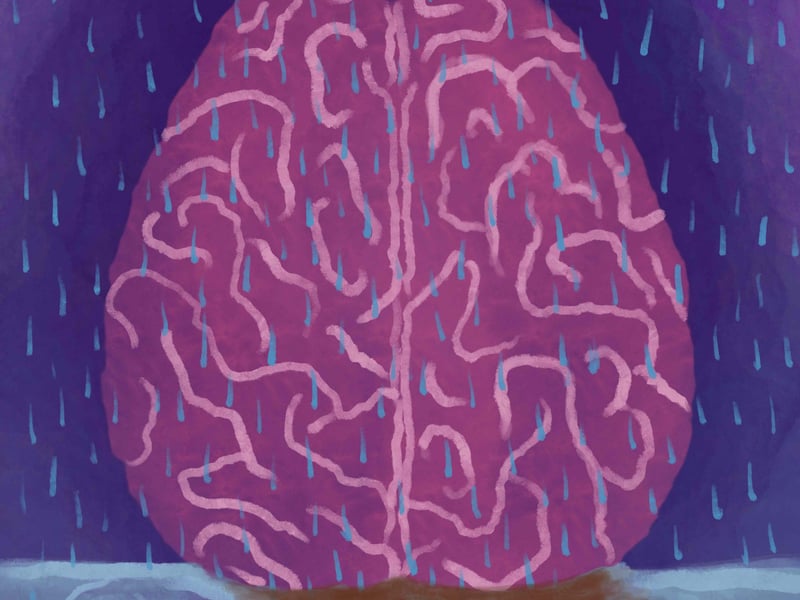
(CN) — Danish scientists say a molecule helps clean the brain when we sleep.
To maintain its health and remove waste buildup from the waking hours, the brain activates the glymphatic system to circulate fluids in the brain and spinal cord, according to a study published Wednesday in Cell. The scientists behind that study identified the molecule responsible for this process: norepinephrine.
The brainstem releases tiny waves of norepinephrine once every 50 seconds during deep sleep. Those waves get blood vessels to contract and generate slow pulsations called vasomotions to create a rhythmic flow, which encourages the surrounding fluid to take the waste away, according to senior author Maiken Nedergaard.
“It’s like turning on the dishwasher before you go to bed and waking up with a clean brain,” Nedergaard, of the University of Rochester and University of Copenhagen, Denmark, said. “We’re essentially asking what drives this process and trying to define restorative sleep based on glymphatic clearance.”
To clear up those ambiguities, the scientists brought in mice.
Lead author Natalie Haugland said via email that the team implanted a tiny recording device in the mice brains so that, when the mice slept or behaved naturally, the team could record fluctuations of cerebrospinal fluid and blood inside the brain in real time. That is how the scientists learned that deep sleep norepinephrine waves in the mice correlated with variations in brain blood volume, indicating that norepinephrine triggers a rhythmic pulsation in the blood vessels.
Following that finding, the team decided to compare the changes in blood volume to brain fluid flow and found the brain fluid flow fluctuations corresponded with changes in blood volume. Haugland thought this meant that norepinephrine compels the vessels to propel the surrounding brain fluid to remove the waste.
“You can view norepinephrine as this conductor of an orchestra,” Hauglund, of the University of Copenhagen and the University of Oxford, said. “There’s a harmony in the constriction and dilation of the arteries, which then drives the cerebrospinal fluid through the brain to remove the waste products.”
However, the scientists found that sleep aids can disrupt the orchestra.
When they gave mice the common sleep aid drug zolpidem — Ambien — they found the norepinephrine waves during deep sleep were 50% lower compared to mice that did not take zolpidem. While the mice that took zolpidem fell asleep faster, the fluid transport into the brain dropped over 30%, causing the scientists to worry about that effect in humans.
“More and more people are using sleep medication, and it’s really important to know if that’s healthy sleep,” Hauglund said. “If people aren’t getting the full benefits of sleep, they should be aware of that so they can make informed decisions.”
It is important to note that the waste removal process in the brain during deep sleep removes toxic proteins that form sticky plaques, which other scientists linked to neurological disorders like Alzheimer’s disease.
The team hopes further study can uncover more details about that link.
They also hope they can figure out how everyone can gain the benefits of a good, deep sleep.
 Follow @kndrleon
Subscribe to our free newsletters
Our weekly newsletter Closing Arguments offers the latest about ongoing trials, major litigation and rulings in courthouses around the U.S. and the world, while the monthly Under the Lights dishes the legal dirt from Hollywood, sports, Big Tech and the arts.