
 Search Articles


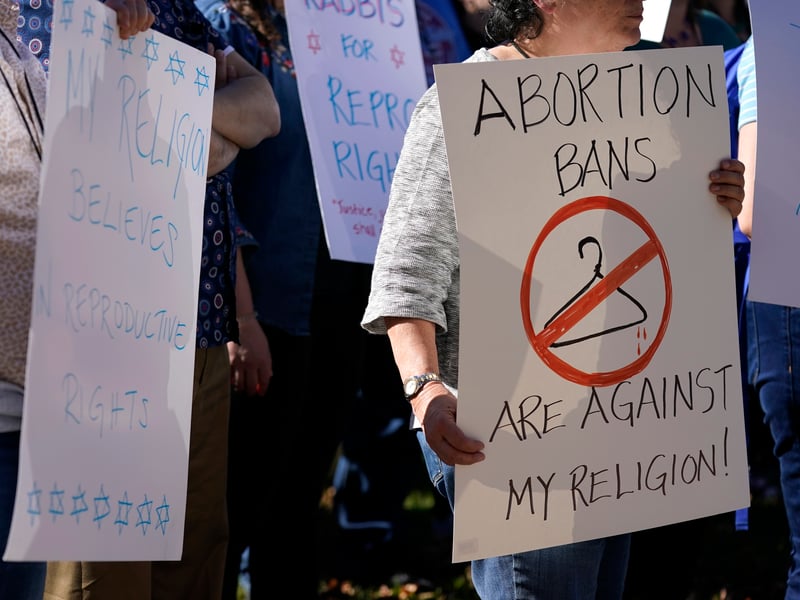
(CN) — The Missouri Supreme Court ruled Thursday that the state’s Republican attorney general improperly interjected himself in an effort to put abortion rights on the ballot.
In a unanimous decision, the state’s high court ruled that Attorney General Andrew Bailey has “a clear and unequivocal duty” to approve State Auditor Scott Fitzpatrick’s language associated with a proposed ballot initiative asking Missouri voters if they want to restore the right to abortion.
“The attorney general was to have performed that task within 10 days of receiving the fiscal notes and summaries from the auditor, a period that expired more than three months ago,” Judge Paul C. Wilson wrote in the 20-page opinion.
Bailey’s refusal to sign off on Fitzpatrick’s language pitted the two Republicans against each other in state court.
Bailey took issue with Fitzpatrick’s cost estimate for the measure, which the state auditor estimated to be $51,000 annually. Bailey claims the true cost could be $51 million annually, warning that the state could lose all federal Medicaid health insurance funding, which is about $12 billion per year.
Bailey’s inaction prompted Dr. Anna Fitz-James, who is represented by the ACLU of Missouri, to file a lawsuit in Cole County claiming Bailey has a “ministerial” duty to sign off on the fiscal note his office compiles for each proposed constitutional amendment.
Cole County Judge Jon Beetem, also a Republican, found in favor of Fitz-James. The state’s high court affirmed that decision.
“This court has often said a ministerial duty is ‘a duty of a clerical nature which a public officer is required to perform upon a given state of facts, in a prescribed manner, in obedience to the mandate of legal authority, without regard to his own judgment or opinion concerning the propriety of the act to be performed,’” Wilson wrote.
Bailey does not plan to pursue the issue.
“We disagree with the court’s decision, as we believe Missourians deserve to know how much this amendment would cost the state, but we will respect the court’s order,” said Madeline Sieren, a Bailey spokeswoman, in a statement.
Fitzpatrick thanked the court for upholding the ballot initiative process.
“As someone who is ardently pro-life, I will vote against these initiatives if they make it to the ballot,” Fitzpatrick told the St. Louis Post-Dispatch. “However, my personal stance cannot compromise the duty my office has to provide a fair assessment of their cost to the state.”
Supporters of the initiative still have to meet the signature requirement to put the issue on the 2024 ballot, which is 8% of the voters in six of Missouri’s eight congressional districts.
That process was interrupted by Bailey’s refusal to approve the cost estimate.
“If the attorney general had complied with his duty to approve the auditor’s fiscal note summaries in the time prescribed, the secretary would have certified the official ballot titles for Fitz-James’ initiative petitions nearly 100 days ago,” Wilson wrote.
The decision requires Bailey to approve the ballot initiative within 24 hours.
But further delays in getting the issue on the ballot could be in the offing. In a separate lawsuit, the ACLU has sued Missouri Secretary of State Jay Ashcroft, claiming the ballot language is misleading and argumentative. Ashcroft is currently the leading Republican candidate to replace Parson when his term expires in 2024.
Anthony Rothert, Director of Integrated Advocacy at the ACLU of Missouri who represented Fitz-James, called on Missouri’s GOP leaders to carry out their duties immediately to give state voters a voice at the ballot box.
“At every level of our judicial system, the courts saw the attorney general’s effort to derail the initiative process for what it was: a deliberate threat to the direct democracy,” Rothert said in a statement. “As obviously unconstitutional as his scheme was, it succeeded in wasting valuable time. If the attorney general and secretary of state are serious about their oaths to the Constitution, they will carry out their duties today, not cause more delay.”
 Follow @joeharris_stl
Subscribe to our free newsletters
Our weekly newsletter Closing Arguments offers the latest about ongoing trials, major litigation and rulings in courthouses around the U.S. and the world, while the monthly Under the Lights dishes the legal dirt from Hollywood, sports, Big Tech and the arts.