
 Search Articles


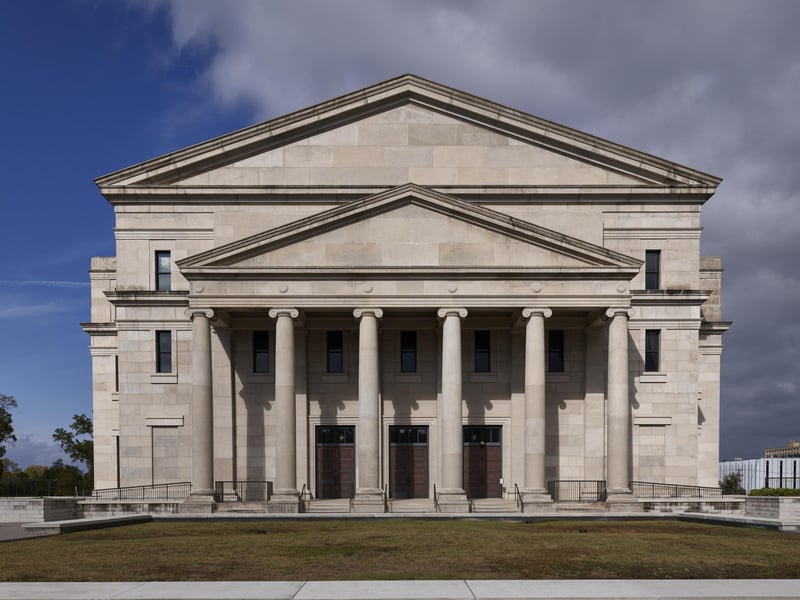
(CN) — Mississippi’s Supreme Court district map violates Section 2 of the Voting Rights Act, illegally diluting the vote of Black residents, a federal judge determined Tuesday.
Mississippi’s constitution divides the state into three Supreme Court districts. Each district elects three justices on a districtwide, at-large basis to eight-year terms. The map at the center of case was enacted in 1987 and has not been changed since. The next election is not scheduled until 2028, but Tuesday’s order prevents the state from using the current map.
Four plaintiffs living in Mississippi’s Supreme Court District 1 claimed the district boundaries used for electing state Supreme Court justices diminished the influence of Black voters in violation of Section 2.
Senior U.S. Judge Sharion Aycock found — based a framework established in the U.S. Supreme Court’s 1986 Thornburg v. Gingles ruling — that the number of Black voters in the district is sufficiently large and geographically compact to constitute a majority in a single-member district, the voters are politically cohesive and the white majority votes sufficiently as a bloc to usually defeat their preferred candidate.
Aycock, a George W. Bush appointee, determined that the racial divide in voting patterns was too extreme and consistent across different types of elections to be explained by party alone. She further found that “race matters” and best explains the divergent voting patterns.
Aycock determined Mississippi has a “long and well-documented history of official discrimination,” that elections in Mississippi remain racially polarized and that socioeconomic disparities tied to past discrimination make it harder for Black candidates and voters to participate fully in the process.
“Race is a significant factor in Mississippi voting patterns,” Aycock wrote in a 105-page ruling, emphasizing that courts must determine whether race is “one of the causes of polarized voting, not the sole cause.”
The judge rejected the state’s argument that the polarization in voting patterns was based on partisanship rather than race. Aycock noted the state never seriously disputed the contention that a reasonably configured Black-majority district could be drawn and she accepted the plaintiffs’ illustrative plans demonstrating as such.
Aycock cited the testimony of 17 witnesses during an eight-day trial in August 2024, including the plaintiffs’ expert, Dr. Byron Orey.
Orey analyzed 19 biracial elections from 2011-2023 — including Supreme Court, Public Service Commission, Transportation Commission and statewide races. The data presented at trial showed “extremely high” cohesion among Black voters, who supported Black candidates at rates between 81% and 96%.
The same data showed “strikingly low” and “extreme” racial polarization in white voting patterns. She noted that the testimony showed white support for Black candidates was consistently below 17% and often in the single digits. This white bloc voting usually resulted in the defeat of the Black-preferred candidate, the judge said.
On the other hand, the state’s justifications for maintaining the 1987 map were considered weak, Aycock wrote, given the availability of alternative plans that complied with traditional redistricting criteria.
“Under the totality of the circumstances, the court finds that Black voters in District 1 have less opportunity than other members of the electorate to participate in the political process and to elect candidates of their choice,” Aycock concluded.
The state had also argued that Section 2 cannot be enforced by private individuals, but Aycock rejected that position because the Fifth Circuit has consistently allowed such suits. The court also emphasized that Section 2 applies not only to legislative elections but also to judicial elections.
Following the principle that redistricting is primarily a legislative task, the court will allow the Mississippi Legislature the first opportunity to enact a new, lawful map. The court will hold a status conference to set a deadline for the legislature to act and to discuss next steps if it fails to do so.
The plaintiffs were represented by attorneys from the American Civil Liberties Union, ACLU of Mississippi, Southern Poverty Law Center, and Simpson Thacher & Bartlett LLP.
In a statement, Jarvis Dortch, the executive director of the ACLU of Mississippi said, “Today’s win is a victory for all Mississippians. Our state succeeds when it embraces its diversity and welcomes all voices. This ruling acknowledges that the current Supreme Court district lines silence too many Black Mississippians. Thanks to this federal court’s decision, Black voters will have a more equal say in who serves on our state’s highest court.”
The case dates back to 2022, when four Mississippi residents — Dyamone White, Derrick Simmons, Ty Pinkins, and Constance Olivia Slaughter Harvey-Burwell — brought a lawsuit against the State Board of Election Commissioners, Governor Tate Reeves, Attorney General Lynn Fitch, and Secretary of State Michael Watson.
Simmons, a plaintiff in the case and also a Mississippi State Senator said, “The court’s decision affirms what we have long known — that our democracy works best when every community has equal representation. This ruling is not just a win for the other plaintiffs and me, but for every Mississippian who believes in the fundamental promise of equal justice under the law.”
In the Mississippi Supreme Court’s history, only four Black justices have served: Reuben V. Anderson, Fred L. Banks, Jr., James E. Graves, Jr., and Leslie D. King.
Each was appointed by a governor rather than elected directly, and all occupied the same seat — District 1, Place 2.
Anderson was appointed in 1985 as the first Black member of the court, Banks followed in 1991, Graves joined in 2001 before later moving to the Fifth Circuit Court of Appeals, and King was appointed in 2011 and continues to serve. Notably, none of their terms have ever overlapped.
The court has nine justices elected from the three districts. They serve eight-year, staggered terms.
 Follow @gabetynes
Subscribe to our free newsletters
Our weekly newsletter Closing Arguments offers the latest about ongoing trials, major litigation and rulings in courthouses around the U.S. and the world, while the monthly Under the Lights dishes the legal dirt from Hollywood, sports, Big Tech and the arts.