
 Search Articles


PHOENIX (CN) — A bill that would exempt Minor League Baseball from abiding by Arizona’s minimum wage requirements just took one step closer to becoming law.
While many players support the bill, activists say it would set a precedent to allow large corporations to skirt voter-approved minimum wage requirements.
In the wake of a $185 million settlement agreement with Major League Baseball over violations of minimum wage laws, minor league players negotiated and signed their first ever collective bargaining agreement with the MLB last year, governing salaries, benefits, transportation and lodging, due process issues and more. Minor league minimum salaries more than doubled on all levels thanks to the agreement, going from $4,800 to $19,800 per year at the lowest level and from $17,500 to $35,800 at the highest level.
Comparatively, Arizona’s minimum wage sits at $14.35 per hour, which equates to about $28,700 annually, assuming 40 hours worked per week for 50 weeks out of the year.
A 2016 ballot initiative called the Arizona Minimum Wage Act, otherwise known as Prop 206, includes time-worked reporting requirements that are at odds with how baseball players typically operate. MLB consultant Meghaen Dell’Artino told the Arizona Senate Finance and Commerce Committee Monday afternoon that tracking hours worked for baseball players is difficult when so much practice and game tape review is done on players’ own time rather than during typical work hours.
“The experience of a minor league baseball player is unique,” Dell’Artino told the committee as they contemplated sending the bill to the house floor. “Neither teams nor players would be well served if players were forced to have their hours tracked, saw their playing or practice time limited, or saw their access to the clubhouse or training facilities limited to the state minimum wage laws.”
That’s why the Major League Baseball Players Association, which now includes all minor league players in bargaining power, sent a letter to the state legislature asking them to support Senate Bill 1093, sponsored by state Senator Sonny Borrelli, a Republican from Lake Havasu. The bill would allow players, while playing in Arizona, to spend however many hours honing their craft as they’d like, and rely on the salary provided to them by their agreement with the MLB rather than count hours in their unorthodox schedules.
“This is not about not paying players a minimum wage,” Dell’Artino told the committee.
She said the average player in the minor leagues makes $110,000 per year. The minimum salary for a major league baseball player is $740,000, and the average major league player makes more than $4 million in a year.
Though no minor league players have spoken out against the agreement or the pending bill, activists say there are deeper issues at play.
“This isn’t about minor league players, this is about all Arizonans,” said Hugo Polanco, a lobbyist for Living United for Change in Arizona. “This is about not creating a precedent that weakens the protections of Prop 206. It is our belief that this does not further the purpose of voter intent.”
Democratic Senator Mitzi Epstein of Tempe agreed.
“It’s so important to protect workers from being exploited,” Esptein said as she voted no.
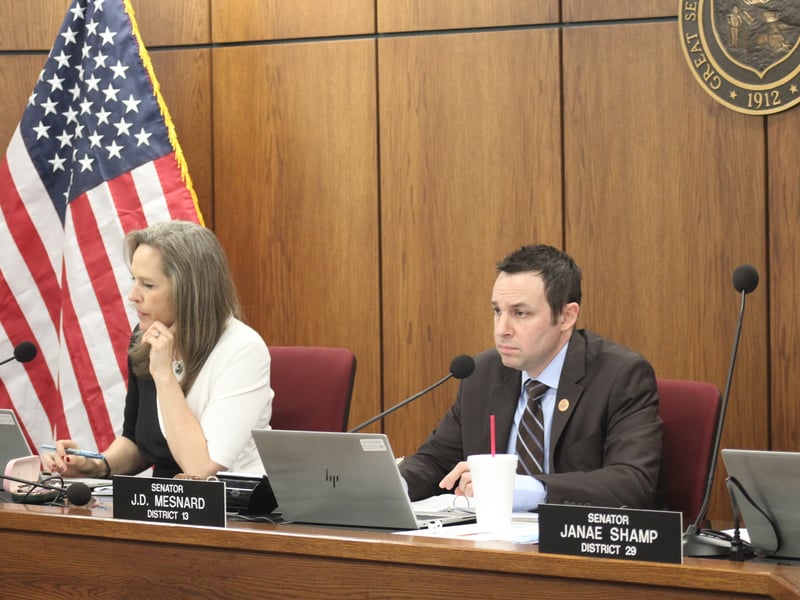
J.D. Mesnard, the Republican Senator from Chandler, said the players should be entitled to whatever they think is the better deal for them. And if they decide to back out of the agreement, he said, Arizona’s minimum wage law will be their safety net.
He added that meddling with an agreement in which both parties are on board would be an “unforced error.”
The bill passed the committee with a 5-2 vote, and will soon head to the Senate floor for a full vote.
Republican Representative Leo Biasucci, also of Lake Havasu, authored a sister bill in the House of Representatives. It passed out of the House Commerce Committee on a 6-4 vote.
 Follow @JournalistJoeAZ
Subscribe to our free newsletters
Our weekly newsletter Closing Arguments offers the latest about ongoing trials, major litigation and rulings in courthouses around the U.S. and the world, while the monthly Under the Lights dishes the legal dirt from Hollywood, sports, Big Tech and the arts.