
 Search Articles


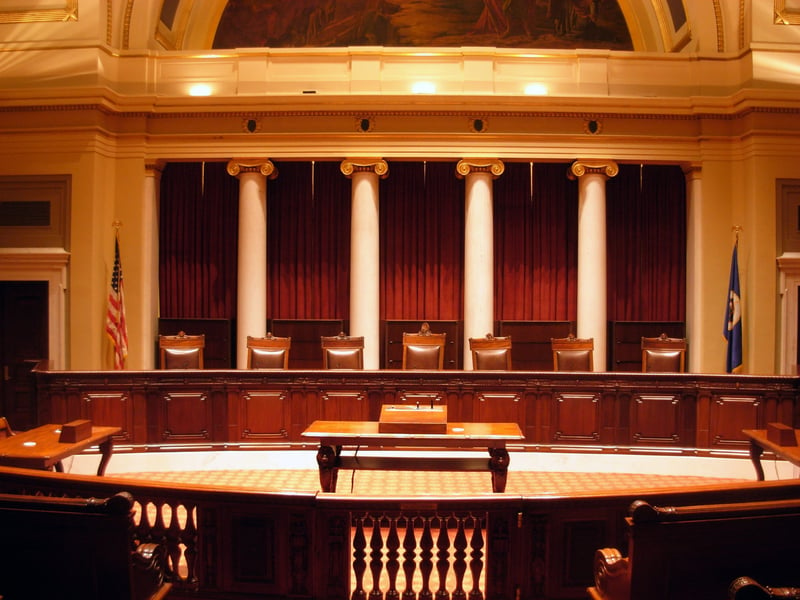
ST. PAUL, Minn. (CN) — A Minnesota woman will have her indecent exposure conviction overturned after the state’s Supreme Court said Wednesday that her actions in the case do not constitute a sexual act.
In its decision written by Minnesota Supreme Court Associate Justice Karl Procaccini, the court found that the mere act of having exposed breasts in public is not enough to warrant a criminal charge.
Police first arrested Eloisa Rubi Plancarte after someone notified authorities she had exposed breasts at a Rochester, Minnesota, gas station in 2021. A lower court later convicted her under Minnesota’s indecent exposure law, which makes it a misdemeanor to “willfully and lewdly” expose one’s body or private parts.
“The language chosen by the Legislature makes clear that — without more — mere exposure of a person’s ‘body, or the private parts thereof,’ is insufficient to prove the lewdness element of indecent exposure,” Procaccini wrote in his opinion.
Assistant Olmsted County Attorney Jim Haase, who represented the state in oral arguments earlier this year, told the court that the intent and other circumstances surrounding an event determine whether it amounts to indecent exposure — even for body parts not typically associated with sexuality.
“Is it the state’s position that this statute could be violated by exposing any body part?” Procaccini asked Haase during oral arguments.
“I would say it’s conceivable,” Haase replied. “I don’t know that it’s determinative of this case.”
At one point, Haase said that a person’s exposed elbow could even be considered indecent exposure.
But Plancarte’s attorney Adam Lozeau argued that the “private parts” referred to in the statute mean genitals, and breasts are not genitals. He added there’s nothing that shows that Plancarte engaged in sexual conduct.
Justices agreed Wednesday with Plancarte’s broader argument and noted that none of Plancarte’s conduct was sexual, a requirement under the “lewd” portion of the law.
The lower court had refused to dismiss the charge after declaring Plancarte was an exhibitionist and derived sexual gratification from showing her breasts in public.
Minnesota’s highest court also disagreed with that sentiment, saying no evidence suggests that.
The fact that Plancarte was charged with indecent exposure three times in a week, a lack of body camera footage showing Plancarte engaging in any sexual conduct and Plancarte’s comments to police about being “a stripper,” and that “Catholic girls [expose their breasts] all the time,” is not evidence that “her conduct in this instance was of a sexual nature,” according to Procaccini.
“At most, Plancarte’s statements speak to her subjective mental state when she was exposing her breasts, which is irrelevant to determining whether her conduct was lewd,” he wrote in the court’s opinion.
During his argument earlier this year, Lozeau told the court that the law is not applied equally because a man would not face the same charge as his client, which would put it at odds with both the U.S. and Minnesota Constitutions.
However, the Minnesota Supreme Court declined to interpret the law’s meaning behind what a private part is or to decide if the law is unconstitutional because its finding fully resolves the case.
Subscribe to our free newsletters
Our weekly newsletter Closing Arguments offers the latest about ongoing trials, major litigation and rulings in courthouses around the U.S. and the world, while the monthly Under the Lights dishes the legal dirt from Hollywood, sports, Big Tech and the arts.