
 Search Articles


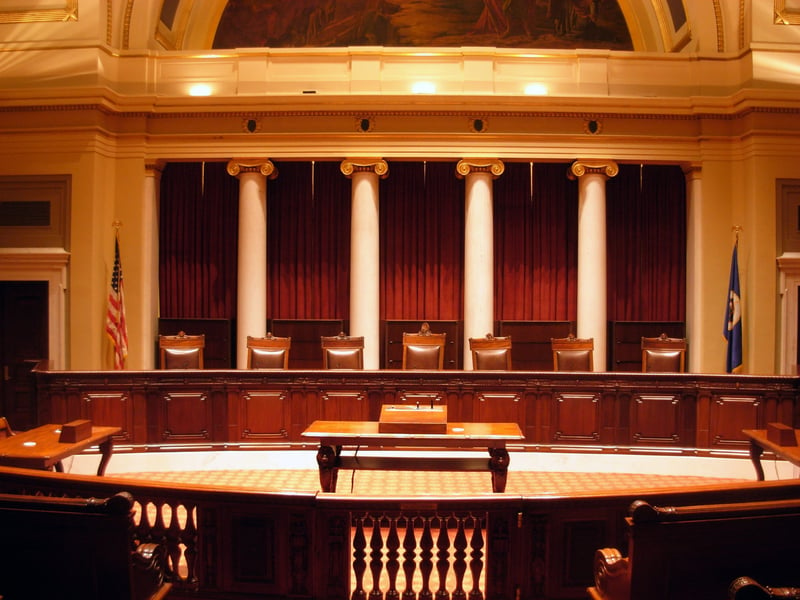
ST. PAUL, Minn. (CN) — In a case that could redefine the Minnesota Whistleblower Act, the state Supreme Court on Tuesday examined whether “good faith” is enough to protect an employee from being fired.
In April 2023, a supervisor asked Laurissa Wredberg, a sexual assault counselor with the nonprofit Canvas Health, to reveal the whereabouts of a minor-victim she was counseling. The minor was the subject of an arrest warrant for a probation violation — specifically, for being a runaway.
Wredberg refused, arguing she was prohibited from sharing information without the minor’s consent. According to Wredberg, her employer pressured her twice more and eventually fired her for refusing to disclose the information.
Canvas Health claims it was simply trying to manage the case of a missing minor under its supervision, and that Wredberg’s refusal to share the minor’s whereabouts put them at risk of future harm. Canvas argues Wredberg wasn’t being asked to disclose information publicly or testify in court, and internal communication does not trigger the statutory privilege.
“There was no allegation that Ms. Wredberg was required to disclose records, that she was asked to testify in a court proceeding, or that she was asked to give a statement to the police,” Canvas Health’s attorney, James Sherman of Wessels Sherman in Minneapolis, told the court.
Wredberg brought her complaint to a state court under the Whistleblower Act, asserting she was unlawfully terminated for prioritizing her duty of confidentiality over her supervisor’s demand to assist law enforcement. Her claim hinged on a specific statute that a counselor may not be allowed to disclose victim information.
The lower court found and the state Court of Appeals affirmed that statute only applies to sexual assault counselors testifying in court proceedings, not everyday workplace interactions.
Pamela Spera, Wredberg’s attorney, told the justices the state has a compelling interest in protecting a victim’s privacy through the sexual-assault-counselor privilege, as held previously.
“In failing to protect a sexual assault counselor from losing her job for safeguarding privileged information, the Court of Appeals fails to protect the vital confidentiality between the victim and the counselor,” Spera said, warning the lower courts’ decision could create a “chilling effect.”
The justices were visibly conflicted during Tuesday’s hearing, expressing a “gut feeling” concern that counselors should be protected while admitting a strict reading limits the statute to courtroom proceedings.
“It feels off to us that a sexual assault counselor doesn’t have confidentiality obligations to a client,” Justice Karl Procaccini said. “We don’t want to draft a rule of law that closes the door on this case.”
Justice Paul Thissen expressed confusion over whether Wredberg has to be legally correct in her interpretation of the statute to be protected, or if the “good faith belief” that disclosing the information would violate the law is enough to back her claim.
Spera said Wredberg’s belief was bolstered by the court’s 2022 ruling In Re Hope Coalition, in which justices spoke in broad terms about the state’s interest in protecting counselor-victim privacy.
Chief Justice Natalie Hudson was quick to point out that case was decided in the context of a criminal proceeding, unlike Wredberg’s case.
“Context is everything,” she said. “Context is so important, when I read your brief and I hear your arguments here today, you seem to be taking that context away.”
Wredberg argues even if the court finds she has no claim under the Whistleblower Act, public policy exists protecting sexual assault counselors’ confidentiality, and the state has a compelling interest to uphold that privacy.
Sherman warned the court expanding professional privileges to cover everyday workplace communications would turn judges into “litigators” and disrupt the state’s employment-at-will doctrine. He said Wredberg’s misinterpretation of her privilege completely isolates Canvas from information about its client, including the location of the missing minor, for whom it bore responsibility as a mental health care provider.
“Public policy exception to employment-at-will needs to be clearly defined somewhere,” Sherman said. “You can’t just go make it up all willy-nilly.”
The justices noted other privacy laws — like the federal law restricting release of medical information and the Minnesota Health Records Act — specifically include law enforcement exceptions mandating disclosure of information, suggesting that an “absolute shield” does not exist for sexual assault counselors.
The eventual ruling will likely hinge on whether the court chooses a narrow path, finding the relevant statute is strictly a rule for testimony and court proceedings, or a broad path protecting an employee’s “good faith” belief in victim privacy.
Subscribe to our free newsletters
Our weekly newsletter Closing Arguments offers the latest about ongoing trials, major litigation and rulings in courthouses around the U.S. and the world, while the monthly Under the Lights dishes the legal dirt from Hollywood, sports, Big Tech and the arts.