
 Search Articles


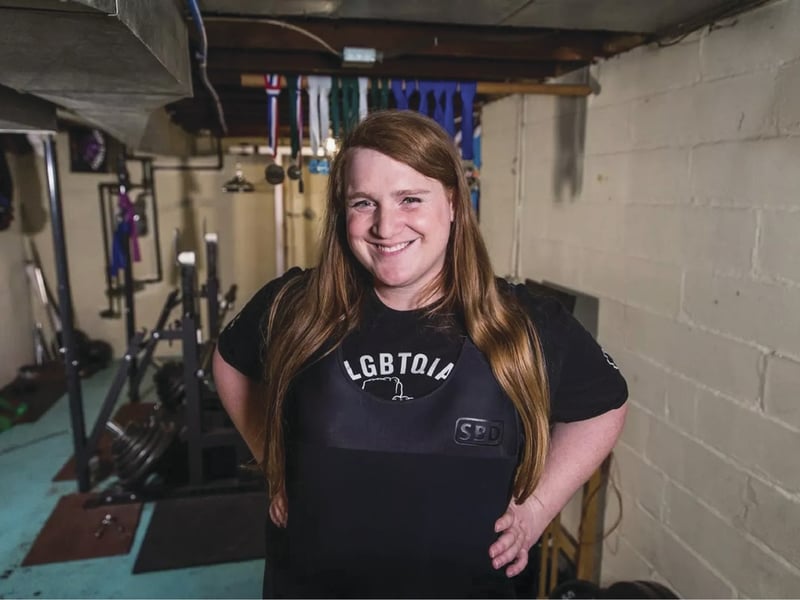
(CN) – The Minnesota Supreme Court, in a unanimous ruling Wednesday, sided with a transgender athlete who claimed that USA Powerlifting violated the state’s Human Rights Act by banning her from competing in its women’s division.
JayCee Cooper sued USA Powerlifting, a national organizer of weight lifting competitions also known as USAPL, in 2021.
Cooper filed the lawsuit in response to a December 2018 email, in which the USAPL’s committee chair told her, “Male-to-female transgenders are not allowed to compete as females in our static strength sport as it is a direct competitive advantage.”
Cooper appealed to the state’s high court after an appeals court partially overturned a state court’s ruling in her favor.
Chief Justice Natalie Hudson, who wrote the unanimous 35-page opinion, said there is “no genuine dispute that USA Powerlifting discriminated against Cooper because of her transgender status. Although USA Powerlifting lacked a formal, written transgender participation policy at the time of its initial communication with Cooper, the record establishes — and the parties do not dispute — that USA Powerlifting’s policy at the time of the decision was to categorically exclude transgender women from competing in the women’s division.”
While the court sided with Cooper in her public accommodations discrimination claim, it did not rule against USAPL’s defense that it has a legitimate business purpose under the Minnesota Human Rights Act in denying males who have transitioned into women from competing in the women’s division.
Hudson wrote, “USA Powerlifting submitted substantial expert testimony and scientific evidence that transgender women who have gone through male puberty have a significant strength advantage. At the same time, Cooper asserts that allowing transgender women to compete in the women’s division would not change the nature of the sport of powerlifting … we conclude that there is a genuine dispute of material fact as to whether USA Powerlifting’s blanket policy has a legitimate business purpose.”
USAPL has a transgender participation policy on its website. It reads, in part, “Through analysis the impact of maturation in the presence naturally occurring androgens as the level necessary for male development, significant advantages are had, including but not limited to increased body and muscle mass, bone density, bone structure, and connective tissue. These advantages are not eliminated by reduction of serum androgens such as testosterone yielding a potential advantage in strength sports such as powerlifting.”
The decision drew reactions from both sides.
Jess Braverman, legal director at Gender Justice and one of Cooper’s attorneys, lauded the ruling.
“This ruling sends a clear and powerful message: transgender people have a right to enjoy public spaces in Minnesota like sporting events, restaurants, and movie theaters, free from targeted discrimination,” Braverman said in a statement on the Gender Justice website. “This decision is a historic victory for fairness, equity, and the fundamental rights of all Minnesotans.”
Representative Kristin Robbins, R-Maple Grove, who’s seeking the Republican nomination for governor, called the decision part of “Tim Walz and Keith Ellison’s war against women” in a post on X.
“This isn’t complicated,” Robbins said in her post. “Men are men, and women are women, and no decision by a court can undo obvious biological reality. As Governor, I will make it abundantly clear that Minnesota supports and protects women and girls in their bathrooms, locker rooms, and sports competitions.”
The case has been remanded to Ramsey County, where Cooper originally filed her lawsuit, for further consideration.
While the ruling was unanimous, Justice Theodora Gaïtas did not take part in the decision. Gaïtas joined the court in August.
 Follow @joeharris_stl
Subscribe to our free newsletters
Our weekly newsletter Closing Arguments offers the latest about ongoing trials, major litigation and rulings in courthouses around the U.S. and the world, while the monthly Under the Lights dishes the legal dirt from Hollywood, sports, Big Tech and the arts.