
 Search Articles


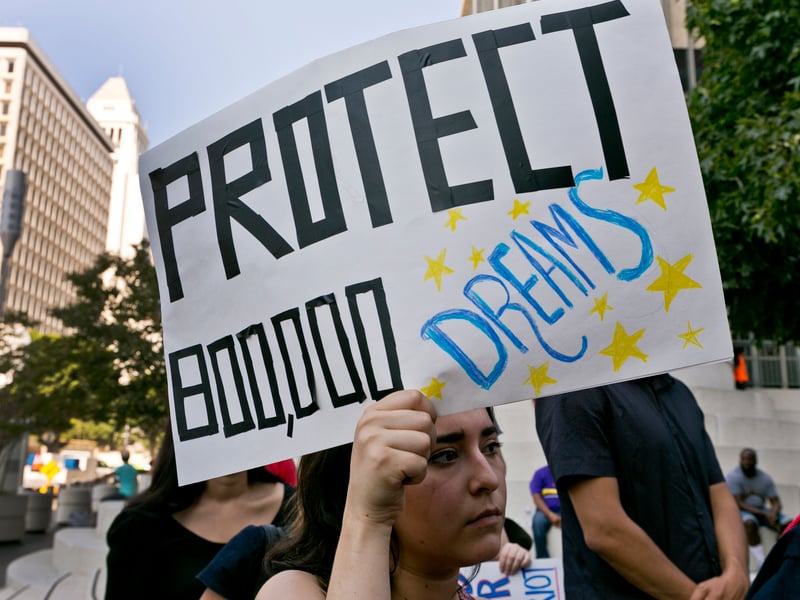
(CN) — Minnesota’s offer of in-state tuition rates and tuition aid to Minnesota residents who are living in the United States illegally does not violate federal law, a federal judge has held.
A federal immigration statute bars immigrants living illegally in the United States from receiving state post-secondary education benefits based on residence unless a citizen or a national of the United States is also eligible for such benefits without regard to their residence.
Minnesota law allows in-state tuition and tuition aid for students who attended high school within the state for three or more years, graduated from a state high school or attained the equivalent high school degree. In the case of students without lawful immigration status, Minnesota requires the student to provide documentation that they have applied to obtain lawful immigration status if such a federal process exists.
In June 2025, the federal government sued the state in federal court arguing that Minnesota’s statutes discriminate against U.S. citizens and violate the supremacy clause of the U.S. Constitution, which holds that when federal and state laws are in conflict, federal law prevails.
In her ruling issued March 27, U.S. District Judge Katherine Menendez, a Joe Biden appointee, found Minnesota’s statutes are not preempted by the federal law and she dismissed the federal government’s complaint with prejudice. The judge also dismissed Minnesota Governor Tim Walz and Minnesota Attorney General Keith Ellison as defendants as they do not have enforcement authority over the Minnesota statutes, leaving just the Minnesota Office of Higher Education as defendant.
Minnesota Attorney General Keith Ellison praised the decision.
“Today, we defeated another one of Donald Trump’s efforts to misconstrue federal law to force Minnesota to abandon duly passed state laws and become a colder, less caring state,” Ellison said. “The Minnesota Legislature decided that it’s a necessary investment for our state to do everything we can to encourage a more educated workforce, and that kids who have grown up here and succeeded in attending and graduating from Minnesota high schools should be eligible for in-state tuition at our public colleges and universities.”
Since then, he said, “young people have seized on this opportunity to get a college education and pursue the American dream in our state, and that’s a beautiful thing for them, for our workforce needs, and for the long-term health of all Minnesotans.”
Menendez focused on two provisions of the federal statute as applied to the Minnesota residency statute, saying that for the resident tuition statute to be preempted by the federal law, it must conflict with both provisions of the federal law by providing for eligibility on the basis of residence in Minnesota andby excluding non-Minnesotans on the same grounds.
“So, if either of the clauses do not preempt the resident tuition statute, then the Minnesota law is not preempted, and dismissal of the action is required. If both clauses of [the federal statute] preempt the resident tuition statute, then the motion fails,” Menendez wrote.
The federal statute’s provision barring in-state tuition eligibility based on residence does not preempt Minnesota’s statute, because it requires only that the student have attended a Minnesota high school for three or more years and graduated from a Minnesota high school, or achieved the equivalent, she wrote. It does not require the student to be a Minnesota resident.
“As defendants point out, there are multiple ways a student could qualify for resident tuition without residing in Minnesota,” Menendez wrote, “such as attending a Minnesota high school while living in a neighboring state, or by attending a Minnesota boarding school.”
Menendez also said the second provision of the federal statute, which bars tuition benefits for an alien unlawfully in the country unless the same benefit is available to a citizen or national of the United States without regard to residence, does not apply to Minnesota’s statutes because Minnesota does not determine eligibility for in-state tuition based on residence.
“No state can be allowed to treat Americans like second-class citizens in their own country by offering financial benefits to illegal aliens,” U.S. Attorney General Pamela Bondi said when the original suit was filed last year. “Federal law prohibits institutions of higher education from providing postsecondary education benefits to aliens that are not offered to U.S. citizens. These laws blatantly conflict with federal law and thus are unconstitutional under the supremacy clause of the U.S. Constitution.”
 Follow @roxalaird16
Subscribe to our free newsletters
Our weekly newsletter Closing Arguments offers the latest about ongoing trials, major litigation and rulings in courthouses around the U.S. and the world, while the monthly Under the Lights dishes the legal dirt from Hollywood, sports, Big Tech and the arts.