
 Search Articles


ST. PAUL, Minn. (CN) — The Minnesota Court of Appeals ruled Monday that the state’s sovereign immunity applies in dog-bite cases, regardless of whether it is the dog’s “owner” under a statute governing bites.
The appeals court overruled a district court’s finding that the Minnesota Legislature waived the state’s sovereign immunity by passing a statute which assigned liability to “the owner” of a biting dog without directly addressing whether this included the state.
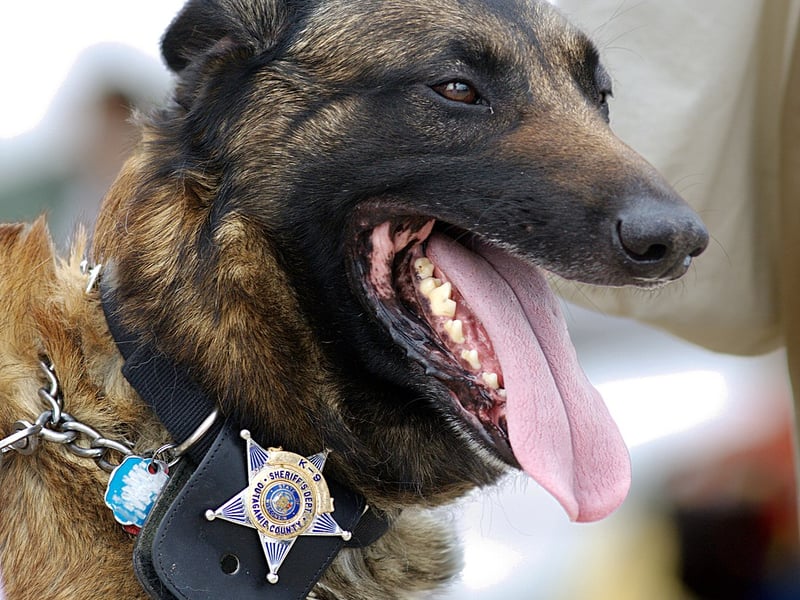
The underlying case involved Cristina Berrier, a car dealership employee who was bitten by a state trooper’s K-9 while the trooper’s patrol vehicle was being serviced. Berrier suffered serious and permanent injuries from the bites.
At arguments held in the southern Minnesota city of Rochester this April, attorneys for the Minnesota State Patrol argued that simply assigning liability to a dog’s owner did not waive existing immunities.
Attorney Grant Borgen, representing Berrier, argued that it should, and pointed out that cities and other municipalities’ immunities had been found to be waived under the statute.
“‘The owner’ is a definite and ascertainable person,” Borgen said at oral arguments. “If you own the dog, you are responsible for the bite.”
The appeals court sided with the state police force in its Monday morning decision.
“We agree with the state patrol that the district court erred when it applied the same analysis that the supreme court rebuffed in Nichols to conclude that the dog-bite statute waives sovereign immunity,” Justice Theodora Gaitas wrote in the court’s opinion, name-checking a 1988 case which abolished sovereign immunity for common-law tort claims but acknowledged that the doctrine could still be used to shield the state from liability created by statutes – and that that liability could be waived by the legislature.
Gaitas added, “The legislature’s use of the term ‘the owner’ – a term that could include the state – was, alone, insufficient evidence of the legislature’s intent to waive sovereign immunity.”
Arguments that attempted to distinguish the dog-bite statute from those discussed in Nichols , the judge wrote, were similarly unconvincing.
Speaking Monday afternoon, Borgen said he and his client were disappointed by the decision and planned to petition the Minnesota Supreme Court for further review.
“I think the issue is one that’s ripe to be decided by the Supreme Court… the failure to follow Hyatt was disappointing,” Borgen said, name-checking the decision that made cities and counties potentially liable for dog bites. “The decision by the Court of Appeals creates this distinction, where if a dog bites you and it’s owned by the state, it’s not liable, and if it’s owned by a county or a city it is.”
While Borgen couldn’t outline a timeline for the appeal, the attorney said it would be coming “in due course.”
Subscribe to our free newsletters
Our weekly newsletter Closing Arguments offers the latest about ongoing trials, major litigation and rulings in courthouses around the U.S. and the world, while the monthly Under the Lights dishes the legal dirt from Hollywood, sports, Big Tech and the arts.