
 Search Articles


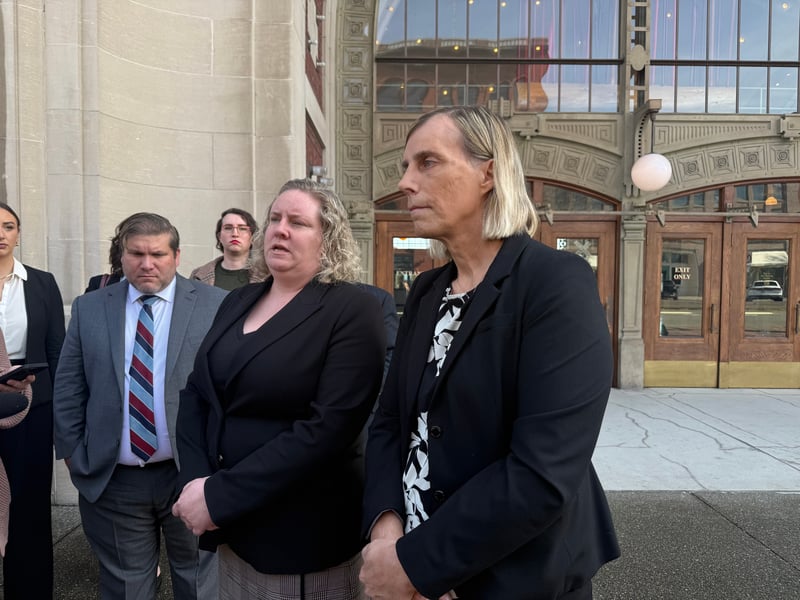
(CN) — A federal judge on Thursday ruled a lawsuit brought by transgender service members will continue while the Trump administration appeals his block of efforts to ban trans people from serving in the military.
U.S. District Judge Benjamin H. Settle declined the government’s motion to stay proceedings during its appeal, stating he found it “highly unlikely” that the Ninth Circuit would find a basis for terminating the lawsuit.
The George W. Bush appointee said it was instead likely the appellate court would remand the case for further proceedings and ruled the parties may proceed with limited discovery in the case, over the White House’s protests that it would result in “needlessly duplicative” litigation.
“I do not view the proposed discovery contemplated by each party as very burdensome or presenting a hardship. Accordingly, the motion to stay is denied,” Settle ruled from the bench.
He did say he wanted guidance from the Ninth Circuit on the merits of his earlier injunction before moving forward to more important stages of the lawsuit, like summary judgment.
Settle’s order marked a minor win for the trans service members behind the lawsuit, who argued a stay would allow the government to continue discharging them and all other trans people from the military in accordance with President Donald J. Trump’s related executive order.
“Such an outcome would undermine, not serve, the ends of justice, especially given this court’s determination that plaintiffs are likely to succeed on their claim that their discharge under these policies is unconstitutional,” the service members argued in court documents.
Additionally, the service members argued that discovery is necessary at this point in the suit, because they still have no information about the scope of the military’s separations outside their own experience — voluntary or involuntary.
“We have no insight as to the proceedings or involuntary separations affecting other members, including the plaintiff Gender Justice League,” Omar Gonzales Pagan of Lambda Legal, who represents the plaintiffs, told Settle.
The individual plaintiffs also said that all but one of them have been “forced or coerced” to select a voluntary separation with the military since the ban was issued.
Under the Pentagon’s new policy, the service members claim they can opt for either voluntary separation — which made them eligible for a higher lump sum separation payment — or to be subjected to involuntary separation proceedings for a reduced lump sum separation payment.
A Justice Department lawyer said almost all of the plaintiff service members have been placed on administrative absence or will likely be placed on administrative absence soon.
“At this point there’s been no involuntary separations, either noticed or that have occurred, at this time,” attorney Jared Littman told Settle.
The judge gave the parties until Sept. 17 to meet and confer on the scope and schedule for limited discovery.
Neither side responded to requests for comment.
A week after he took office in January, Trump banned transgender people from the U.S. armed forces via an executive order that directed officials to separate current transgender service members from the military within 30 days.
The plaintiffs, seven active-duty service members who faced imminent discharge under the new policy, sued the government in early February.
Secretary of Defense Pete Hegseth, in a Feb. 27 memo, gave Defense Department leaders one month to identify troops diagnosed with or being treated for gender dysphoria.
Siding with transgender military members who sued over the policy, Settle ruled in March that the policy “imposes a de facto blanket prohibition on transgender service,” and blocked the government from implementing both the executive order and the ensuing “Hegseth policy.”
The judge also blocked “any other attempt to identify and separate transgender service members for being transgender” nationally.
Under the Hegseth policy, only transgender people who have never transitioned or attempted to transition and who are willing to serve in their birth sex are eligible for an exemption.
The government has argued that the policy doesn’t discriminate on sex or transgender status — the basis upon which the plaintiffs are pursuing equal protection claims — but rather it discriminates against people who have or have had gender dysphoria.
Previously the Trump administration argued allowing transgender people to serve in the military would impair unit cohesion, good order and discipline, which Settle noted was unsupported by the evidence in the record.
Settle’s injunction came two days after the plaintiffs appeared before a packed courtroom in Tacoma, Washington, to implore Settle to block the policy, arguing it blatantly discriminates against trans people and falsely declares them unfit for service.His decision also followed a March 18 preliminary injunction issued by U.S. District Judge Ana Reyes in the District of Columbia finding Trump’s order wrongfully targets trans soldiers and effectively disqualifies all trans people from service unless they successfully receive an exemption.
The government appealed Settle’s injunction in late March and moved to stay proceedings in August, Oral arguments for the appeal are currently scheduled before a Ninth Circuit panel on Oct. 20.
The military executive order is a renewed effort by the Trump administration to pick up where it left off during Trump’s first term when he instituted a similar ban, reversing a policy allowing open service to transgender people instituted by the Obama administration.
Federal courts blocked the first Trump ban until the Supreme Court gave it the green light in 2019. Biden repealed the ban shortly after he took office in 2021.
Subscribe to our free newsletters
Our weekly newsletter Closing Arguments offers the latest about ongoing trials, major litigation and rulings in courthouses around the U.S. and the world, while the monthly Under the Lights dishes the legal dirt from Hollywood, sports, Big Tech and the arts.