
 Search Articles


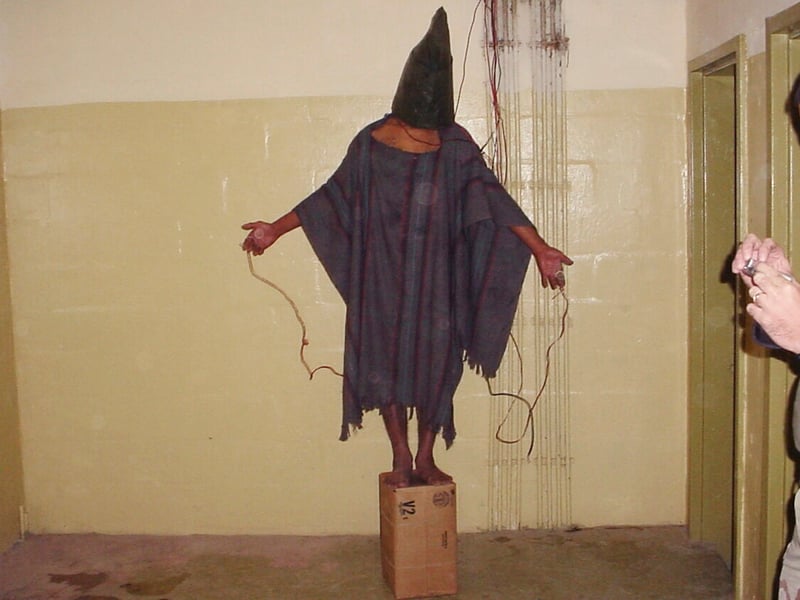
RICHMOND, Va. (CN) — A military contractor asked a Fourth Circuit panel Tuesday to annul $42 million in damages awarded to tortured Iraqi detainees.
The claims stem from CACI Premier Technology’s contract with the U.S. to assist with interrogations at Abu Ghraib prison outside of Baghdad, Iraq, in 2003. The three plaintiffs — middle school principal Suhail Al Shimari, fruit vendor Asa’ad Zuba’e and journalist Salah Al-Ejaili — described being tortured there. The U.S. never charged the men with any crimes.
The detainees sued under the Alien Tort Statute. This 1789 law allows noncitizens subjected to violations of international law to bring a case in U.S. federal court, including against a U.S. corporation like Reston, Virginia-based CACI, when there is a sufficient connection to the United States.
The lower court dismissed direct abuse and aiding-and-abetting claims but allowed the detainees to pursue a conspiracy claim.
CACI argues the bulk of the conduct happened overseas and the lower court wrongly created a cause of action even though Congress had not enacted statutory claims for plaintiffs to pursue under the Alien Tort Statute.
Attorney John O’Connor of Steptoe, representing CACI, directed the panel to the Supreme Court’s decision in Nestlé v. Doe , a class action against Nestlé and Cargill for aiding and abetting child slavery in Ivory Coast by purchasing from cocoa producers that use child slave labor from Mali. The Supreme Court ruled that a plaintiff in an Alien Tort Statute case must establish that the conduct occurred within the United States.
“Lower courts cannot reject Supreme Court precedents with which they disagree,” CACI wrote in its brief. “Plaintiffs never identified any CACI employees in the United States who supposedly joined the conspiracy on which the judgment rests, when they joined the supposed conspiracy, or why.”
Attorney Baher Azmy from the Center for Constitutional Rights, representing the detainees, countered that the United States controlled Iraq during 2003 when it installed the Coalition Provisional Authority, established to govern Iraq during the U.S. occupation.
“There was no foreign law in existence at the time,” Azmy said. “It immunized CACI from Iraqi law and required that U.S. law apply.”
Azmy also said CACI engaged in numerous conspiratorial activities in the continental United States, including the recruitment of employees and evidence of reports sent to the U.S. headquarters from CACI employees on the ground.
O’Connor challenged Azmy, stating that the reports he cited do not reference the treatment of detainees. U.S. Circuit Court Judge Stephanie Thacker used the opportunity to admonish O’Connor for what she found to be numerous inaccurate citations in CACI’s brief.
“Since you brought up citations, there are a number of citations that don’t appear to be accurate,” the Barack Obama appointee said, pointing to an inaccurate quote in the brief. “I’m just bringing it up since you mentioned that we should look closely at citations.”
Next, CACI argued the lower court improperly created a cause of action, a role it feels is better suited for Congress.
“A substantive cause of action has to be filled in either by Congress or the courts, and the Supreme Court’s been pretty clear about which of those it ought to be,” O’Connor said. “It ought to be Congress."
The detainees argue that the lower court judge acted within the bounds of the Alien Tort Statute by recognizing a cause of action for torture. The statute authorizes federal courts to identify specific claims under widely accepted international norms, as federal common law.
CACI asserts that the statute cannot apply to claims arising from the United States’ conduct of war.
“The district court’s rulings placed itself and plaintiffs in the position of passing on the propriety of the Army’s wartime interrogation operations and interrogation techniques,” CACI wrote.
Senior U.S. Circuit Court Judge Henry Floyd, a George W. Bush appointee, disagreed.
“Where there is a significant violation of international norms, why is it that the court can’t touch that?” Floyd asked. “For two centuries, domestic law has recognized the law of nations."
News outlets broke the story of the torture of Iraqi prisoners in 2004, leaking photographs and video showing naked, hooded detainees posed in human pyramids, prisoners on leashes and widespread sexual assault. A military investigation ended with the courts-martial of low-level military personnel and the finding that CACI worked to “soften up” prisoners before their interrogations.
During the trial, Al Shimari claimed CACI and its co-conspirators threatened him with dogs, deprived him of food and subjected him to electric shocks. Zuba’e testified that the detainers beat his genitals with a stick and held him in a solitary cell in conditions of sensory deprivation for almost a year.
The hearing marks the sixth time the Fourth Circuit has analyzed the case since the detainees filed in 2008. CACI remains a top government contractor, having accepted $226 million in October 2024 to provide expertise to the U.S. Southern Command Operations.
U.S. Circuit Court Judge Marvin Quattlebaum, a Donald Trump appointee, completed the panel. Attorneys representing the detainees and CACI did not respond to requests for comment.
Subscribe to our free newsletters
Our weekly newsletter Closing Arguments offers the latest about ongoing trials, major litigation and rulings in courthouses around the U.S. and the world, while the monthly Under the Lights dishes the legal dirt from Hollywood, sports, Big Tech and the arts.