Search Articles



WASHINGTON (CN) — Blue slips are back on the menu for Senate Democrats this week, after President Donald Trump tapped a pair of nominees for federal district courts in states where lawmakers can for the first time use the age-old tradition to block his court picks.
But Democrats from Michigan and Pennsylvania — where the president is hoping to install two new federal judges — have so far been tight-lipped about whether they will stand in the way of the White House’s judicial agenda.
Trump on Monday night announced that he’d nominated Antonio Pozos, a former federal prosecutor and partner at D.C.-based law firm Faegre Drinker Biddle & Reath, to a vacancy on the U.S. District Court for the Eastern District of Pennsylvania. The president also tapped Michael Martin, also a longtime federal prosecutor in Michigan, to join the bench on the Great Lakes State’s eastern district court.
In the year since he returned to office for a second term, Trump has largely stayed away from selecting nominees for judicial vacancies in states with two Democratic senators, opting instead to fill out courts in Republican-controlled states. That calculus appears to be at least partly informed by the Senate blue slip, a century-old tradition under which senators can reject certain judicial nominees in their home states.
Michigan and Pennsylvania, however, each have at least one Democratic senator — meaning that Pozos and Martin are the first of the president’s nominees to be vulnerable to blue slip objections. But lawmakers from both states refused to say Tuesday whether they’d oppose Trump’s federal court picks.
Pennsylvania Senator John Fetterman, the lone Democrat from the Keystone state, said he hadn’t worked with the White House on any judicial nominees and that he hadn’t made any decision on whether to return a blue slip for Pozos.
“Nothing at the moment,” he told Courthouse News.
Michigan Senator Gary Peters, a senior Democrat who has announced plans to retire at the end of his term, declined to comment on Martin’s nomination. A spokesperson for Senator Elissa Slotkin, meanwhile, offered little insight into the Michigan delegation’s thinking.
“Senators Peters and Slotkin have continued a decadeslong bipartisan committee process to interview and vet qualified candidates with ties to their communities in Michigan to fill judicial and U.S. attorney vacancies,” said the spokesperson. “Now that Mr. Martin has been nominated by President Trump, the Senate will continue its process of carefully reviewing his nomination.”
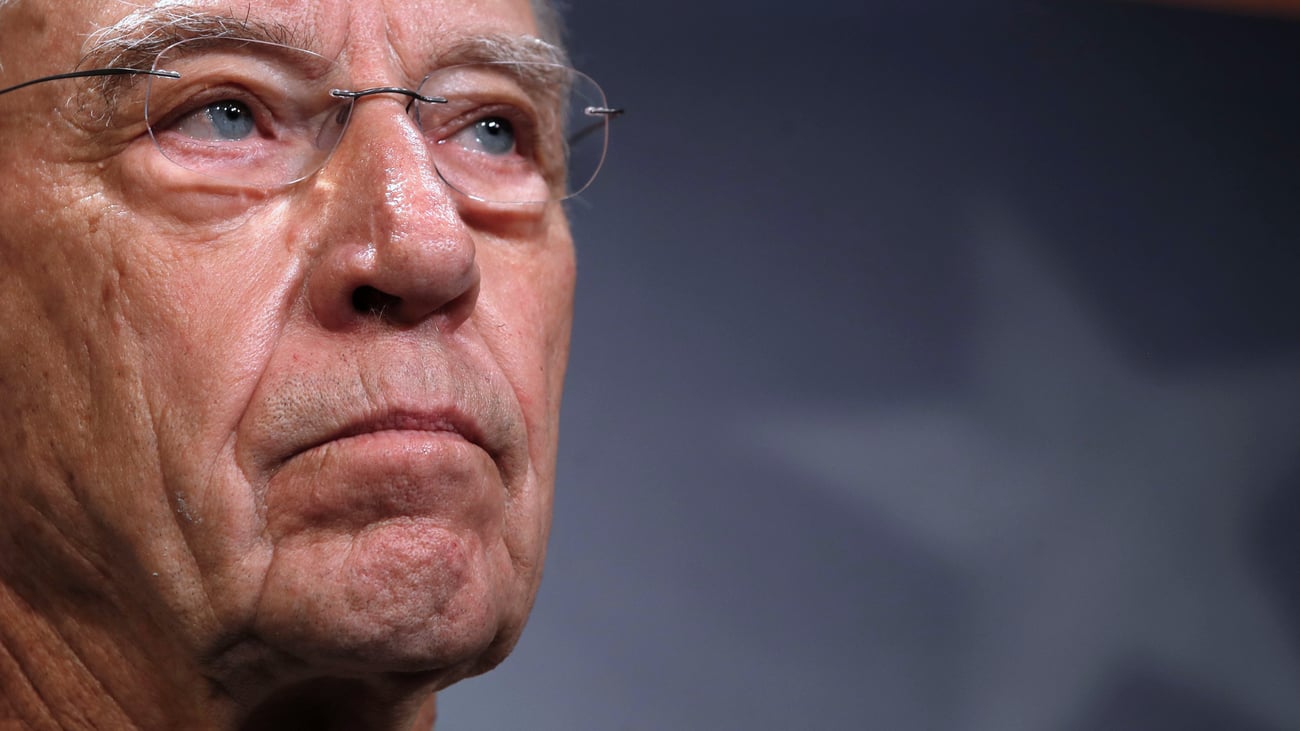
And Iowa Senator Chuck Grassley, chairman of the Senate Judiciary Committee, had similarly little information about whether Democrats planned to oppose either of Trump’s federal district court picks. As of Tuesday afternoon, the White House had yet to formally send either nominee to the Senate.
The Democratic senators from Michigan and Pennsylvania wield significant power over the president’s nominees for these vacancies — their refusal to provide blue slips for either nominee would serve as an effective veto and doom their Senate confirmation.
Trump has long been vocally critical of the blue slip tradition, which during his second term has been effectively deployed by Senate Democrats to block several of his U.S. attorney nominees. The president has called the practice a “hoax” and claimed that it is unconstitutional. He’s repeatedly called on Grassley to abandon blue slips entirely.
But the long-serving Iowa Republican has so far stood firmly by the tradition, arguing that any nominee who fails to capture blue slip support from their home state senators would invariably fail to clear a confirmation vote in the full Senate. The lawmaker has previously criticized Trump for comments in which the president referred to senators using their blue slip authority as “sleazebags.”
Defenders of the blue slip practice have long held it up as a last vestige of bipartisanship in the Senate. They argue that it provides an input mechanism for lawmakers in the minority party who may be held accountable by voters for poor decisions made by a president’s judicial nominees.
But critics, including Trump, claim the tradition has become more a tool of partisan obstruction.
The Senate’s adherence to blue slips has also changed in recent years. Under the first Trump administration, Grassley said that the Judiciary Committee would no longer honor the practice for circuit court nominees. He contended at the time that the blue slip should not serve as a blanket veto for appellate judges whose jurisdiction often covers more than one state.
Both parties have continued to honor blue slips for federal district court nominees and U.S. attorney appointments. Grassley, for his part, has said that he has no plans to change that approach.
 Follow @BenjaminSWeiss
Subscribe to our free newsletters
Our weekly newsletter Closing Arguments offers the latest about ongoing trials, major litigation and rulings in courthouses around the U.S. and the world, while the monthly Under the Lights dishes the legal dirt from Hollywood, sports, Big Tech and the arts.