
 Search Articles


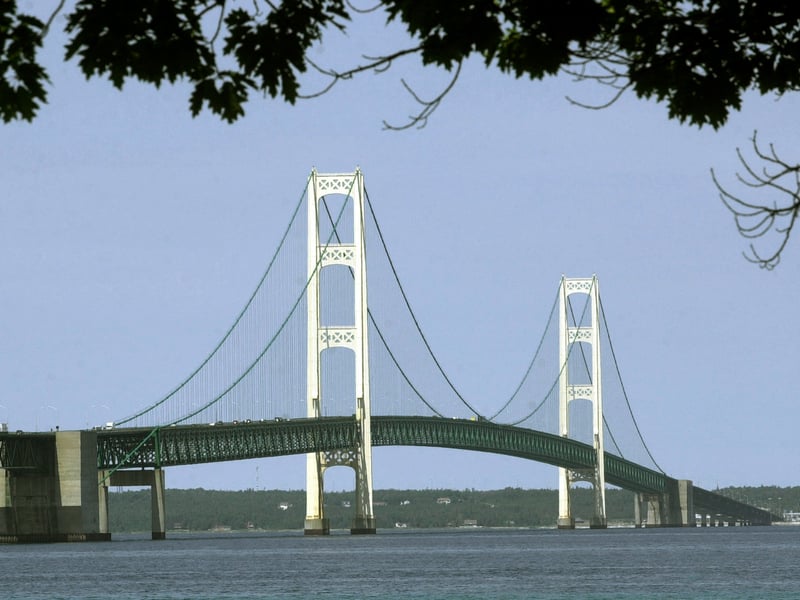
CINCINNATI (CN) — Sovereign immunity protects Michigan and requires dismissal of a lawsuit brought by the operators of an international oil and natural gas pipeline threatened with closure, the state argued Tuesday before a Sixth Circuit appeals panel.
Enbridge Energy LP sued Michigan Governor Gretchen Whitmer and Scott Bowen, Director of the Michigan Department of Natural Resources in 2020, after the officials ordered the Line 5 pipeline to cease operations, claiming violations of the parties’ operating agreement.
Michigan claimed an easement granted to Enbridge in 1953 for the use of the “bottomlands” in the Straits of Mackinac was invalid and that continued use of the land violates the public trust doctrine, which imposes a duty on the state to manage natural resources like the Great Lakes for the benefit of the public.
Assistant Michigan Attorney General Daniel Block argued Tuesday that an exception established by the 1997 U.S. Supreme Court case Idaho v. Coeur d’Alene Tribe of Idaho applied because Enbridge essentially filed a quiet title action that implicated the state’s ownership interest in the bottomlands.
“The argument here is that the state is violating the U.S. Constitution, isn’t that different?” U.S. Circuit Judge Karen Moore, a Bill Clinton appointee, asked the attorney.
“It is not,” Block answered.
U.S. Circuit Judge Raymond Kethledge, a George W. Bush appointee, continued the line of questioning.
“Quiet title relates to the whole bundle of property rights, not just one stick. This seems like one stick,” he said.
“There are numerous instances of Coeur d’Alene being applied to easement cases,” the attorney said. “The right to permanently maintain a structure on property without permission essentially removes ownership from the state.”
“The easement has been exercised for 70 years, has the state been functionally without title to the Straits of Mackinac for 70 years?” Kethledge asked.
“For all practical purposes, Enbridge asserts an ownership interest,” Block said. “They have a pipeline there. The most significant sticks in the bundle are the right to exclude trespassers and make sure nothing is built there illegally.”
Attorney Mark Savignac of the Washington, D.C. firm Steptoe LLP argued on behalf of the pipeline operators and stressed to the court Michigan retains ownership of the bottomlands in the straits.
“Michigan owns the land, they can regulate the land based on federal restrictions, but all they really care about is shutting down this pipeline,” he said.
U.S. Circuit Judge Rachel Bloomekatz, a Joe Biden appointee, asked Enbridge’s attorney about the injunctive relief sought by his client.
“The scope of the injunction is extraordinarily broad,” she said. “How do you square the breadth of the injunction while leaving enough room for state sovereignty?”
“The scope of the injunction comes from the scope of the federal law regulating the pipeline,” Savignac answered. “There is no argument that the physical presence of the pipeline precludes any activity, including commerce, fishing or kayaking.”
Kethledge asked about invasive mussel species found in the lake and whether the state could undertake efforts to remove them from the pipeline.
“I bet they’re all over that thing,” he quipped.
Savignac told the panel Michigan would be within its rights to remove the mussels as long as it did not interfere with the operation of the pipeline.
The state’s attorney also urged the panel to apply the Younger abstention doctrine and require the federal court to stay litigation until the state court action between the parties is concluded.
But Savignac told the court it lacked jurisdiction to raise the issue on its own, while also pointing out Whitmer was not a party to an original state court lawsuit filed by the Michigan attorney general.
Whitmer and Bowen had also previously filed a state court lawsuit to revoke the easement, but Enbridge refused to shut down the pipeline and argued its equipment met all safety requirements.
U.S. District Judge Robert Jonker, a George W. Bush appointee, had denied the state’s motion to dismiss in July 2024 and determined sovereign immunity did not apply.
Jonker applied the doctrine established by the U.S. Supreme Court in ex parte Young , which allows a court to grant injunctive relief and require state actors to comply with federal law. Jonker also ruled then that the facts of the present case are “not remotely close to” Coeur d’Alene .
No timetable has been set for the court’s decision.
Michigan revoked the 1953 easement after a Department of Natural Resources investigation reportedly revealed decades of inaction to maintain and improve the pipelines to protect against oil leakage into the Great Lakes.
The pipeline has spawned a litany of legal actions, not just in Michigan, but also in neighboring Wisconsin, where regulators recently approved the first set of permits to reroute a portion of the pipeline around a tribal reservation.
 Follow @kkoeninger44
Subscribe to our free newsletters
Our weekly newsletter Closing Arguments offers the latest about ongoing trials, major litigation and rulings in courthouses around the U.S. and the world, while the monthly Under the Lights dishes the legal dirt from Hollywood, sports, Big Tech and the arts.