
 Search Articles


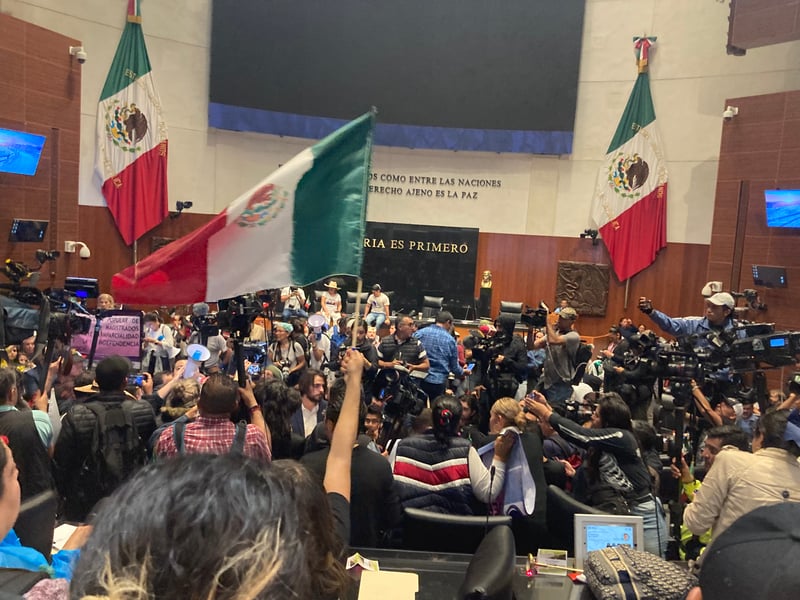
MEXICO CITY (CN) — A sweeping judicial reform passed through Mexico’s Senate in the early morning hours on Wednesday after a 12-hour debate that was relocated because protesters rushed past police blockades and forced their way into the live session.
The reform, which passed with an 86-41 vote, will change Mexico’s Constitution in a historic judicial overhaul that will see every one of Mexico’s 7,000 judges elected through popular vote by 2027. It was the final act of President Andrés Manuel López Obrador’s political career before President-elect Claudia Sheinbaum takes office on Oct. 1.
“We are going to move forward in Mexico and we are going to set an example for the world,” López Obrador said in his Wednesday morning press conference.
Sheinbaum congratulated the senators as well.
“With the election of judges, magistrates and ministers, the administration of justice in our country will be strengthened. The regime of corruption and privileges is becoming a thing of the past and a true democracy and the rule of law are being built,” she posted Wednesday morning on X.
The earlier session on Tuesday was marred by missing senators and claims of false arrest and extortion. Though missing during the first session reportedly due to health problems, National Action Party Senator Miguel Ángel Yunes Márquez was present at the alternative site and voted against the reform. As an opposition party member, his vote was crucial, giving it the two-thirds majority of 86 votes it needed to pass.
“The judgement has been approved, amending, supplementing and repealing various provisions of the constitution of Mexico. We have fulfilled our duties to the people of Mexico,” Senate President Gerardo Fernández Noroña said Wednesday morning directly after the vote was counted.
According to López Obrador, the new judicial reforms would help reduce corruption and make choosing a judge more equitable and democratic.
Judicial candidates would be nominated by the three branches of government, then vetted by an evaluation committee before a lottery system finally selects the candidate to be voted on by citizens.
The reform would also create a system of anonymous judges to hear organized crime cases, reduce the number of Supreme Court justices from 11 to 9 and reduce their terms from 15 to 12 years.
The concept of “blind judges” dealing with organized crime — where neither party will know who the judge of their case is — is an attempt to root out extortion and corruption.
Critics say limiting the judicial branch’s independence could lead to pandering to politicians and organized crime, and the concept of “blind judges” will only lead to unaccountability, increasing vulnerability to criminals’ influence.
As a final step the reform must be ratified by at least 17 of Mexico’s 32 states, a easy hurdle to return to the executive branch and become law. The states of Oaxaca and Tamaulipas have already ratified the reform.
Thousands of judicial workers have been on strike since Aug. 19. They were joined by the National Supreme Court of Justice of the Nation, which stopped its daily activities on Sept. 3 in solidarity.
Norma Piña, president of the Supreme Court, in a live broadcast on Sept. 5 outlined her own alternative proposal for judicial reform and released a press release arguing against the reform. “The demolition of the judiciary is not the way to make the profound and necessary changes to build peace, justice and reparation that Mexico needs so much,” Piña said in the proposal.
The Supreme Court has attempted to block the reform, however, and still may try to do so, though this has no precedent in Mexico.
Judicial workers initially protested outside the Palace of Justice building. When the reform passed the lower house on Sept. 4, protesters camped out for days outside the Senate building, blocking off main avenues.
Subscribe to our free newsletters
Our weekly newsletter Closing Arguments offers the latest about ongoing trials, major litigation and rulings in courthouses around the U.S. and the world, while the monthly Under the Lights dishes the legal dirt from Hollywood, sports, Big Tech and the arts.