
 Search Articles


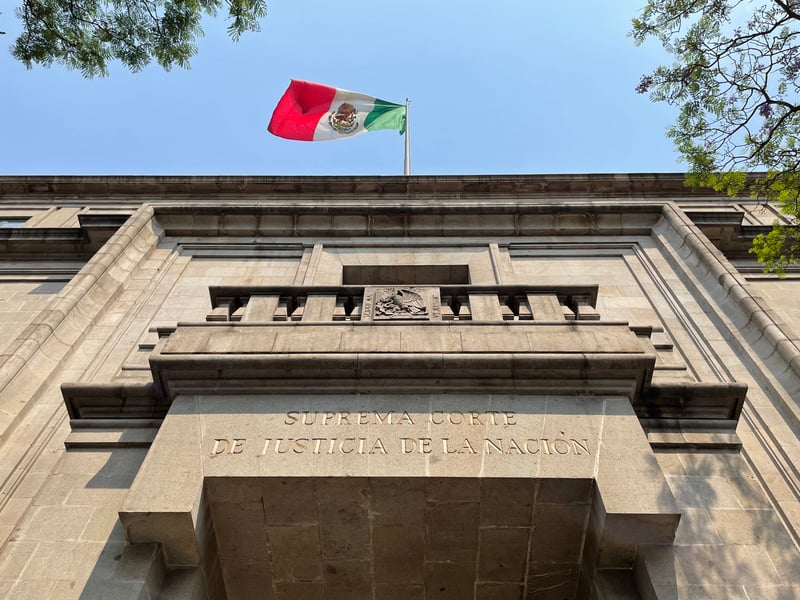
MEXICO CITY (CN) — A ruling from Mexico’s Supreme Court Wednesday ended a monthslong deadlock of the country’s national transparency agency.
The court ruled that the National Institute for Access to Information (INAI) can hold plenary sessions with four, rather than the constitutionally required five, commissioners, allowing it to resume its primary function of reviewing appeals to information access requests.
While free to carry out a number of duties during the deadlock, the INAI had been unable to fulfill this primary task since April after the Senate failed to fill vacant seats on the agency’s board of commissioners.
Both the Mexico Constitution and federal law require a quorum of five of the board’s seven commissioners for the board to legally hold plenary sessions. Three seats on the board remain empty.
With one justice absent, the five-justice lower courtroom of the Supreme Court voted 3 - 1 to allow the INAI to get back to work with the four commissioners currently on the board. The scandal-prone Justice Yasmín Esquivel Mossa was the one dissenting vote. Justice Loretta Ortiz Ahlf was not present at Wednesday’s hearing.
It is “unfeasible to paralyze the functioning of the autonomous constitutional body that guarantees the rights of access to information and protection of personal data due to a contingent issue related to the lack of timely appointment of three commissioners,” the court said in a statement following the ruling.
The ruling does not change Mexican law or amend the Constitution, but rather serves as a temporary suspension of the quorum requirement until the Senate fills the empty seats.
A Senate spokesperson referred Courthouse News to a post on X, the platform formerly known as Twitter, by Senate Majority Leader Eduardo Ramírez, who said “we will continue building the necessary consensuses for this and other unresolved matters.”
President Andrés Manuel López Obrador’s ruling Morena party holds a 46.4% majority in the Senate, with the remaining seats divided up among seven other parties and independent senators.
The 145-day stalemate has lead to a backlog of over 8,200 pending information request appeals, according to INAI chief commissioner Blanca Lilia Ibarra.
The ruling was “a clear sign of the value of the system of checks and balances of the Mexican state and the commitment of the high court to constitutional democracy,” she said in a statement to Courthouse News.
She expects the INAI to resume normal functions once a formal notification of the ruling is presented next week.

Gabriel Espinoza, head of the agency’s department of data protection analysis, called the Supreme Court’s ruling a “great advance” but said that the backlog “will definitely be a huge challenge, as it entails not only issuing the decisions on those appeals, but also making the authorities comply with them.”
The ruling “undoubtedly favors” access to information in Mexico, he said, adding that the court nullified what was an incentive for government agencies to withhold information.
Still, the controversy is not over, Espinoza said, urging the Supreme Court to force the Senate to fill the vacancies.
Political analyst Carlos Bravo Regidor said “it was about time” that the INAI be allowed to go back to work.
The ruling “is yet another signal that the Supreme Court has become the leading force in resisting the process of democratic backsliding the López Obrador administration as embarked Mexico on,” he said.
Journalists likewise hailed the decision as a critical advance, not only for members of the media, but also for civil society and citizens at large.
“This will allow us to once again get transparency from government institutions on matters of what is being done with the country’s resources,” said Verónica Santamaría, an environmental journalist based in Mexico City.
Over 185 journalists and 80 civil society organizations issued a statement in May demanding that the Senate fill the vacant seats on the INAI’s board.
While she praised the court as being “very well-balanced,” it came as “no surprise” to Santamaría that the one dissenting vote came from Justice Esquivel Mossa.
The justice became embroiled in a scandal earlier this year after an ethics panel at Mexico’s National Autonomous University found that she had plagiarized her undergraduate thesis. She has also been accused of plagiarizing her doctoral thesis.
 Follow @copycopeland
Subscribe to our free newsletters
Our weekly newsletter Closing Arguments offers the latest about ongoing trials, major litigation and rulings in courthouses around the U.S. and the world, while the monthly Under the Lights dishes the legal dirt from Hollywood, sports, Big Tech and the arts.