
 Search Articles


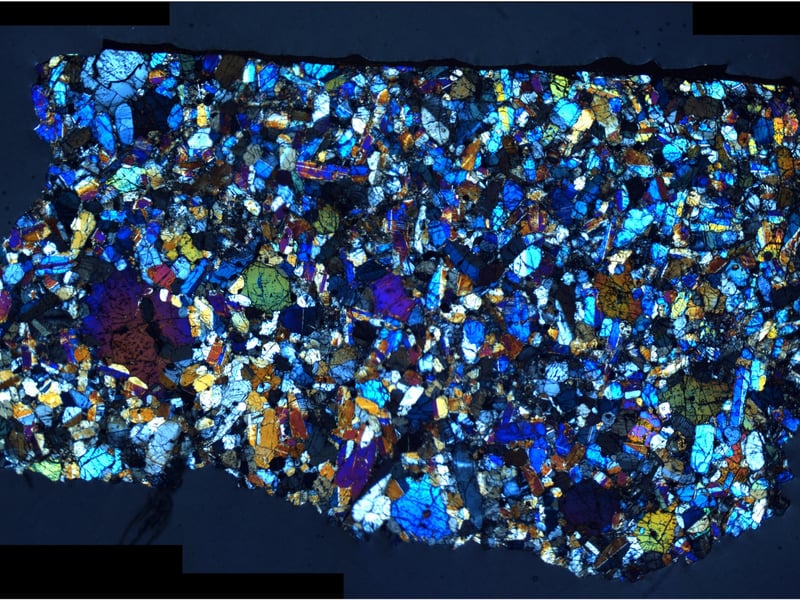
(CN) — Martian meteorites not only enhances our understanding of Mars but also offer valuable comparisons to Earth’s geological history, aiding future exploration and research on both planets, according to a study published Friday.
Scientists uncovered these insights into the planet’s formation and evolution using meteorites collected from Antarctica and Africa, which formed 1.3 billion years ago and later were ejected from Mars.
The findings, published Friday in Science Advances, also provide precise data that can inform recent NASA missions like InSight, Perseverance, and the Mars Sample Return, said James Day, the study’s lead author and a professor of geosciences at the University of California San Diego’s Scripps Institution of Oceanography.
“Martian meteorites are the only physical materials we have available from Mars,” Day said in a press release announcing the study. “They enable us to make precise and accurate measurements and then quantify processes that occurred within Mars and close to the Martian surface.”
Day and his team focused on meteorites from the same Martian volcano, known as nakhlites and chassignites.
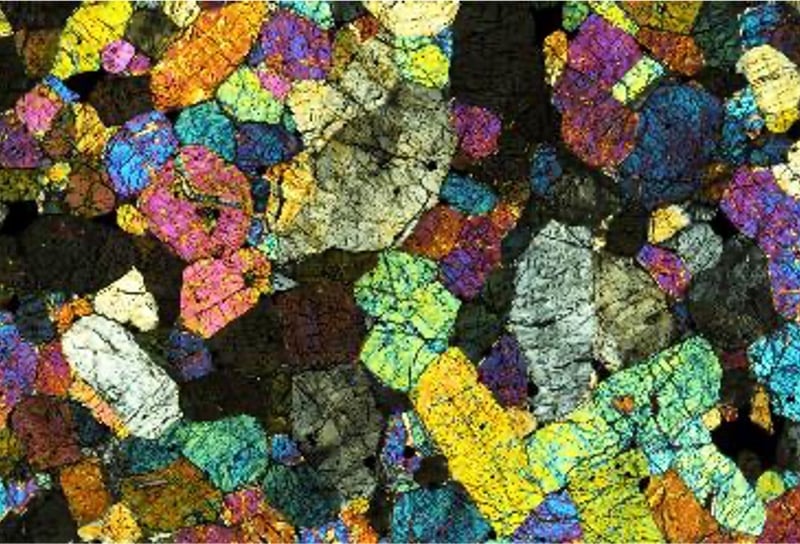
About 11 million years ago, a large meteor impact on Mars sent these rocks into space; eventually, they landed on Earth. The earliest reports of the meteorites discovered by humans were in 1815 in Chassigny, France, and in 1905 in Nakhla, Egypt.
More have since been discovered in places like Mauritania and Antarctica. Scientists could pin their origin to Mars because the meteorites are relatively young and have distinct compositions of oxygen compared to Earth.
Nakhlites are basaltic, similar to lavas erupting in Iceland and Hawaii today, and rich in clinopyroxene. Chassignites are made almost exclusively of olivine.
On Earth, basalts form much of the crust, especially under oceans, while olivines are abundant in the mantle. The same is true on Mars.
The team found that these rocks are related through a process known as fractional crystallization within the volcano. They also showed that some molten nakhlites incorporated portions of the crust near the surface, interacting with Mars’ atmosphere.
“By determining that nakhlites and chassignites are from the same volcanic system and interacted with Martian crust altered by atmospheric interactions, we can identify a new rock type on Mars,” Day said.
The unique chemical makeup of nakhlites and chassignites reveals details about Mars’ layers. They indicate an upper crust altered by the atmosphere, a complex deeper crust and a mantle with plumes reaching up from deep within Mars.
This suggests the early Martian interior melted to produce distinct volcanoes: Nakhlites and chassignites formed similarly to recent eruptions in places like Oahu, Hawaii, Day explained. Newly formed volcanoes press down on the planet’s mantle and generate tectonic forces that produce more eruptions.
“Mars’ volcanism has incredible similarities and differences to Earth,” Day said. “With the existing collection of Martian meteorites, all volcanic in origin, we are able to better understand Mars’ internal structure.”
Subscribe to our free newsletters
Our weekly newsletter Closing Arguments offers the latest about ongoing trials, major litigation and rulings in courthouses around the U.S. and the world, while the monthly Under the Lights dishes the legal dirt from Hollywood, sports, Big Tech and the arts.