
 Search Articles


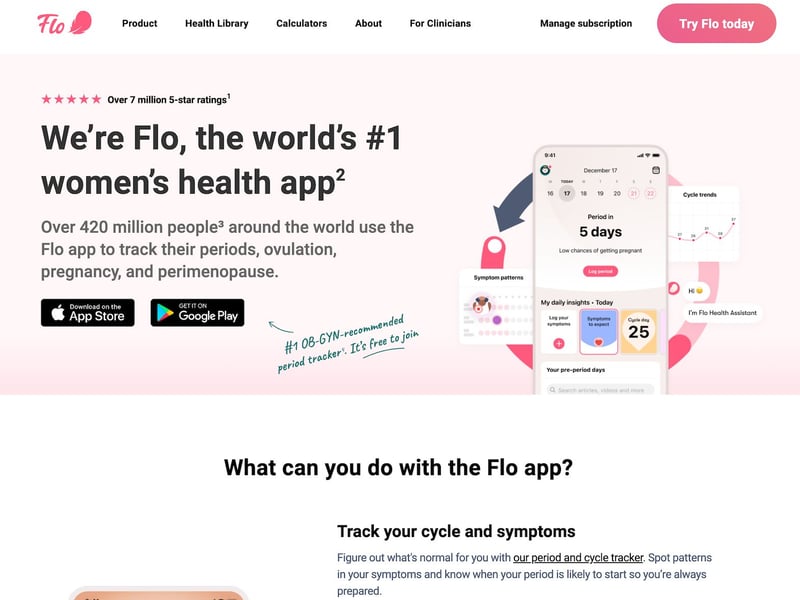
SAN FRANCISCO (CN) — A federal judge signaled Thursday he would grant tentative approval of a $56 million settlement in a class action that accused the period tracking app Flo of sharing users’ highly sensitive information with third parties.
“Overall, it seems fine, though an argument could be made it’s way too little,” U.S. District Judge James Donato, a Barack Obama appointee, said.
A class of app users sued Flo Health in 2021, claiming the company was improperly sharing personal identifying information and private health data with third parties, including Facebook (now known as Meta), Google, ad analytics company AppsFlyer and defunct analytics company Flurry.
Google reached a settlement in principle with the class in July. Flurry settled with the users in March, and the class voluntarily dismissed its claims against AppsFlyer in 2022. In May, Donato preliminarily approved the plaintiff’s $3.5 million settlement with Flurry.
In August, a jury found that Meta violated the California Invasion of Privacy Act when it intentionally recorded the sensitive health information of millions of women through Flo following a two-week trial. Flo settled mid-trial and admitted no wrongdoing.
Under the agreement, Google will pay $48 million and Flo Health will pay $8 million. Compensation will be available for class members who entered menstruation or pregnancy information into the Flo app in the U.S. between November 2016 and February 2019.
Carol C. Villegas of New York-based Labaton Keller Sucharow LLP, an attorney for the plaintiffs, estimated there are between 12 and 13 million members in the nationwide class, with between 1.4 and 1.6 million from California.
In Thursday’s hearing, Donato seemed skeptical of the settlement administrator’s estimated claims rate of 6%, saying that the single-digit expectation was not a triumph, but a “failure,” and questioned parties on how to get the rate into the “high double digits.”
Villegas said the “goal is to get the claims rate as high as possible,” adding that the plaintiffs are working with Flo to contact as many potential class members as possible. So far, she said, Flo had provided just over 3 million user email addresses, as well as names and IP addresses, to help find claimants’ contact information. The plaintiffs are also teaming up with a third-party company to “enrich” the data and collaborating with Meta to get IP addresses and other information to get contact information.
Potential class members will receive an email with instructions on how to obtain the settlement funds. The settlement notice will also be advertised on the Flo Health app and social media, including Facebook, Instagram, Pinterest and YouTube. However, the plaintiffs said Flo objected to posting the settlement notice on TikTok.
“TikTok is where everyone is,” Donato remarked. “It’s like giving print notice but skipping the New York Times.”
Brenda R. Sharton of Dechert LLP, an attorney for Flo, responded that the company was concerned about fraud on TikTok, calling it a “point of pain.” She said that the group’s founder was particularly worried about fraudulent posts about fertility and misstatements or impersonations of Flo.
“It’s a particularly sensitive channel that they wanted to exclude. The other channels hit the same demographics,” she said.
Donato seemed skeptical, but said he would allow Flo to file additional information to prove it’s “radioactive” on TikTok.
“You’re going to have to show me it’s more than one or two uncomfortable or embarrassing things your founder didn’t like,” he said. “I’m just taken aback by hobbling notice from one of the most popular platforms the world has seen.”
After the hearing, plaintiff attorney Diana J. Zinser of Spector Roseman and Kodroff, P.C., told Courthouse News that “we’re looking forward to revising the notice plan in accordance with Judge Donato’s wishes” and “we believe that the goal is to reach as many class members as possible.”
The average recovery is expected to be $25 to $96 per claimant, Villegas added. California claimants will receive double the recovery of those out of state due to the California claims surviving summary judgment.
The plaintiffs’ attorneys in the case requested an award of no more than 33.3% of each settlement amount, plus a maximum of $3.6 million for litigation costs. Plaintiffs may request up to $155,000 to cover their time and costs related to class representation.
Attorneys for Flo declined to comment.
Representatives for Google did not immediately respond to a request for comment.
Following this summer’s trial, Donato indicated that Meta may have to pay nearly $8 billion in damages to Flo app users.
The plaintiffs have proposed damages of $5,000 per class member — the amount of statutory damages allowed per violation of the California Invasion of Privacy Act.
 Follow @mhattridge_
Subscribe to our free newsletters
Our weekly newsletter Closing Arguments offers the latest about ongoing trials, major litigation and rulings in courthouses around the U.S. and the world, while the monthly Under the Lights dishes the legal dirt from Hollywood, sports, Big Tech and the arts.