
 Search Articles


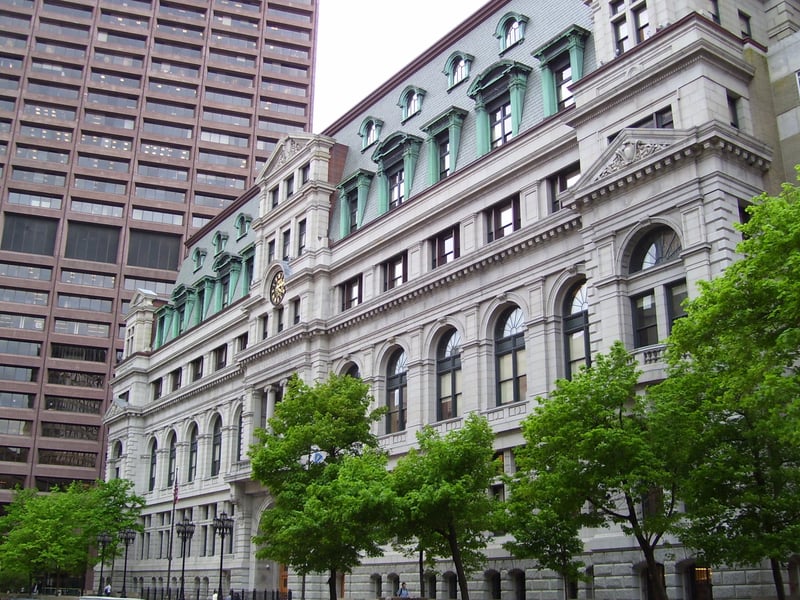
BOSTON (CN) — A man who had a few beers with a friend in a parked vehicle on a camping trip told the Massachusetts Supreme Court on Friday that it was ridiculous for police to have arrested him for “drunk driving,” since he wasn’t driving. But the justices weren’t so sure.
Michael Wurtzberger and James Noble rented a U-Haul in September 2021 to go on a fishing trip. Police found them illegally parked at a Cape Cod beach where they had apparently been staying for several days, living out of the van.
Wurtzberger, who admitted drinking four beers and was surrounded by several open vodka bottles, was in the driver’s seat with the keys in the ignition. The engine wasn’t running but the radio was on.
Police arrested him for “operating a motor vehicle under the influence” and he was sentenced to 3½ years in jail due to prior DUI convictions. On appeal, Wurtzberger insisted that he wasn’t “operating” anything.
The Massachusetts drunk driving law doesn’t define “operating,” and the justices suggested that they wanted to use this case to update a century of case law to reflect 21st-century realities.
“Suppose a homeless family is parked in a parking lot,” suggested Justice Scott Kafker. “The transmission is on because it’s cold. And they’re drinking.”
“That would be a conviction,” insisted assistant district attorney Rose-Ellen El Khoury.
“It’s their home,” Kafker objected. “Is there a way to improve our case law so we don’t punish the homeless person?”
“Tell us how we can improve our ‘operation’ jurisprudence,” Justice Frank Gaziano urged Wurtzberger’s lawyer, Genevieve Henrique.
Henrique gave examples of other states that have changed their interpretations. “Arizona looks to whether there was an actual threat to the public. Maryland considers whether a vehicle was used as a stationary shelter.” She also cited cases from Alabama, Illinois, New Jersey and Utah.
In addition, she said, the law needs to be updated due to technology. “Times have changed a lot since 1928. We have recreational vehicles. We have key fobs. We have driverless cars. We have phones that remotely start a car.”
“I have a 14-year-old who plays with my phone,” she continued. “She can pull up an app and start my car. We have a colleague who can have his Tesla drive up to him as he leaves a bar. When does the ‘operation’ start?”
In Wurtzberger’s case, Henrique complained that the state had offered zero evidence that he moved the vehicle after he started drinking.
“Isn’t that a jury issue?” asked Justice Serge Georges. “You could cross-examine the police officer.”
But for the case to even go to a jury, “there has to be some evidence as to when the drinking started,” Henrique replied. “Here, there was nothing. There has to be something.”
Gaziano suggested that Wurtzberger’s case might be different from others where a person had pulled off to the side of a road and was found passed out or asleep drunk, because in those cases it was obvious that the person had been drinking and driving before pulling over.
Henrique agreed and argued that the government “never intended to criminalize” drinking in a recreational vehicle with no intent to move it.
But El Khoury responded that the government’s intent was “to discourage people who have been drinking from getting into a car.”
“The purpose of this statute is to apprehend a drunk driver before he injures someone,” she said.
El Khoury conceded that the judges could add some common-sense language to a jury instruction to protect a homeless family, but she didn’t think that a wholesale change to the law was necessary. “Technology has changed, but people haven’t changed much, and the basic functions are still the same.”
Subscribe to our free newsletters
Our weekly newsletter Closing Arguments offers the latest about ongoing trials, major litigation and rulings in courthouses around the U.S. and the world, while the monthly Under the Lights dishes the legal dirt from Hollywood, sports, Big Tech and the arts.