
 Search Articles


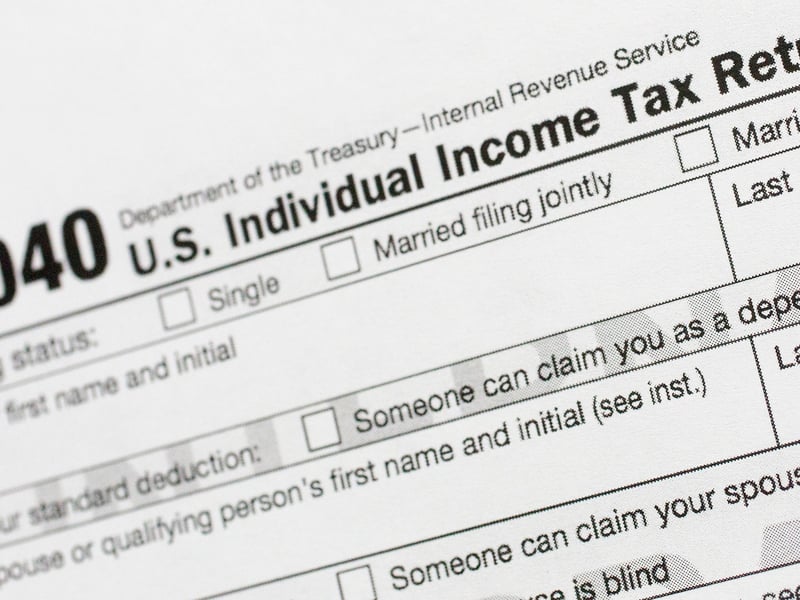
BOSTON (CN) — Statutory penalties for filing a late tax return could be so large as to be an unconstitutional “excessive fine,” some members of the Massachusetts Supreme Court suggested Wednesday at a lively oral argument that ranged from the origins of the Eighth Amendment to the meaning of the Magna Carta.
“At a certain level,” said Justice Scott Kafker, “the penalty is so high that it’s got to be unconstitutional.”
Caroline Walsh died in early 2012 and her son John filed her Massachusetts estate tax return seven years late after running through four different accountants. He claimed that the first one died, the second retired and the third made a lot of mistakes, but the state determined he didn’t have a good excuse for the delay.
John paid $224,000 in taxes, but the state imposed a 25% penalty for late filing, another 25% penalty for late payment, plus $145,000 in interest, meaning that he owed more in penalties and interest than he did in taxes. He claimed that this violated the Eighth Amendment’s prohibition on excessive fines.
Things initially looked good for the state as the justices questioned whether the penalties were a fine at all. “Why is this a fine?” asked Justice Dalila Wendlandt. “How is this punishment?”
The son’s attorney, Michael Walsh, said the penalty was “a stick, not a carrot” and the government was seeking retribution against his client rather than a civil remedy.
“Isn’t it remedial in the sense that there are a lot of investigatory resources in policing this kind of failure to file and pay?” Wendlandt asked.
“Any fine is remedial to some degree,” Walsh conceded, but he cited an 11th Circuit case holding that a penalty for failure to disclose a foreign bank account could be an excessive fine.
“If it’s a fine, why is it excessive given that it’s capped and there was a seven-year lapse?” asked Justice Gabrielle Wolohojian.
Walsh said the fine wasn’t proportional to the offense, noting that fines for federal tax crimes are typically $1,000 to $5,000.
“What about the 25% cap and the fact that the dollar amount is proportional to tax amount?” asked Justice Frank Gaziano.
Walsh said it was a problem that the fine was a flat amount regardless of the circumstances: “It should be different if one guy filed late because his accountant died and another guy was just a jerk.” He also said the purely mechanical calculation could result in a crushing burden for a pauper.
“A pauper wouldn’t have a $100,000 in estate tax liability,” Gaziano replied.
The state’s lawyer, Grace Gohlke, argued that the penalty was proportional to the government’s costs, but immediately ran into skepticism. “What’s the evidence that it’s proportional to the government’s remedial interest?” Wendlandt asked.
“We have no basis here as to what it cost to track him down,” Kafker added. “It’s just a set amount imposed for his dilly-dallying.”
Kafker asked Gohlke if she had researched colonial-era English case law on civil and criminal fines, and she said she hadn’t.
“If a civil penalty is something gigantic, I don’t know if the civil/criminal divide is that clear in the case law,” he said. “Unfortunately I spent a lot of time reading those cases, and I think it’s an open question.”
Kafker challenged Gohlke: “If there’s a million-dollar penalty, could that be an excessive fine if there’s someone with a small inheritance? That would be an excessive fine, wouldn’t it?”
Some of the justices also sounded troubled that there were separate 25% penalties for failure to file and failure to pay. Gohlke said they were separate offenses, but conceded that multiple related fines could at some point become problematic.
“If you add all these things together, and it exceeds the amount of the tax, it gets a lot more complicated,” Kafker said. “At a certain level, it’s going to be a fine.”
Subscribe to our free newsletters
Our weekly newsletter Closing Arguments offers the latest about ongoing trials, major litigation and rulings in courthouses around the U.S. and the world, while the monthly Under the Lights dishes the legal dirt from Hollywood, sports, Big Tech and the arts.