
 Search Articles


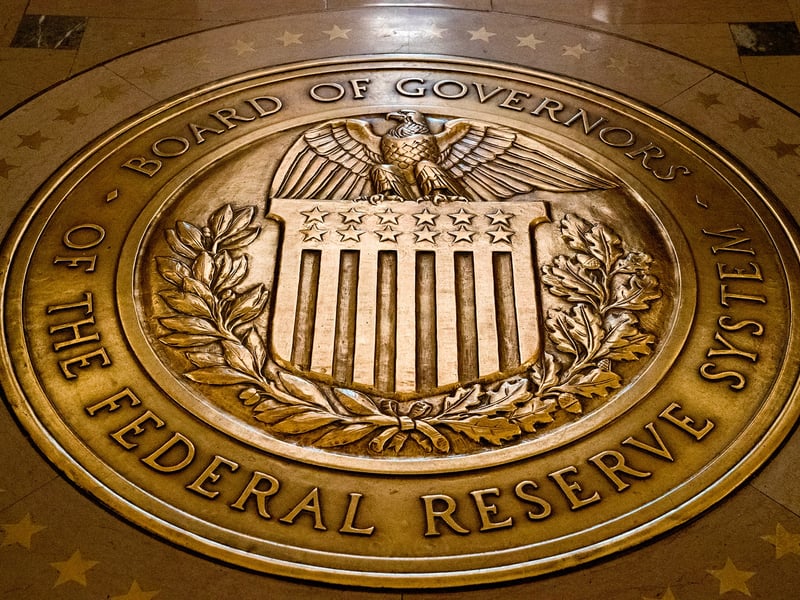
MANHATTAN (CN) — The one-two punch of latest inflation data and the nomination of a hawk to lead the Federal Reserve caused markets to decline slightly this week.
Wall Street saw muted gains early in the week, but after the two crucial reports released early Friday morning equities started to drop. By the closing bell on Friday, the Dow Jones Industrial Average and Nasdaq posted weekly losses of 205 points and 40 points, respectively. The S&P 500, which at one point hit the 7,000-point mark, gained only 24 points for the week.
Investors focused entirely on the Federal Reserve this week. First, on Wednesday, the Fed predictably held the federal funds interest rate steady at 3.5% to 3.75%, with only two voting members advocating for another quarter-point rate cut. The Fed now describes economic expansion as “solid” rather than “moderate” and the unemployment rate “has shown some signs of stabilization.”
Then on Friday, President Trump officially nominated banker and former Fed governor Kevin Warsh to succeed Jerome Powell as chair.
Experts see Warsh, an inflation hawk, as a safe choice and one they hope would buck attempts by the White House to influence monetary policy as it has with Powell, who is under investigation by the Justice Department for construction cost overruns at the Fed’s headquarters.
“Warsh’s long-running hawkish views should help to counteract concerns that he might morph into a full-blown Trump stooge,” Stephen Brown, deputy chief North America economist at Capital Economics, wrote in an investor’s note.
However, Warsh’s nomination also faces political obstacles, as key Republican Senator Thom Tillis said he would oppose Warsh’s nomination until the federal investigation into Powell is fully resolved.
Prior to Friday’s announcement, markets had been wobbly, with scant economic data coming in negative.
Investors were disappointed by the latest producer price index, which increased 0.5% last month, compared with the 0.3% expected. The PPI, which tracks selling prices by U.S. manufacturers, has been increasing steadily since September, and the latest increase was chalked up to a 4.5% increase in margins for machinery and equipment wholesaling, the agency stated.
Due to the government shutdown last fall, scheduling issues meant no corresponding consumer price index was released this week. However, the PPI is not likely to sway the Federal Reserve to change its approach on interest rates
Consumer confidence also looks weak, as the latest survey from The Conference Board fell to its lowest point since 2014, worse even than during the Covid pandemic.
The board’s “present situation” and “expectations” indices also fell by nearly 10 points each, the latter of which is now 15 points below the 80-point threshold that usually signals an incoming recession. Fortunately, the board’s last two months’ surveys were revised upward sharply.
Experts peg the current sentiment drop to a wobbly job market, noting the board’s labor differential of those reporting jobs available versus those saying jobs are difficult to get is now lower than any point since 2016, as well as the K-shaped economy theory.
“The picture for the consumer remains very mixed, with the top earners benefiting from the wealth effect while the bottom 60% of the income distribution is being negatively impacted by policy changes,” said Eric Teal, chief investment officer at Comerica Wealth Management.
Others are skeptical about recent consumer sentiment data. “Consumer sentiment has become unusually divorced from the macroeconomy since the pandemic,” Bernard Yaros, lead economist at Oxford Economics, wrote in an investor’s note.
“A large chunk of this disconnect is attributable to sticker shock from past inflation, the shift to an online survey, the negative bias of the economic news in recent years, and the growing overrepresentation of Democrats in the survey since 2024,” he added.
 Follow @NickRummell
Subscribe to our free newsletters
Our weekly newsletter Closing Arguments offers the latest about ongoing trials, major litigation and rulings in courthouses around the U.S. and the world, while the monthly Under the Lights dishes the legal dirt from Hollywood, sports, Big Tech and the arts.