
 Search Articles


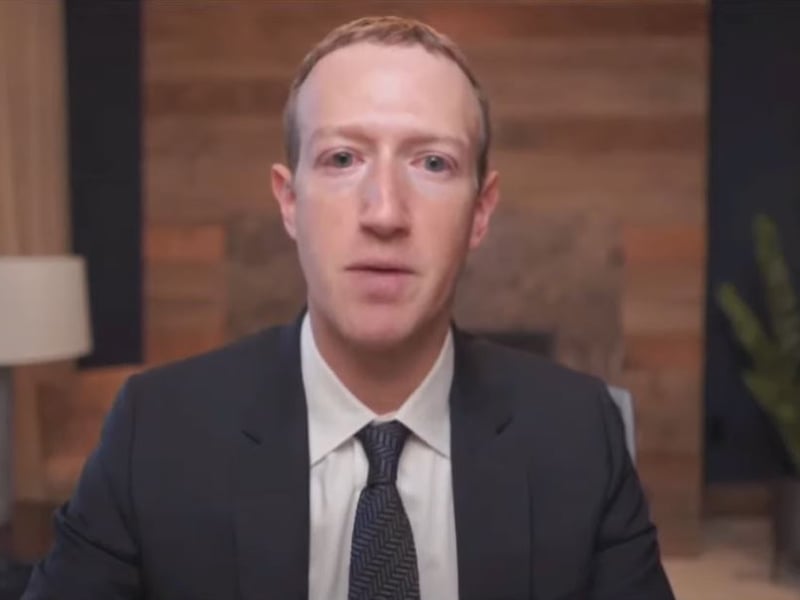
WASHINGTON (CN) — Meta CEO Mark Zuckerberg on Tuesday pushed back against the Federal Trade Commission’s case that he purchased Instagram and WhatsApp with the main goal to snuff out potentially dangerous competitors.
Continuing his testimony in the landmark antitrust case, Zuckerberg said that while he had expressed concerns about the two apps’ rapid growth in the early 2010s, he was also motivated by a desire to help the services exponentially expand their reach.
Chief U.S. District Judge James Boasberg, a Barack Obama appointee, will hear testimony from several other high-profile witnesses, such as Instagram co-founder Kevin Systrom, Snapchat co-founder Evan Spiegel and WhatsApp co-founder Brain Acton, over the next two months.
FTC attorney Daniel Matheson presented several exhibits detailing Zuckerberg’s apparent concern at the time that WhatsApp could begin introducing social media features to the messaging app and create its own “social network.”
In a January 2013 email to Meta’s board of directors — which at the time included Peter Thiel, a former PayPal CEO and major right-wing donor, venture capitalist Jim Breyer, former George H.W. Bush chief of staff Erskine Bowles, and current Netflix board chair Reed Hastings — Zuckerberg expressed that concern.
“The biggest competitive vector for us if for some company to build out a messaging app for communicating with small groups of people, then transforming that into a broader social network,” Zuckerberg wrote. “Companies like Line and Kakao in Korea and Tencent in China are running this exact strategy and it’s working reasonably well.”
Matheson focused on Tencent’s strategy with WeChat, which began as a messaging app and developed into one of the most popular apps in China as it introduced features like photo sharing, stories, internal apps, digital payments services and more, reaching more than 1.2 billion users in 2022.
He asked Zuckerberg about apparent rumors that Google was considering purchasing WhatsApp and whether that factored into the ultimate decision to buy WhatsApp for $21.8 billion.
Zuckerberg first denied any recollection of such rumors, then dismissed them as nothing more than mere suggestions by a banker colleague of his after reviewing a sealed document.
In 2013, a year prior to WhatsApp’s purchase, Facebook tried to buy Snapchat for $3 billion shortly after it first introduced stories. At the time, Zuckerberg said he thought stories made Snapchat a much more competitive app than it ever had been as a messaging service.
Speaking on the stand, Zuckerberg argued that he wanted to do for Snapchat what he had done for Instagram: improve the platform’s infrastructure and help it grow.
“I told Evan [Spiegel] that if they joined us, I would help them get to a billion people,” Zuckerberg said. “I don’t think the app has reached a billion people over 10 years later.”
Spiegel reportedly denied the offer so that he and his co-founders could continue building the app on their own. The app reported approximately 453 million daily active users in 2024.
After incorporating Instagram and WhatsApp into Meta’s “family of apps,” the company was able to impose policy changes on the platforms, such as shifts in ad loads and data-sharing settings.
Matheson pressed Zuckerberg about one such change in 2018, where Meta began shifting more ads to Instagram, referred to as an “ad tax” to compensate for lower rates of engagement on Facebook. According to an update to Meta’s board, Zuckerberg noted that Instagram co-founder Kevin Systrom was not excited about the higher tax.
Matheson asked whether Zuckerberg agreed that users generally would prefer to see less ads, to which Zuckerberg equivocated, arguing that some Facebook users enjoy seeing more ads due to quality increases since the platform’s early days.
Zuckerberg said that those users were served more ads in the same way users who like news are suggested more news posts on their Facebook feeds. He added he had heard from friends that they were “very excited” about promoted products they bought off Instagram or Facebook.
The FTC’s argument has centered heavily on Zuckerberg’s contemporaneous statements surrounding the two billion-dollar purchases, a strategy the FTC noted was fashioned after the Justice Department’s playbook in the Google internet search monopoly trial.
There, U.S. District Judge Amit Mehta ruled that Google’s witnesses consistently were unable to provide accurate statements during testimony in the internet search trial.
Mehta, an Obama appointee, said in his ruling that Google operated an illegal monopoly that he gave the contemporaneous statements more weight than the witnesses live testimony.
 Follow @Ryan_Knappy
Subscribe to our free newsletters
Our weekly newsletter Closing Arguments offers the latest about ongoing trials, major litigation and rulings in courthouses around the U.S. and the world, while the monthly Under the Lights dishes the legal dirt from Hollywood, sports, Big Tech and the arts.