
 Search Articles



MARSEILLE, France (CN) — The trial of Marine Le Pen, the figurehead of France’s right-wing National Rally party, began Monday over charges she and others embezzled several million euros of European Union funds. But experts argue that despite the severity of the charges, it’s unlikely the trial will leave a negative impression on Le Pen’s voters — in contrast, it might actually encourage the extreme-right movement.
“These populist far-right political movements … it allows them to denounce a form of relentlessness against them,” Jean-Etienne Dubois, a historian and professor at the University of Nantes in western France, told Courthouse News. “They turn it to their advantage by saying, ‘but look, we’re against the system, against the government in place’ — it’s easy to say ‘they’re trying to silence us, to destabilize us, to weaken us,’ and so on.”
Le Pen will stand trial alongside 26 others, including her father and other RN members, on charges of embezzlement of public funds and collusion. They are charged with systematically misappropriating 6.8 million euros in EU funds between 2004 and 2016.
Investigators say paychecks of 21,000 euros (about $23,500) a month, which were allocated to pay parliamentary assistants in Brussels, were instead given to lawmakers working with the party, called the RN, in Paris. Le Pen has consistently denied the accusations.
If convicted, Le Pen faces up to 10 years in prison and double the amount of what was supposedly embezzled, plus the possibility of a 10-year ban on running for office.
In 2017, when Le Pen was summoned for an initial interrogation, she called the affair a “daily political-media soap opera,” and questioned the legitimacy of the charges.
The Le Pen camp maintains their innocence.
“We formally contest the accusations made against our MEPs and parliamentary assistants,” the RN said in a statement last year, referring to members of the European Parliament.
The trial is scheduled to continue through Nov. 7. at the Paris Criminal Court.

Jean-Marie Le Pen, Marine Le Pen’s father, is also on trial but was excused from attending the proceedings due to fragile health. Despite being the founder of the National Front in 1972 — which became the National Rally in 2018 — he has been pushed out in a multi-year effort to rebrand the party away from its radical history. Marine Le Pen renamed it and put the media-savvy 29-year-oldJordan Bardella at its head.
The mayor of the southern city of Perpignan, the vice president of the extreme-right Reconquer! Party and the former treasurer of the National Front are other prominent figures involved in the trial.
But there hasn’t been much buzz surrounding the proceedings.
On Friday morning in central Marseille, a woman sitting on a ledge in a square was unaware there was going to be a trial. Another man said he had heard of something going on but didn’t know anything specific.
One woman, who asked not to be named, wasn’t convinced that the case would have any impact at all.
“It’s going to be stifled, that’s my opinion, it’s not going to go too far, and journalists are putting forward other issues to camouflage what’s going on” she told Courthouse News. “The voters are fundamentally racist, what interests them is racism — they don’t care what’s happening at the economic level, they’re going to vote for them in the end.”
Michel Wieviorka, a sociologist and director at Paris’ School of High Studies in Social Sciences, told Courthouse News that the general disregard for political leaders on trial is a widespread phenomenon in far-right populist movements, both in France and elsewhere.
“The actors of the populist movements, who are the people that vote for her — these actors are never embarrassed by the contradictions or problems of this type, never,” he said. “They always have explanations that end up minimizing the problem, or even twisting the accusations — it’s because Europe is toxic and absolutely wants its political death, that kind of thing — they reverse the problem.”
Other examples of right-wing leaders trying to turn their prosecution to their advantage include Donald Trump in the United States and the late Silvio Berlusconi in Italy.
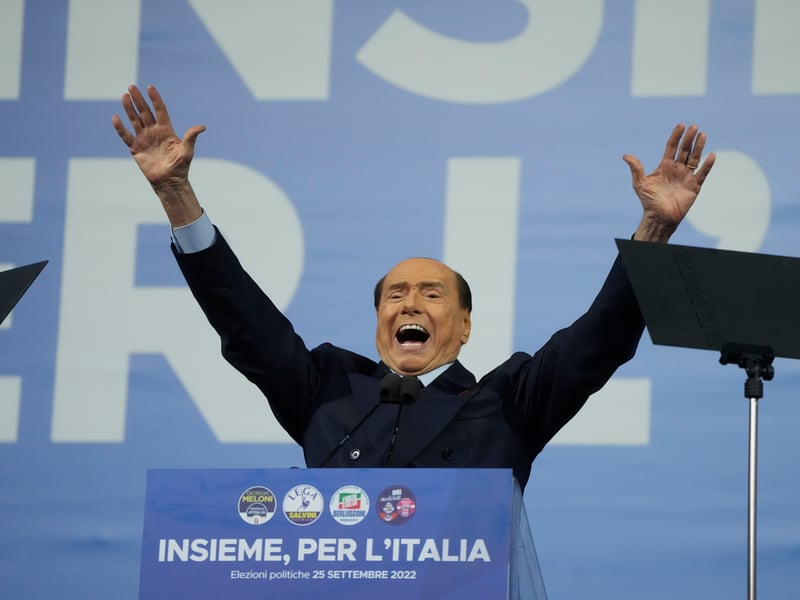
Dubois argues that a common strategy is to embrace justice when it’s in a party’s favor, and denounce justice when a ruling goes against them. Dubois cited Jean-Marine Le Pen, who he says has been on trial over 20 times during the course of his career.
“Sometimes, he tried to sue for defamation, and he actually won a certain number of them — so sometimes justice can rule in favor,” Dubois said. “So in that case, he would say, ‘ah look, I was right,’ and then as soon as justice would rule against him, he would say, ‘ah well yes, but you see they’re hounding me.’”
Dubois and Wieviorka both told Courthouse News that the biggest risk of this trial would be for Marine Le Pen to be convicted and rendered ineligible for office. Such an outcome would take any presidential ambitions off the table for 2027, which is Le Pen’s primary focus.
According to Wieviorka, Marine Le Pen is in a bit of a tricky position. While denouncing the system that is bringing her to trial, Le Pen is also expected to show increased respect for France’s institutions if she’s seeking higher office.
“At the moment, she’s not in power, she’s in opposition and as long as she’s in opposition, the contradiction is not a problem,” he said. “The day she’s in power, she would be responsible for the order of security, she would represent all of the French people and not just her own voters, and she would have a lot more difficulty.”
 Follow @lilyradz
Subscribe to our free newsletters
Our weekly newsletter Closing Arguments offers the latest about ongoing trials, major litigation and rulings in courthouses around the U.S. and the world, while the monthly Under the Lights dishes the legal dirt from Hollywood, sports, Big Tech and the arts.