
 Search Articles


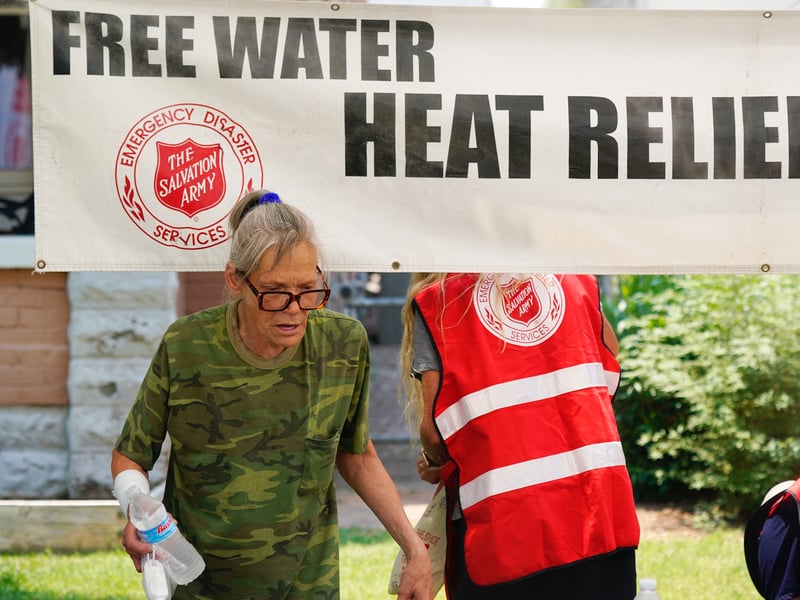
PHOENIX (CN) — After confirming at least 427 heat-related deaths in 2025, Maricopa County health officials plan to expand heat relief efforts to bolster a two-year downward trend.
Though 2025 was a modest respite from the hottest summer the Grand Canyon State’s ever recorded, temperatures have now reached triple digits earlier in the year than ever before. To combat what will likely be another extreme summer, the Maricopa County Department of Public Health presented plans Monday morning to expand hours for cooling centers and hydration stations and distribute free naloxone and electrolyte drinks at all heat relief sites.
Most visits to heat relief stations occur between 5 p.m. and 6 p.m., though most stations in the county close by 7 p.m. The department’s chief medical officer, Dr. Nick Staab, said expanding hours is imperative to protecting the county’s most vulnerable populations.
“For those who are often spending their nights outside, their bodies don’t have the opportunity to cool off overnight,” Staab told the Maricopa County Board of Supervisors. “Without that ability to reset overnight, it’s just the cumulative effect of days after days.”
Last year, 48% of people who died from heat causes were homeless. About 65% were also using substances, which represents a significant jump in percentage from 2024. This year, the county says it will partner with more substance abuse and street outreach programs to distribute resources and expand its Lyft services to bring people to heat relief stations.
It also plans to establish an overnight family-oriented respite center, which, unlike cooling centers, allows people to lie down and sleep. Health officials are currently developing a site with the help of the Arizona Faith Network.
On Wednesday, the temperature in Phoenix hit 100 degrees Fahrenheit sooner in the year than ever before. Then each of the next six days saw record highs. The National Weather Service predicts that temperatures in Phoenix will continue to break daily records for at least the next five days. Despite the temperature boom, most heat relief stations have not yet opened their doors, and will not be operational until May 1.
More than 40% of heat-related deaths in 2025 occurred on days under excessive heat warnings from the National Weather Service. Already, the service has declared excessive heat warnings for the last few days.
The county operates 122 hydration stations, 97 cooling centers and 26 respite centers. Phoenix and other larger cities operate their own facilities as well. Though the county did not present plans to increase heat relief stations, Jeanene Fowler, executive director of public health, told the board that the department plans to visit each site to ensure hours are updated and proper informational signage is posted.
Fowler said she couldn’t estimate county costs for the prospective improvements, as funding will come from a multitude of sources including Centers for Disease Control and Prevention grants, the American Rescue Plan Act and the Maricopa County Opioid Settlement Fund. She added that some grants as well as ARPA funding will expire at the end of June.
Republican Supervisor Debbie Lesko asked for a report of cost estimates and a breakdown of what grants the county will still have access to in fiscal year 2026-27.
Despite it being the hottest year on record, Maricopa County recorded only 608 heat-related deaths in 2024 compared to 2023’s record-shattering 645. It was the first downward shift in a decade.
The numbers continued to drop in 2025, which Staab attributed to far fewer days above 110 degrees than recorded in 2024.
County Supervisor Thomas Galvin asked the department to seek out free radio and TV time to push announcements about heat safety.
“I don’t know that PSAs work in the same way that they used to work for us,” Fowler replied. “A lot more is done on social media and online.”
Staab clarified that the department takes any chance it gets to spread its message in TV and radio news.
 Follow @JournalistJoeAZ
Subscribe to our free newsletters
Our weekly newsletter Closing Arguments offers the latest about ongoing trials, major litigation and rulings in courthouses around the U.S. and the world, while the monthly Under the Lights dishes the legal dirt from Hollywood, sports, Big Tech and the arts.