Search Articles


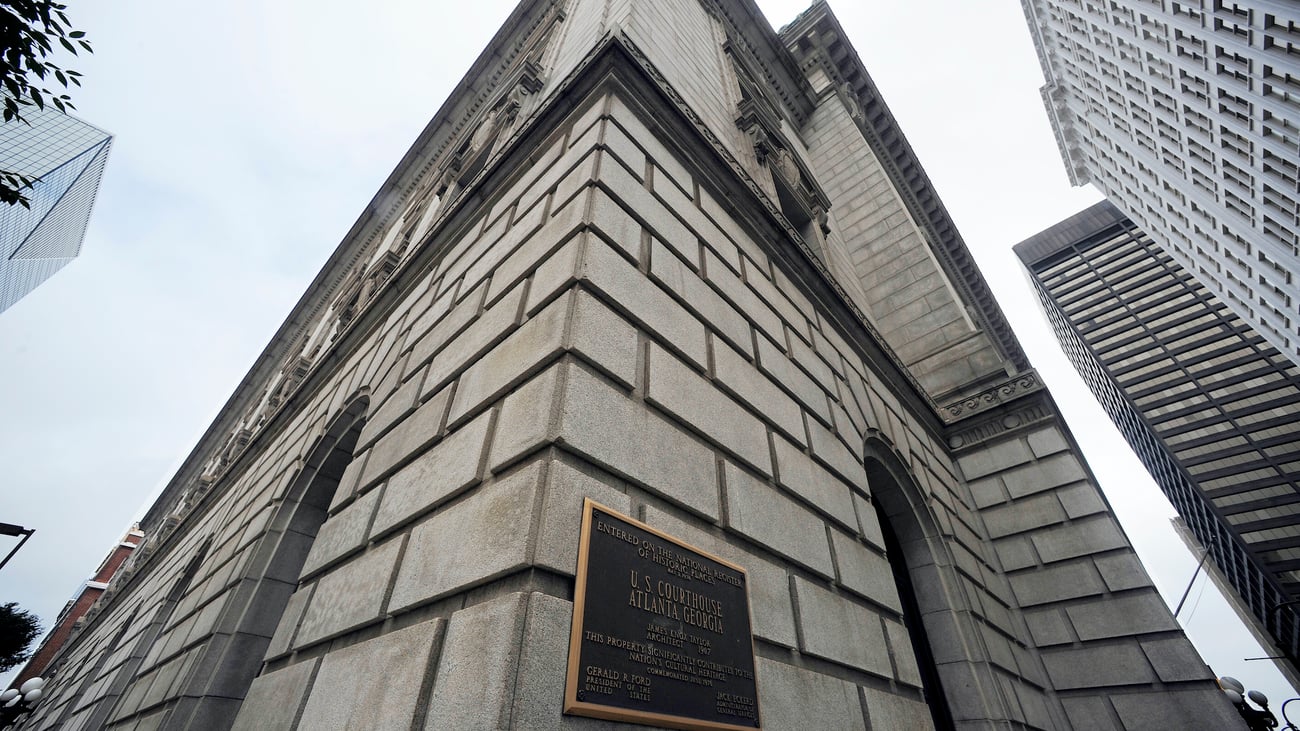
ATLANTA (CN) —The indifference of officials in Florida’s Bay County Jail caused a detainee to slide into a psychotic crisis which ended with him removing his own eyeballs, the man’s attorney told an 11th Circuit panel on Wednesday.
The federal appeals court will decide whether the ex-detainee can revive a lawsuit claiming his serious mental health needs were ignored.
“[Daniel] Bennett was having a psychotic break that everybody witnessed pretty much from day one when he came into the jail,” attorney Christopher Klotz of Aylstock Witkin Kreis & Overholtz argued for Bennett.
According to Klotz, two mental health counselors at the jail failed his client at every turn. Although they put him in an isolated cell with the highest level of suicide prevention after a suicide attempt, no one ever gave Bennett any medical treatment or counseling, Klotz said.
Eleven days after his arrest, Bennett removed both his eyeballs from their sockets with his own hands. When a deputy entered his cell, Bennett, whose face was covered in blood, asked if he “did a good job” and if he should “do it again.”
Bennett, who is now blind, had to be placed in a 48-hour medically-induced coma after the incident and was diagnosed with schizoaffective disorder. He was briefly returned to jail until the criminal charges against him were dismissed.
A Florida federal judge ruled in favor of Bay County sheriff Tommy Ford and mental health counselors Jack Howell and Shanderico Gray in the lawsuit filed by Bennett after his self-enucleation, the medical term for removing one’s eyeballs.
Raising claims for negligence and violations of his Eighth and Fourteenth Amendment rights, Bennett claimed the officials were deliberately indifferent to his serious mental health needs.
U.S. District Judge T. Kent Wetherell II decided no reasonable jury could find Bennett’s constitutional rights were violated while he was on suicide precautions at the jail.
But Klotz urged the 11th Circuit panel to overturn Wetherell’s decision. Klotz argued Gray failed to assess Bennett daily and may have back-dated an assessment he says she failed to perform the day before Bennett blinded himself “to cover herself.”
But Alyssa Yarbrough of Warner Law Firm, who represents the defendants, told the panel neither counselor was aware Bennett was at risk of serious harm.
Howell and Gray acted reasonably by ensuring Bennett was under the strictest observation after he attempted suicide six days into his detention by tying a plastic bag over his head, Yarbrough argued.
In his ruling in the defendants’ favor, Wetherell found the counselors’ failure to refer Bennett to a higher level of care was “at most, ordinary negligence, not deliberate indifference.”
According to a brief filed by his attorneys, Bennett was incoherent and rambling when he was booked for pushing his grandmother — a “trumped up” charge Klotz explained was fabricated so police could get Bennett out of his concerned family’s home.
Bennett’s psychotic behavior only escalated after he was put on the highest level of suicide precaution. He peeled paint off walls, smeared feces on his cell door window, stuck his head in the toilet while flushing and told a deputy he could find out the deputy’s name by pulling his own hair out.
Yarbrough argued there was no evidence Gray was aware of these behaviors, which were handled by security.
U.S. Circuit Judge Elizabeth Branch questioned whether Gray, who marked Bennett’s behavior as “normal” on forms, should have done more than just keep Bennett under suicide precautions.
But the Trump-appointed judge noted “Howell chose the highest level of suicide prevention. What evidence is there that Howell knew that wasn’t going to be sufficient?”
Klotz agreed the jail’s suicide prevention protocol was “100% necessary” but said monitoring Bennett’s behavior was not akin to actual medical treatment for a psychotic break.
“Moving the plaintiff from one location to another location and not giving him any mental health treatment is not medical treatment,” Klotz said. “Suicide prevention is not treatment.”
According to his attorneys, Bennett was never seen by a psychiatrist or doctor while detained.
Yarbrough told the panel the evaluation process “was heading toward treatment” and that Howell followed the jail’s suicide precaution procedures by ensuring Bennett would be monitored.
“There was nothing Howell knew that necessitated a call to the medical department in the jail,” Yarbrough said, adding that Bennett did not want counseling when it was offered by Howell.
U.S. District Judge Jacqueline Becerra, a Joe Biden appointee sitting by designation from the southern district of Florida, also pointed out that there was no evidence Bennett had ever had severe mental health issues before or had been on any kind of medication.
Becerra and Branch were joined on the panel by U.S. Circuit Judge Robin Rosenbaum, a Barack Obama appointee. The panel did not indicate when it would issue a decision in the appeal.
If you are having thoughts of suicide, call or text 988, or call the National Suicide Prevention Lifeline at 1-800-273-8255 (TALK). VisitSpeakingOfSuicide.com/resources* for a list of additional resources.*
 Follow @KaylaGoggin_CNS
Subscribe to our free newsletters
Our weekly newsletter Closing Arguments offers the latest about ongoing trials, major litigation and rulings in courthouses around the U.S. and the world, while the monthly Under the Lights dishes the legal dirt from Hollywood, sports, Big Tech and the arts.