
 Search Articles


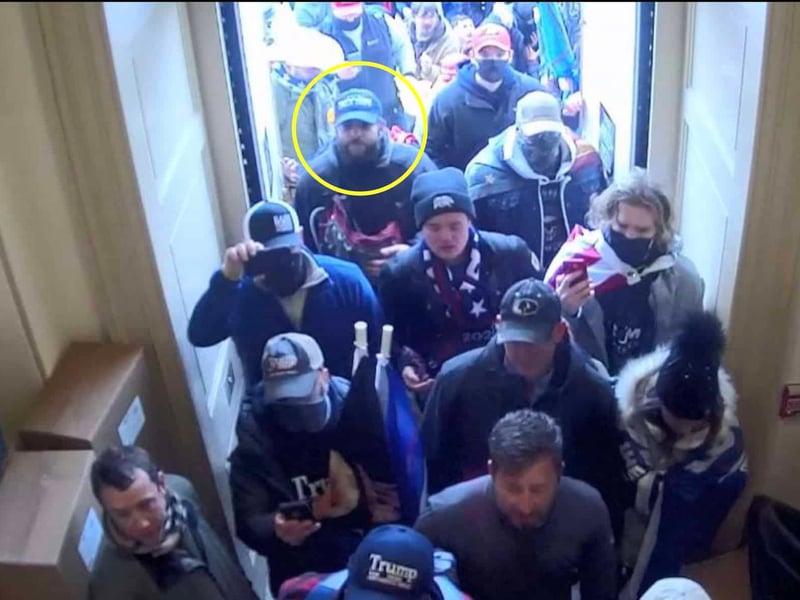
WASHINGTON (CN) — Federal prosecutors filed two felony gun charges Friday against Taylor Taranto, a Capitol riot defendant ordered to await trial behind bars earlier this week after his arrest for driving near former President Barack Obama’s Washington home in a van filled with hundreds of rounds of ammunition, two guns and a machete.
Taranto is the third Jan. 6 defendant to get detained before his trial after Justice Department attorneys argued he should not be allowed to return to his parent’s home in Washington state because of the potential danger he posed to elected officials and the public, pointing to a string of threatening statements and actions he made in the days leading up to his June 30 arrest.
Magistrate Judge Zia Faruqui said during a detention hearing Wednesday that he was concerned over a pair of live streams in which Taranto threatened to blow up his car near the National Institute of Standards and Technology — the agency’s Maryland campus houses a nuclear reactor — and another in which Taranto spoke of finding underground tunnels to enter the homes of Obama and White House senior adviser John Podesta.
Faruqui also said he was concerned about what Taranto, an Iraq War veteran, could have accomplished with his military training and a small arsenal of weaponry.
“I’m scared when I think of the weapons you have … that there could be catastrophic consequences,” Faruqui said.
A grand jury filed two charges against Taranto for carrying a pistol without a license and possession of a large-capacity ammunition feeding device. If convicted, the first charge carries a maximum penalty of five years in prison and one year for the second.
The two felonies are in addition to four misdemeanor charges Taranto faces in connection to his participation at the Capitol riot on Jan. 6, 2021, including entering a restricted building, disorderly conduct and parading in the Capitol.
During Wednesday’s hearing, Taranto’s public defender, Kathryn Guevara, argued that the prosecution was trying to characterize her client as a dangerous fugitive and punish him for expressing his political beliefs.
Guevara said Taranto only came to Washington, D.C., after House Speaker Kevin McCarthy announced in February that he would allow some Jan. 6 defendants access to Capitol security footage and that Taranto was in plain sight while in the district. She said her client made multiple appearances at a protest site outside the Washington jail where many Jan. 6 defendants are held and even appeared at the federal courthouse for the sentencing of David Walls-Kaufman two weeks before his arrest.
Guevara could not be reached for comment.
Another concerning pair of incidents before Taranto’s arrest occurred at two elementary schools near the home of Democratic Representative Jamie Raskin of Maryland, where Taranto is accused of playing a Jan. 6 conspiracy video at one and filming children exiting another as part of an evacuation drill.
According to the government’s pretrial detention request, Taranto can be heard over video at the second school saying that the evacuation was due to a “violent white supremacist out somewhere.”
Faruqui made the rare decision to detain Taranto based on concerns that even if the defendant was under house arrest in his parents’ home, there was still a chance he could commit violence. He expressed some sympathy for Taranto’s position, highlighting his military service and the struggles he has faced since returning home, such as post-traumatic stress disorder and other mental health conditions, that Faruqui said put him on this path.
“We failed you, and now you have to pay the price for us not taking care of one of our most vulnerable populations,” Faruqui said.
Taranto will appear in federal court again on July 25.
 Follow @Ryan_Knappy
Subscribe to our free newsletters
Our weekly newsletter Closing Arguments offers the latest about ongoing trials, major litigation and rulings in courthouses around the U.S. and the world, while the monthly Under the Lights dishes the legal dirt from Hollywood, sports, Big Tech and the arts.