
 Search Articles


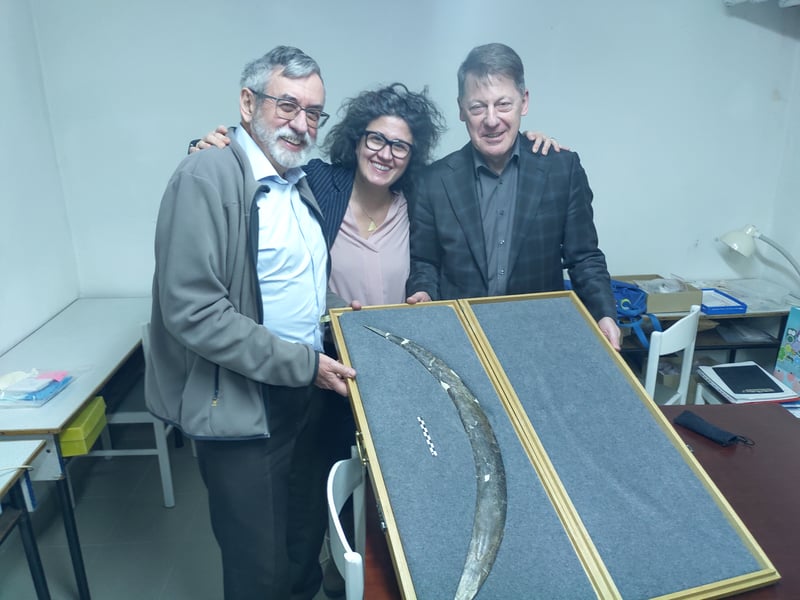
(CN) — A boomerang made from a mammoth’s tusk pulled from a Polish cave could be one of the oldest known examples of a complex tool found in Europe, according to a research study published in PLOS One on Wednesday.
Pulled from deep within Obłazowa Cave in southern Poland, researchers from several European countries used DNA analysis and radiocarbon dating to determine the age of the boomerang, several bones and a human left distal thumb phalanx found nearby are from 41,670 and 39,950 “cal BP,” or before present, meaning before the year 1950 in the common era.
The researchers suggest that the boomerang isn’t just one of the oldest tools found in Europe, but possibly globally and an important artifact in human adaptation, migration, cultural development, technology, symbolism and environmental interaction in the earliest phases of human migration into Central Europe in the Early Upper Paleolithic era.
“Due to the limited number of lithic artefacts and bones within this archaeological horizon, it has been suggested that the human fossils and the boomerang may have been part of a shamanistic ritual,” the researchers write in the study. “This interpretation draws parallels with rock art evidence of portrayed human hands with missing digits found in the Iberian Peninsula and France. Determining the precise chronology of these exceptional artifacts is essential for understanding the development and variability of symbolic behaviors and artistic expression among Homo sapiens groups, as well as for tracing the origins of artistic innovations.”
While the boomerang is associated today with Aboriginal Australian culture, there’s evidence that the tool was developed independently in different places around the world.
The boomerang found in Poland resembles a type of boomerang found in Queensland in Australia, the researchers write. The Polish boomerang has “demonstrated its capability to fly as a non-returning boomerang,” they add.
The oldest known wooden boomerang, with a radiocarbon dated age of 10,200±150 BP and 8,990±120 BP, was discovered in Wyrie Swamp in South Australia.
“While it is beyond the scope of this paper to assess whether the boomerang served a ritual versus utilitarian function, its association with other ornaments at Obłazowa and pendants from sites like Stajnia and Mamutowa Caves suggests an emerging regional artistic identity within the broader Aurignacian framework,” the researchers write in the study. “This parallels the distinct regional traditions observed in Europe, such as the ivory figurines and flutes of the Swabian Jura, contrasting with Aquitaine’s engraved parietal art or Cantabrian cave paintings.”
Creating and moving the boomerang “represents a unique commitment” because of its size, the researchers write. The thinning of the tusk to make it symmetrical “reflects a notable investment in a context where mobility was essential. Since no ivory fragments were found at the site, the boomerang must have been crafted elsewhere and carried to Obłazowa Cave, underscoring its special status,” they add.
The cave where the tusk was found is a multi-layered site that first had settlements of Neanderthals and then Homo sapiens, wrote Paweł Valde-Nowak of the Jagiellonian University in Kraków, Poland, one of the authors of the study, in an email.
“It is from the times of the latter that an ivory boomerang and a set of objects come from that give the impression of being very valuable to the people of that time,” he added. “Interdisciplinary research on the Oblazowa Cave is still ongoing. New analytical techniques allow for a deeper interpretation and greater precision, as demonstrated by an article in PLOS One.”
Subscribe to our free newsletters
Our weekly newsletter Closing Arguments offers the latest about ongoing trials, major litigation and rulings in courthouses around the U.S. and the world, while the monthly Under the Lights dishes the legal dirt from Hollywood, sports, Big Tech and the arts.