Search Articles


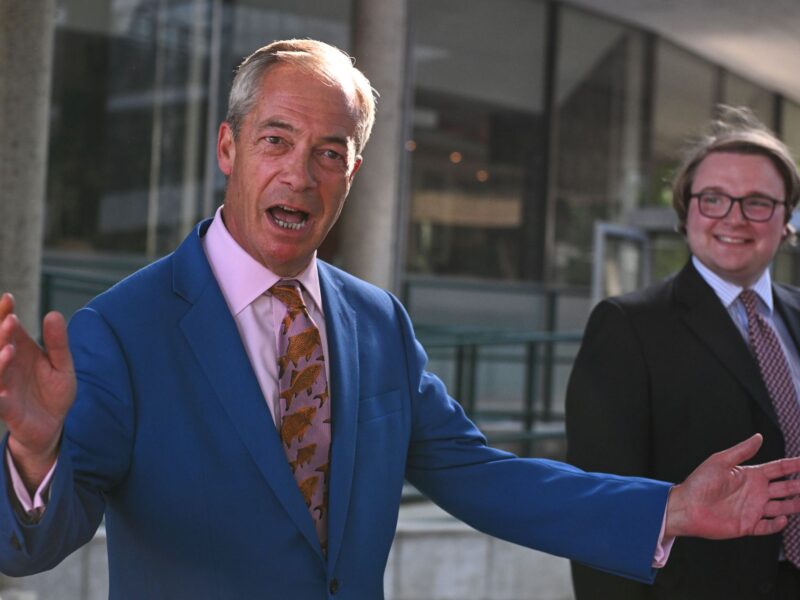
MANCHESTER, England (CN) — Britain’s main political parties said they will not field candidates in the special election triggered by Nigel Farage’s resignation from Parliament, leaving the far-right Reform UK leader to seek a fresh mandate as he fights scrutiny over his undeclared finances.
Farage announced Tuesday he would resign his seat representing Clacton, a right-leaning coastal constituency in eastern England, saying voters, and not Parliament’s standards watchdog, should decide his political future.
Farage was facing a parliamentary investigation into whether he should have declared a $6.7 million gift from cryptocurrency billionaire and Reform donor Christopher Harborne.
That inquiry has now been paused because he resigned his seat, although it can resume if he returns to Parliament.
The gift was later reported to the National Crime Agency by bankers who raised concerns it could involve laundered money.
Farage also faces a possible second parliamentary standards investigation over financial support provided by another Reform donor, George Cottrell, a cryptocurrency entrepreneur who pleaded guilty to wire fraud in the United States in 2017.
He denies breaking parliamentary rules.
Farage also offered to personally cover the cost of the special election, saying taxpayers should not have to pay for a vote he had triggered. In Britain, however, parliamentary elections are administered and funded by public authorities to ensure they remain independent of candidates.
The refusal by center-left Labour, the center-right Conservatives, the centrist Liberal Democrats, the left-wing Green Party and the far-right Restore party means the contest is likely to become a referendum on Farage himself.
Parties refuse to contest the seat
Prime Minister Keir Starmer called the resignation “a desperate stunt.”
“Politics should be about improving the lives of millions of people, not about personal gain,” Starmer said.
Foreign Secretary Yvette Cooper said the special election “shouldn’t be happening” and accused Farage of throwing a “political tantrum” to distract attention.
“Nobody is going to get drawn into what is a political stunt by Nigel Farage because he wants to duck and dive around the rules that apply to everyone,” Cooper said.
Conservative leader Kemi Badenoch said her party would not take part in “the fake election, which Nigel Farage is causing to distract people from what is happening.”
Liberal Democrat leader Ed Davey said the government should prevent Farage’s resignation from taking effect until Parliament’s standards investigation concludes, arguing Clacton voters deserve “all the facts before they cast their votes.”
“We shouldn’t be playing Mr. Farage’s game to escape justice,” Davey said.
Green Party leader Zack Polanski also ruled out standing a candidate.
“Farage is the epitome of everything that’s wrong with British politics — backed by big money and Donald Trump and stoking division in our communities,” Polanski said. “We won’t stand in the Clacton stunt election — but we will focus relentlessly on this ultimate establishment stooge.”
Rupert Lowe, the leader of the rival far-right Restore party whose movement has won support from disaffected Reform voters and received backing from Elon Musk, declined to contest the seat.
Lowe dismissed what he called a “Reform-sponsored media circus” designed to “deflect away from wholly fair questions over why he has concealed such vast and irregular financial donations.”
The boycott by every rival party highlights how Britain’s political establishment has chosen to deny Farage the head-to-head contest, arguing the resignation is intended to sidestep scrutiny of the parliamentary standards investigation.
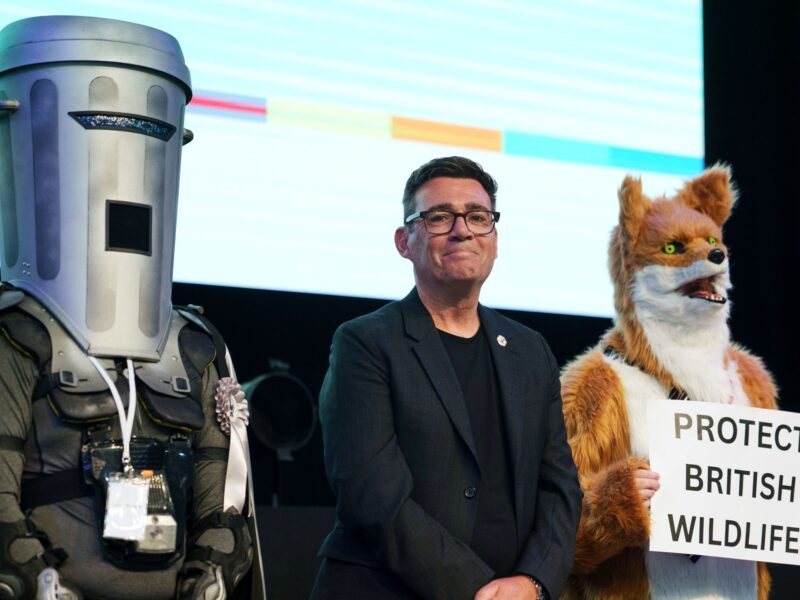
The only announced candidate is perennial contender Count Binface, the alter-ego of comedian Jonathan Harvey, who runs wearing a cape and with a trash can on his head.
The Trump playbook
Farage, a longtime supporter of President Donald Trump, has framed the parliamentary investigation as an “establishment hit job” and a media-driven “witch-hunt,” language that mirrors Trump’s response to criminal indictments and civil lawsuits in the United States.
Trump amplified the comparison before Farage resigned by sharing an article on his social media platform titled “They’re Running the 2024 Anti-Trump Playbook on Nigel Farage.”
The parliamentary investigation concerns whether Farage should have declared a $6.7 million gift from Harborne in the 12 months before he was elected to Parliament in the 2024 general election.
Like Trump, Farage argues political accountability should ultimately rest with voters rather than institutions. By resigning before the standards process concludes, he is asking Clacton voters to deliver that verdict directly.
“I’ve thought about it hard,” Farage said in his video announcement. “I could go out and try and make some real big money. I could go to the USA, where I’ve got plenty of offers.”
Instead, he said, “The people of Clacton should be the judges of my actions. This will be a people versus the establishment by-election.”
Under Parliament’s disciplinary procedures, the standards investigation pauses while Farage is no longer a member of Parliament.
If he wins the special election, the investigation resumes.
If the inquiry ultimately recommends suspending him for at least 10 sitting days, British law provides for a recall petition. If 10% of registered voters sign it, another special election would be triggered.
Farage also described himself as the most attacked politician in modern British history.
Britain has seen two lawmakers murdered while serving in Parliament over the last decade.
Labour lawmaker Jo Cox was shot and stabbed to death by a far-right extremist during the 2016 Brexit campaign. Conservative lawmaker David Amess was fatally stabbed in 2021 by an attacker influenced by the Islamic State group.
One week after Cox’s murder, Farage said Britain’s vote to leave the EU had been achieved “without a single bullet being fired,” prompting widespread criticism.
Waning support for Farage
Farage won Clacton in July 2024 with 46% of the vote, well ahead of the Conservatives with about 28% and Labour with 16%.
While Reform continues to poll above all other parties, surveys suggest Farage’s personal standing has weakened.
A snap YouGov poll on Wednesday found only 54% of Reform supporters consider him trustworthy while 21% say he is untrustworthy.
Across the broader public, 60% of Britons said Farage has not been honest about his financial affairs compared with 12% who believe he has been fully forthcoming.
Even among Reform voters, only 40% believe he has been honest about the issue while 22% think he has not.
Separate polling places Farage’s net favorability at minus 28 nationally, trailing only outgoing Prime Minister Starmer.
If no other parties put forward candidates against Reform, the ultimate test for Farage may be himself. If he fails to match his 2024 vote share or turnout falls sharply, the result may itself become the public’s verdict.
Courthouse News reporter James Francis Whitehead is based in England.
 Follow @jayfranklinlive
Subscribe to our free newsletters
Our weekly newsletter Closing Arguments offers the latest about ongoing trials, major litigation and rulings in courthouses around the U.S. and the world, while the monthly Under the Lights dishes the legal dirt from Hollywood, sports, Big Tech and the arts.