
 Search Articles


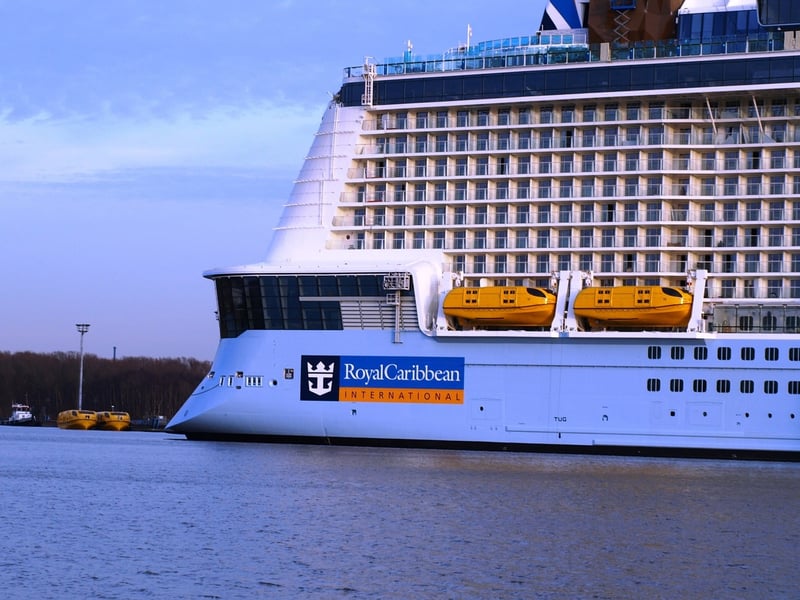
BOSTON (CN) — Bar Harbor, one of the most popular tourist towns in Maine, told the First Circuit Wednesday that it has a right to keep out cruise ships, leaving the three-judge panel flummoxed at oral argument over how to balance the townsfolk’s quality of life with the rights of huge swarms of travelers who want to visit the town — whether they’re welcome or not.
“Bar Harbor has 5,000 people,” noted U.S. Circuit Judge William Kayatta. “Cruise ships can have a population of 5,000 or more. The entire population of the town doubles. It’s like 8 million people showing up in a day in New York City. Does the commerce clause really prevent the town from doing something given that volume?”
The picturesque seaside village has a history as an artists’ colony and an exclusive enclave for the wealthy, having been a summer home to the Rockefeller, Astor, Vanderbilt and J.P. Morgan families. And it’s the gateway to scenic Acadia National Park (which was largely donated by John D. Rockefeller).
But it’s also overrun with tourists in the summer and fall. The Acadia park is one of the busiest in the country with about 4 million visitors a year, and in the past cruise ships have disgorged about a quarter of a million people into the town annually.
In November 2022, the town voted to cap cruise ship disembarkations at 1,000 per day. Because cruise lines can no longer guarantee passengers the ability to visit the town, they say the cap effectively shuts down their ability to stop there.
A lawsuit was brought by local pier owners, merchants, tender operators and pilots, claiming the town ordinance violates the Constitution’s commerce clause and conflicts with federal maritime regulations. A lower court upheld the ordinance in March 2024.
“Bar Harbor is in an untenable situation that reflects forcing a small town to accommodate the business model of cruise ships,” argued attorney Robert Papazian. “Residents can’t access their grocery store or the downtown area when a cruise ship is in town. The cruise industry shouldn’t get to dictate what a town looks like.”
The judges were sympathetic to the town’s plight. “Portland has 70,000 people, and if 5,000 people come in, they can handle that,” Kayatta, a Barack Obama appointee, said. “But Bar Harbor is in a different situation. I still haven’t heard what Bar Harbor is supposed to do when a 20,000-person cruise ship shows up.”
Retired Supreme Court Justice Stephen Breyer, who joined the panel, said Bar Harbor “is an attractive town and they don’t want to turn it into an amusement park.” He said many parks have closing times and campfire and other restrictions to protect their beauty. “So Bar Harbor says we want to preserve the beauty of our town. Which is beautiful. Why can’t they keep out too many people?”
Plaintiff’s’ attorney Timothy Woodcock said that was different because “you can close a park” but under the Constitution “you can’t draw a line at the edge of the town and say you can’t come across the border.”
U.S. Circuit Judge David Barron, also a Barack Obama appointee, saw a number of constitutional problems with the ordinance, including that it discriminated based on the mode of travel because there was no limit on automobiles. If a park allowed people to arrive by car but not by bus, for instance, that would be “problematic,” he said.
Breyer picked up on this concern. “I don’t want to give every park in the U.S. the right to bring in the people they like and not the people they don’t like,” he said. “What if the town excluded southern cruise ships but said we’ll allow people from Maine? Or Massachusetts, because that’s a nice state?”
Barron also suggested that if every town along the seaboard were allowed to place its own limits on cruise ships, it could devastate the cruise industry. “Not every little town can do this,” he suggested.
Woodcock, of Eaton Peabody in Bangor, Maine, agreed. “The issue is protecting the national economy. You can’t stop traffic at the state border.”
But Papazian said that many towns prohibit cruise ships altogether, and if more towns adopted limits, the cruise industry would simply adjust its business model. Kayatta suggested that cruises could still stop at Bar Harbor but sell only 1,000 premium tickets that would let passengers disembark at that stop.
Barron noted that the ordinance applied only to cruise ships with more than 50 passengers, and said a flotilla of smaller ships could still arrive and overwhelm the town. But the town’s lawyer, Jonathan Hunter of Rudman Winchell in Bangor, said the ordinance was based on long experience and the town wasn’t required to solve all its problems in one piece of legislation.
Arguing for the pilots, Jonathan Benner of Thompson Coburn in Washington D.C. warned the judges that a ruling for the town could raise foreign policy issues because many of the cruise ships sail under foreign flags and have federal customs and maritime rights.
The argument was scheduled for half an hour, but after it had gone on for more than an hour without any apparent consensus, the judges began wondering if they should decide the issue at all.
Given the interstate and foreign complications, Barron suggested that it would be better if Congress addressed the problem. “Why does a court need to jump in first?” he asked.
The lawyers repeatedly contradicted each other as to how much of a safety risk the crush of passengers posed and how well the town was able to manage the onslaught, and Breyer suggested that the panel could avoid the issue by sending the case back for further factfinding.
“I find this very difficult. That’s why I’m looking at sending this back to get a fuller record so we have more to go on,” he said.
“Let them build a record. Maybe they’ll settle. What do you think?”
Subscribe to our free newsletters
Our weekly newsletter Closing Arguments offers the latest about ongoing trials, major litigation and rulings in courthouses around the U.S. and the world, while the monthly Under the Lights dishes the legal dirt from Hollywood, sports, Big Tech and the arts.