
 Search Articles


LOS ANGELES (CN) — The civil trial between two surfers and the city of Palos Verdes Estates wrapped up its second week Friday with the testimony of a local surfer, who denied the very existence of the Lunada Bay Boys, widely considered to be a notorious surf gang that zealously guards their turf.
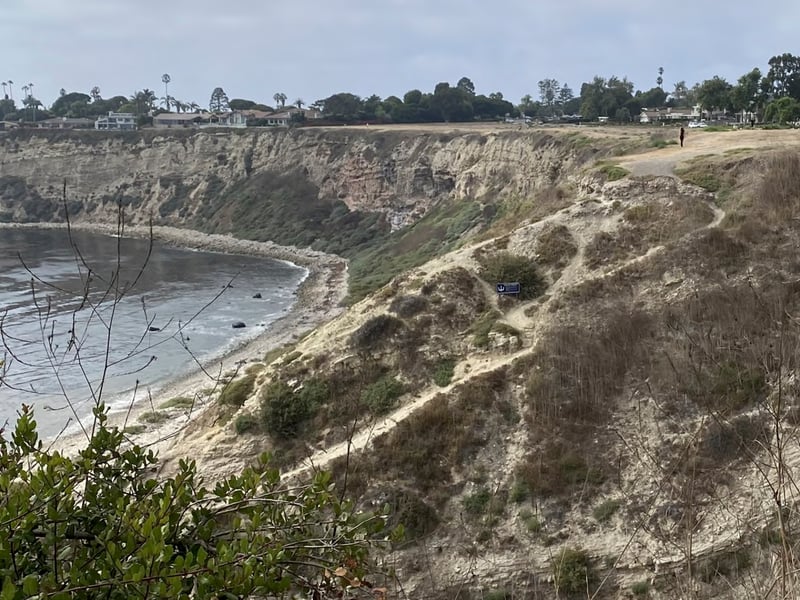
Lunada Bay, a small cove tucked away in the affluent enclave of Palos Verdes Estates, is often pointed to as the prime example of Southern California surf “localism,” the practice of bullying and intimidating outsiders in an effort to keep the beach free from overcrowding.
A lawsuit filed in 2016 by an ex-cop, Cory Spencer, and a surfer, Diana Reed, claims the Lunada Bay Boys and the city of Palos Verdes Estates violated the Coastal Act. The plaintiffs argue the harassment and intimidation amounts to an illegal, unpermitted “development,” since it is aimed at restricting public access to the coastline. The suit was thrown out by a Superior Court judge but revived on appeal.
Michael Papayans, 36, was once named as a defendant in the lawsuit, along with 11 other so-called Bay Boys. Papayans, along with 10 other local surfers, reached settlements with the plaintiffs, agreeing to stay away from Lunada Bay for a year and to pay a fine. But some of the Bay Boys are still being called as witnesses by the plaintiffs to be questioned about their alleged practice of harassing nonlocals.
Papayans adamantly denied the presence of surf localism or a group called the Bay Boys.
“The only time I’ve ever seen someone get yelled at is if they’re doing something dangerous, or not following the etiquette,” Papayans testified. Lunada Bay, he explained, “is different from a beach break. There’s a tight place to take off from. If there’s not an order for things, it can be dangerous.”
Any perceived harassment, he explained, has nothing to do with where someone is from, but instead has to do with following rules — not leaving trash, waiting your turn for a wave, and so on.
“It has nothing to do with being a nonlocal,” Papayans said. “There’s no pecking order.”
Later, during cross examination, he said: “We don’t call each other the Bay Boys.”
The testimony echoed that of another local surfer and alleged Bay Boy, Sang Lee, who testified earlier in the week.
Papayans is among the more notorious of the supposed Bay Boys, due to his 2017 conviction for assault, after punching a 50-year-old man in the Dodgers Stadium parking lot, leaving him with a traumatic brain injury. Papayans pleaded no contest and was sentenced to 14 days in jail.
Plaintiffs’ attorneys tried to introduce the incident during Papayans’ testimony, but Superior Court Judge Lawrence Riff wouldn’t allow it, saying that it sounded like “improper character evidence.”
Much of Papayans’ testimony was about text messages in a group chat between himself a clique of other local surfers. In one exchange, a local alerted others “that Palos Verdes Estates was sending undercover cops to Lunada Bay,” Papayans said from the stand. “Everyone was aware there was investigation — sending people to investigate possible localism.”
Another message was sent after a surfer saw Cory Spencer down at the beach. It read, in part: “There are two kooks. He’s a little bald-headed white guy … Fuck, what a joke.”
After a few texts back and forth about Spencer, Papayans replied, “Michelle, get into the bay and rouse those kooks.”
Plaintiffs’ attorney Vic Otten seemed to take that as proof of an organized effort to keep out a nonlocal. But Papayans denied this, explaining that Michelle is his aunt, who was strangely included on the text chain, and who doesn’t surf.
“I was joking with my aunt,” Papayans said. “My aunt has never surfed in her entire life. I was trying to make a joke out of it, because to me it was a giant joke.”
It was a deflating end to a week that has not gone particularly well for the plaintiffs. Judge Riff, once again, urged both sides to settle the case.
“You should settle this case,” he said, adding that the suggestion was not because he was leaning one way or the other.
“This case has been going on for eight years, and it’s not going to end here,” Riff said. “There could be another two years in the Court of Appeal. It may go to the Supreme Court. You may be looking at another four to five years of expensive and uncertain litigation.”
Despite Riff’s insistence that he has yet to make up his mind, he has shown indications that he has grown impatient with the plaintiffs’ case, and remains unconvinced of their conclusions. On Friday, he gave their side 12 more hours of direct testimony. He also told them: “I don’t need more evidence to establish that local surfers engage in localism for one reason or another — maybe having to do with where they live, maybe with breach of etiquette.”
Instead, he said, “I want to hear evidence concerning the acts that the plaintiffs say are the defendants conspiring with city. I need to know what the connections are with the city on the alleged conspiracy.”
The pace of the trial is set to abruptly slow. Testimony will be heard on Thursday and Friday of next week only. The trial will then take a week-long break, returning in the first week of September. Once the plaintiffs’ 12 hours is up, the defendants have said they will file a motion for summary adjudication — essentially arguing that the plaintiffs have failed to prove their case. Riff said that he would allow a month for each side to file briefs on the motion. If the trial goes forward, it wouldn’t begin until some time in October.
During the first break in the trial, early next week, Riff ordered the parties to meet with a retired judge and enter settlement negotiations.
 Follow @hillelaron
Subscribe to our free newsletters
Our weekly newsletter Closing Arguments offers the latest about ongoing trials, major litigation and rulings in courthouses around the U.S. and the world, while the monthly Under the Lights dishes the legal dirt from Hollywood, sports, Big Tech and the arts.