
 Search Articles


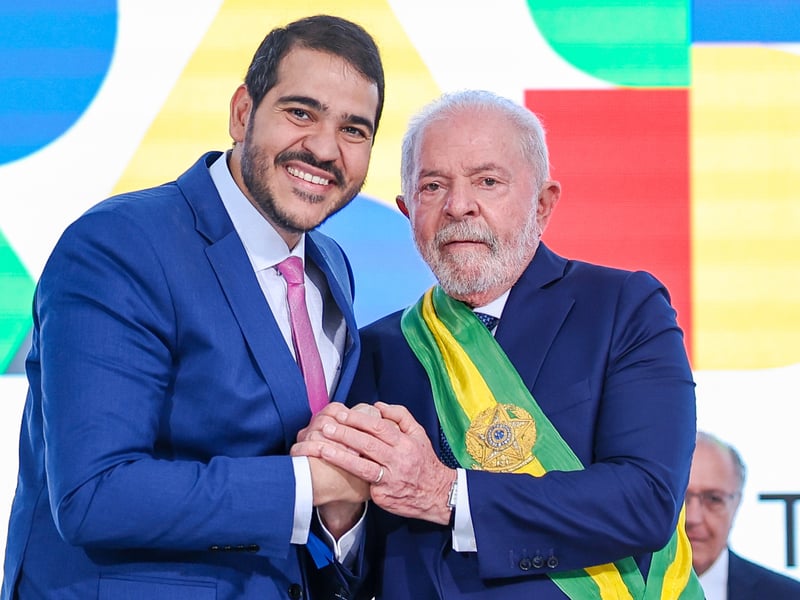
RIO DE JANEIRO (CN) — Brazilian President Luiz Inácio Lula da Silva on**** Thursday nominated Attorney General Jorge Messias to fill the seat held by Justice Luís Roberto Barroso, who officially retired from Brazil’s Supreme Federal Court on Oct. 18.
The announcement brings to five the total number of sitting justices that Lula has appointed to the 11-member court. Over three terms, he has nominated 11 in total — the most of any Brazilian president since the country’s return to democracy in 1985.
The decision follows quiet consultations with senators and Supreme Court members. It aligns with Lula’s recent preference for picking figures with longstanding ties to the Workers’ Party, of which Lula is also a member.
Under Brazil’s constitution, the president nominates Supreme Court justices. They must be native-born citizens between 35 and 75 years old, with “recognized legal expertise and unblemished reputation.”
From there, the nomination must be approved by the Senate’s Constitution and Justice Committee, then confirmed by a majority of the full chamber. They are lifetime appointments, lasting until the mandatory retirement age of 75.
Besides Messias, Lula’s nominees include Cristiano Zanin, Flávio Dino, Dias Toffoli and Cármen Lúcia.
The court’s changing composition signals a shift in Lula’s strategy. In his first terms, he sought diverse and independent justices. Now, his focus appears to be on predictability and institutional alignment.
“He’s following the same approach he took with Zanin,” said Gabriela Rollemberg, a lawyer, political scientist and co-founder of the nonprofit Brazilian Academy of Electoral and Political Law.
Zanin, Lula’s former defense attorney during the Operation Car Wash probe, was nominated to the court in 2023.
“He’s choosing someone very close to him, with direct political alignment, without necessarily thinking of a broader composition for the court or the public interest,” Rollemberg said.
Messias, who served as legal adviser to former President Dilma Rousseff and has led the Attorney General’s Office since the start of Lula’s third term, is considered one of the president’s closest aides. His nomination comes as the Supreme Court plays a central role in national politics, ruling on issues ranging from digital platform regulation to the prosecution of coup plotters.
Felipe Recondo is co-founder of JOTA, a news outlet focused on Brazil’s judiciary and politics. He’s also author of several books on the Supreme Court.
The court’s current makeup, he says, reflects Lula’s experience with the justice system during the Operation Car Wash investigations and their aftermath.
After being imprisoned and barred from running in 2018, Lula reportedly developed deep distrust toward parts of the judiciary and began to prize institutional loyalty above all else.
“When he makes an appointment like this, it seems to show concern with governability and political stability,” Recondo said. “He appears to be thinking of a medium-term court that won’t derail the government’s plans or bow to political passions or personal opinion.”
The current generation of justices, Recondo added, have more political backgrounds and more executive-branch experience, bringing the Supreme Court closer to Brazil’s center of power.
“The court we have today maintains constant dialogue with politics — something we hadn’t seen in past decades," he said.
Messias’ career has spanned Brazil’s bureaucracy, government and academia.
Under the current administration, he’s played a more political role as he’s pushed to restructure the AG’s office he runs. He’s also taken the lead on sensitive cases, including the prosecution of those involved in the Jan. 8, 2023, coup attempt led by former President Jair Bolsonaro.
Overseeing a portfolio of 2.6 million cases, the office is sometimes called the world’s largest law firm. It handles everything from defending the federal government in court to reviewing public policies and contracts. The job’s demands mirror those of a Supreme Court justice, requiring technical command, restraint and independence.
Messias’ discreet style, shaped by years in public service, is seen by allies as proof of his convictions — and a sign that his rulings will be unlikely to yield surprises.
He holds a doctorate in law from the University of Brasília, where his thesis examined the state’s role in addressing global risks and emergencies.
In his writings, he criticizes “ultraliberalism,” which he says weakened the state’s ability to respond to crises. He has praised the Supreme Court’s role as a guardian of the constitution and democracy.
An evangelical, Messias is known for avoiding public clashes. Inside the government, he’s seen as someone who can speak to conservatives without alienating progressives.
Still, his nomination triggered criticism from groups and public figures who had pushed for the appointment of a woman. Since Justice Rosa Weber’s retirement in 2023, the court has been left with only one woman — Cármen Lúcia — reviving complaints about a lack of gender and racial diversity on Brazil’s highest bench.
In its 134 years of history, the court has had only three female justices. “It’s ridiculous to have an all-male Supreme Court,” Recondo said. “It doesn’t work. It doesn’t fit. It sends the wrong message to society — outdated, prejudiced, sexist.”
On Oct. 13, a group of about 3,000 female judges, prosecutors and public defenders delivered a letter to the presidential palace, listing 13 women deemed qualified for the post. The authors said the court’s lack of representation is a structural problem. They urged the government to use the vacancy to address a historic imbalance.
The issue has also reached Congress. Lawmaker Luciene Cavalcante of the leftist PSOL party has proposed a constitutional amendment to establish gender and racial quotas in Brazil’s higher courts. Under the proposal, at least half the seats would be reserved for women, Black, Indigenous and Quilombola people, a term for Brazilians with enslaved heritage.
In Rollemberg’s view, Messias’ nomination reflects a longstanding reluctance — even among progressive presidents — to break with white male dominance of the judiciary. She said the government missed a chance to align the court’s composition with Brazil’s social diversity.
“The way people are and exist in the world is different,” she said. “Those lived experiences matter in judicial decisions and, of course, in shaping public policy.”
Messias’ closeness to the president has also raised questions about independence. Even so, history suggests that a political background does not necessarily dictate how a justice will rule.
Despite being appointed by Lula, Justice Dias Toffoli denied Lula’s 2019 request to leave prison to attend his brother’s funeral. Former Justice Joaquim Barbosa, who was appointed by Lula in 2003 and retired in 2014, became one of the Workers’ Party’s fiercest critics while presiding over the “mensalão” corruption trial.
“Once a justice takes office, constitutional guarantees ensure the independence to exercise the robe,” Rollemberg said.
Messias joins the court at a moment when it wields unprecedented political and social power. Now, he must balance expectations of institutional loyalty with the need to demonstrate independence.
Courthouse News reporter Marília Marasciulo is based in Brazil.
Subscribe to our free newsletters
Our weekly newsletter Closing Arguments offers the latest about ongoing trials, major litigation and rulings in courthouses around the U.S. and the world, while the monthly Under the Lights dishes the legal dirt from Hollywood, sports, Big Tech and the arts.