Search Articles


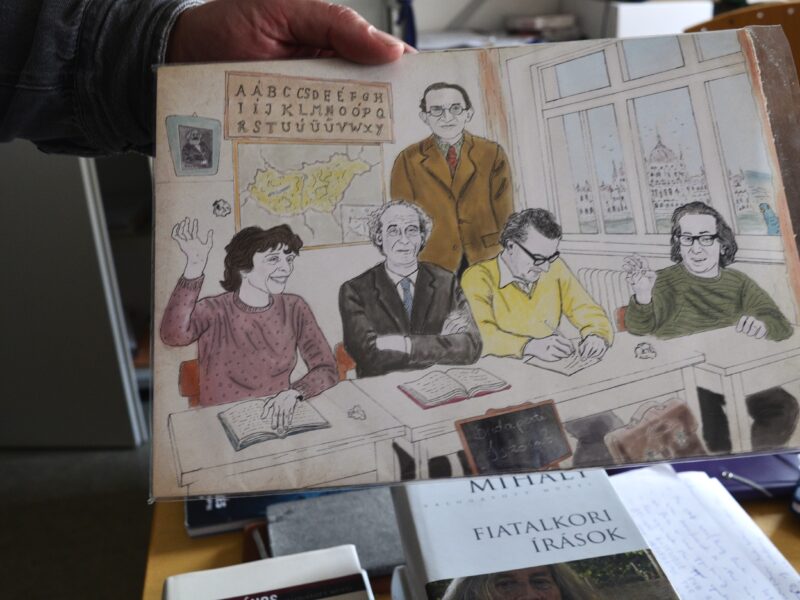
BUDAPEST, Hungary (CN) — It started as an editorial attack in Magyar Nemzet, Hungary’s major right-wing newspaper, and ended years later the way Viktor Orbán wanted it to: With the closure of an archive dedicated to Hungary’s most famous left-wing philosopher.
In the wake of Orbán’s historic ouster after 16 years in power, Hungary can start reconstructing what happened during the prime minister’s authoritarian reign and begin building a new future.
As this process unfolds, there is a study — albeit in a minor off-beat key — in how Orbán’s authoritarianism worked and how his victims struggled against it: Recalling the saga of how the government slowly throttled an archive and research center inside the old apartment of György Lukács, a world-renowned Marxist philosopher from Budapest.
“This became the so-called ‘philosophers’ affair’: Orbán’s and his media’s first major anti-intellectual campaign,” said László Szücs, a philosopher and archivist with the Lukács Archive International Foundation, a group working to reopen the apartment to the public.
“Orbán’s policies have claimed many and varied victims,” Szücs said. “Philosophers were the first targets of Orbán’s ‘culture war.’”
Over his 16 years in power, Orbán waged a relentless campaign against his “left-liberal” opponents: His regime forced the Central European University to relocate to Vienna because it was funded by liberal philanthropist George Soros; it kicked Klubrádió, an independent radio station, off the air; critical journalists were excluded from news conferences; it seized control of the Budapest University of Theater and Film Arts to tame a “liberal bastion”; it stripped powers and funding from local governments it didn’t like; it passed laws targeting nongovernmental organizations.
“It was very popular in the right-wing circles to claim victory in closing the Lukács Archive because he was a ’terrible communist leader’ and so on,” Szücs said, speaking shortly after Orbán’s defeat on April 12.
Shaking his head, Szücs said closing the Lukács Archive and Library was as symbolic as a German government applying ideological pressure to shut down institutions that preserve the scholarly legacy of Theodor Adorno or Martin Heidegger, famous German philosophers — one a Marxist, the other a Nazi sympathizer.
‘Morally and legally questionable’
The throttling began on Jan. 8, 2011, when the Magyar Nemzet ran a slanderous editorial accusing a group of prominent Hungarian philosophers — many of them associated with Lukács and fierce Orbán critics — of receiving “morally and legally questionable” funding worth about $2 million when Hungary was under a previous socialist-liberal government. The funds actually did not go directly to the prominent philosophers, but rather covered the work of research groups, numerous philosophers and doctoral students, book publications and conferences.
At the time, the Magyar Nemzet (“Hungarian Nation”) served as the mouthpiece for Orbán’s freshly elected government.
Thus began the “philosophers’ affair” — an early and important thread to follow in understanding how Orbán’s “illiberal revolution” turned Hungary into Europe’s far-right model.
Only eight months before that editorial, Orbán and his right-wing Fidesz party had routed the long-governing center-left Hungarian Socialist Party and won a commanding supermajority in Parliament. With near-unchecked power, Orbán set about molding Hungary into a fiefdom where left-liberal opponents were not tolerated.
The Lukács Archive made for an easy target.
Before his death at age 86 in 1971, Lukács willed his documents, manuscripts, letters and library to the Hungarian Academy of Sciences. This was no small matter: Lukács was a major figure in Europe both for his political and intellectual activities.
He played roles in Hungary’s short-lived revolutionary governments of 1919 and 1956; he kept up correspondence with intellectuals across the world, including with his friend German novelist Thomas Mann; and his philosophical works laid the foundations for Western Marxism and critical theory.
After his death, the then-communist Hungarian state honored him by turning his apartment into an archive for his papers and paid a small staff of librarians and researchers to look after it and carry on Lukács’ work.
During his life, Lukács, a critic of Soviet-style communism and an advocate of a “humanist socialism,” hosted many fellow intellectuals at his apartment on the Danube to discuss ideas and writings. The circle of thinkers in his orbit became known as the “Budapest School” of Marxist philosophy, a version of Adorno’s “Frankfurt School” in Germany.
The archive endured even as many of Lukács’ pupils and colleagues — who made up the Budapest School — were persecuted by the pro-Soviet Hungarian government, forcing many into exile.
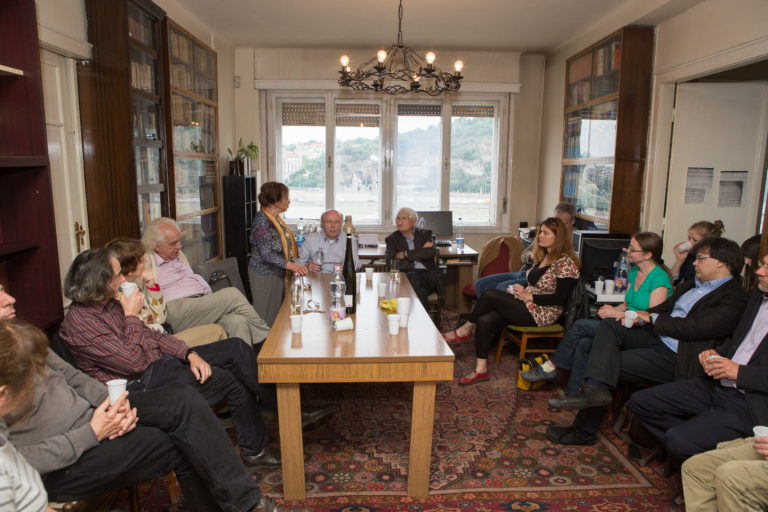
As the years passed, the archive acted as an intellectual lighthouse for dissidents in Budapest and, after communism ended, for Hungary’s left-wing intelligentsia. It grew in size after an upstairs apartment was added and became the site of regular seminars, book readings and meetings. Besides Lukács’ archive, the center also began publishing works by scholars associated with the Budapest School.
Then Orbán took power in 2010.
A coordinated attack on the ’liberal'
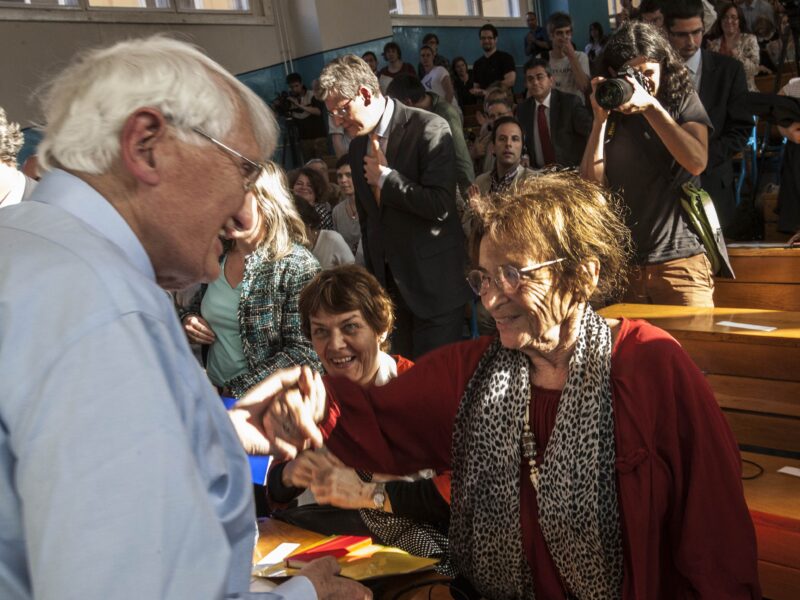
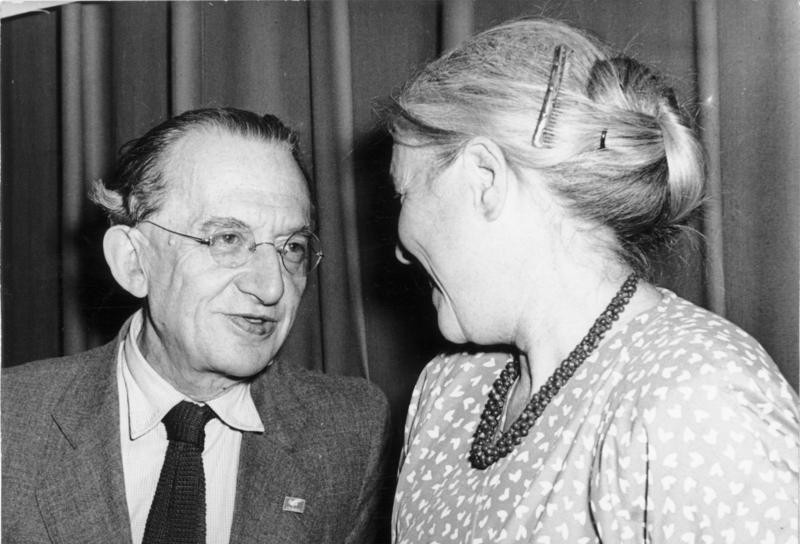
The Magyar Nemzet editorial was scathing in its attack on the left-liberal philosophers. It took particular aim at the 82-year-old Ágnes Heller, a Lukács disciple and prominent philosopher who held the Hannah Arendt chair at The New School in New York City.
Their sin, according to the Magyar Nemzet, was that they were “liberals” who had “not settled for staying in the ivory tower” and wished to “share their views and thoughts with a wider public beyond the academic arena.”
In other words, these philosophers — Heller, Mihály Vajda, Sándor Radnóti and others — had overstepped their positions by becoming outspoken critics of Orbán and his politics.
Shortly after the editorial appeared, Gyula Budai, Orban’s anti-corruption commissioner, launched an investigation into the “suspicious” philosophy grants. The probe was turned over to the police.
Magyar Nemzet amped up its mudslinging and called it a “scandal” that showed philosophy had reached a “moral low point.” Other right-wing media joined the onslaught.
For many, the smear campaign invoked Hungary’s ugly history of antisemitism — Lukács, Heller and Vajda came from Jewish families — with its attacks on “liberals” and “cosmopolitans” used as code words for Jews.
There were strong comparisons to what happened following Béla Kun’s failed communist revolution in 1919, during which Lukács was named the people’s commissar for education and culture.
The ultra-conservative Hungarian government under Miklós Horthy targeted Jews, calling them dangerous communist radicals, and the country saw a wave of pogroms.
In 1920, Horthy passed the first anti-Jewish law limiting the number of Jews at universities. Subsequent laws barred Jews from civil service work, the judiciary and local government and, as Hungary went to war alongside Nazi Germany, Jewish property was expropriated. During the war, Hungarian Jews were executed on the banks of the Danube and sent en masse to concentration camps.
In January 2011, Heller quickly struck back, calling the probe “an inquisition” into legally awarded grants. She said the money was spent on young researchers and that she and other prominent philosophers received no compensation.
“[The philosophers] were all accused of liberalism and leftism,” she said in an interview at the time, “and that was the main issue, because the whole financial issue was just a cover-up for the political harassment.”
She blamed Orbán for being “behind the harassment” of well-known Hungarian philosophers, composers, artists and writers for speaking out against his right-wing government. He was upset at her for accusing him of “dictatorial inclinations,” she said.
At the same time, Jürgen Habermas, one of Europe’s most venerated philosophers and a friend to Heller, condemned European leaders for their conspicuous silence even as Hungary, a European Union member since 2004, violated the “fundamental principles of a liberal constitutional order.”
“In China, the observance of human rights is rightly demanded,” Habermas and a colleague wrote. “But at home, they don’t look so closely at their own actions. That’s the scandal within the scandal.”
Habermas warned: “The pro-government press is waging a campaign against an undefined ‘circle of liberal philosophers’ … The term ’liberal’ once again carries the connotation of the unpatriotic, cosmopolitan views of Jewish intellectuals.”
He said it was a blatant attack on “politically undesirable philosophers” and on “a discipline that, since its beginnings in classical Athens, has been concerned in particular with the constitution of the political community.”
The closing of the mind
At first, it may have looked like the “philosophers’ affair” would blow over after the police found no wrongdoing with the grants.
Meanwhile, the philosophers filed defamation suits against the Magyar Nemzet, and the smear campaign was paused. In a big win, a Budapest city appellate court in 2016 eventually ruled the newspaper had defamed them.
But the matter was far from over.
After taking office, Orbán also had begun restructuring the Hungarian Academy of Sciences to suit his ends and bring culture and research under government control.
By threatening to cut off funds, he forced numerous independent institutes to sever ties with the academy and thereby brought them under his thumb. Allies were put in top positions and funds were cut for programs supported by previous left-liberal governments. The government also began cutting funds to public art programs it accused of “frittering away” taxpayers’ funds.
In 2016, the Hungarian Academy of Sciences announced it would transfer Lukács’ papers to its library and close the apartment, citing the archive’s high operating costs.
Meanwhile, Budapest’s city government, in the hands of Orbán allies, joined the assault on Lukács and removed a sculpture of the philosopher from a central park. It is now housed in the Budapest History Museum and there are no plans to return it to St. Stephen’s Park, city officials said.
These attacks again sparked an outcry among European intellectuals.
About 2,000 scholars, including Habermas and American left-wing philosophers Nancy Fraser and Fredric Jameson, signed a letter of complaint. Another petition garnered 8,000 signatures.
Scholars went to Budapest to speak out against the archive’s closure and Hungarian researchers established a foundation to defend it. Orhan Pamuk, the Turkish Nobel Prize winner in literature, visited Budapest to praise Lukács for inspiring him to write.
But the government was not deterred.
By 2018, all of the archive’s staff had either retired or been transferred. The Hungarian Academy of Sciences replaced the locks and shut the archive down on May 24, 2018. There were vague promises to renovate the apartment and reopen the archive, but that didn’t happen. Instead, it looked more likely that the apartment, with its prime location, would be sold.
Lukács’ voluminous collection of documents — letters, manuscripts, notes, photographs — was moved to the Hungarian Academy of Sciences library.
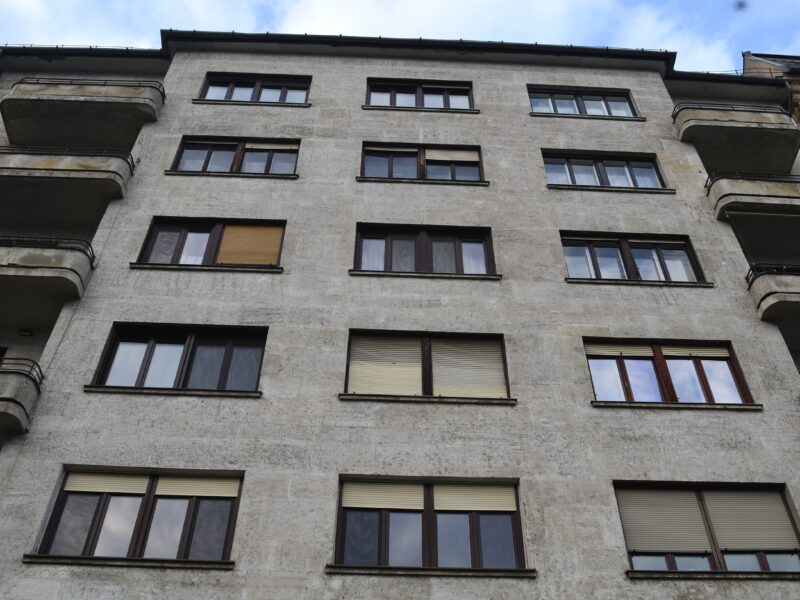
The Lukács apartment on the fifth floor at No. 2 Belgrád Rakpart (Belgrade Quay) closed its doors to the public and dust gathered on the philosopher’s study and library, where his collection of books, their margins filled with his notes, remained.
“After that, Lukács research became very difficult, or very complicated,” Szücs said.
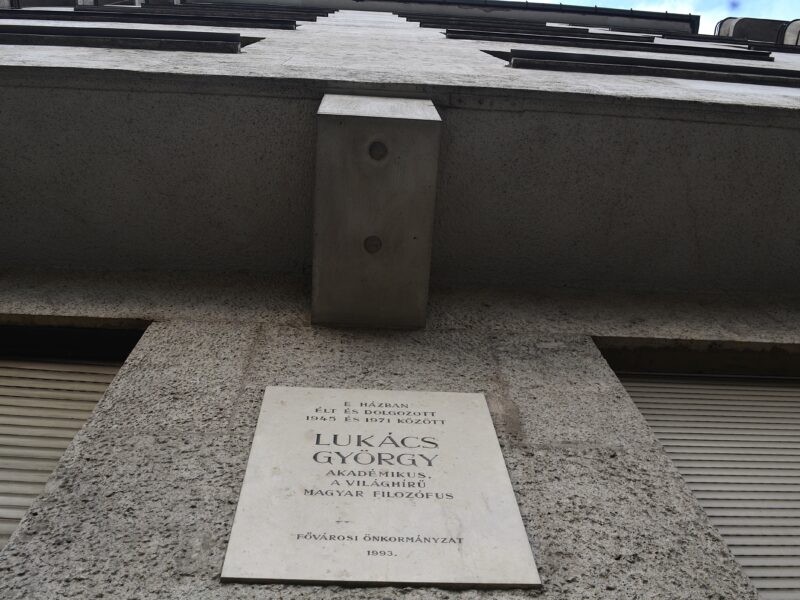
Lukács gets a second chance
In 2019, Budapest got a new mayor — and after years of conservative government, a left-liberal was back in power in the capital.
The new mayor’s office took up the cause of Lukács and decided to do something about the philosopher’s abandoned apartment.
This year, the city is paying for renovations and then reopening the apartment as a space for “conferences, seminars, discussions, exhibitions, and archival education workshops on philosophy, art and history,” the mayor’s office said. Lukács’s library also will be made available for use again.
The apartment was leased to the Budapest City Archives, which will run the reopened archive in collaboration with the Lukács Foundation.
Lukács’ trove of documents won’t be brought back to the apartment after the Hungarian Academy of Sciences rejected requests for its return. The academy did not return a message seeking comment.
Meanwhile, under Budapest’s left-liberal government, the city backed a project to preserve the Budapest School’s legacy after Heller’s estate was transferred to the Budapest City Archives following her death in 2019. Szücs oversees this project.
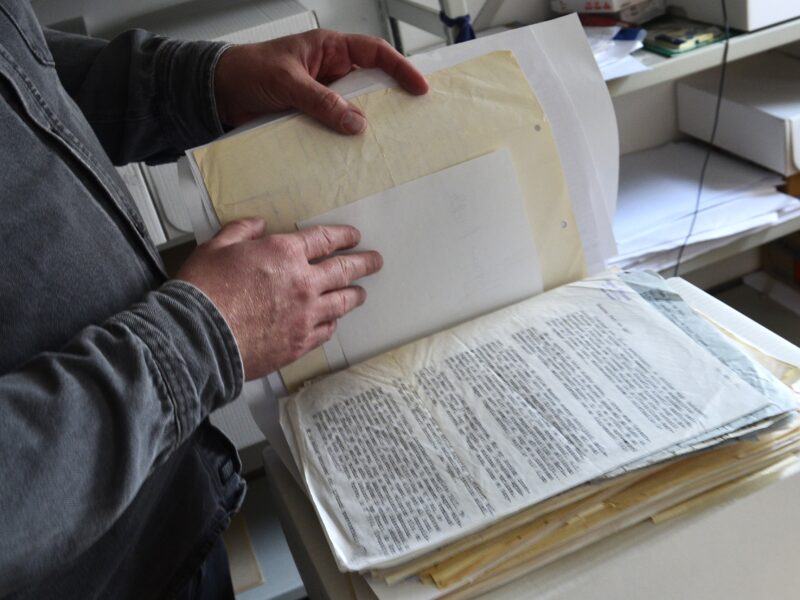
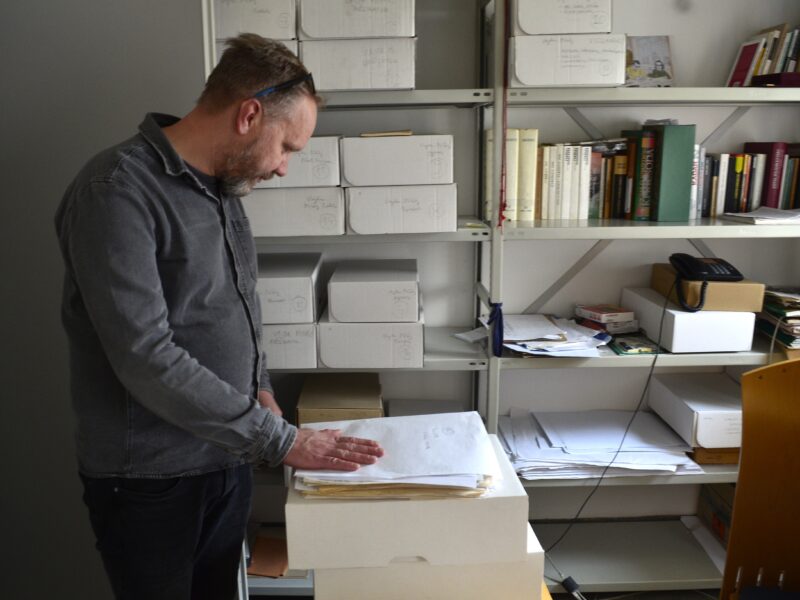
Inside his office in the Budapest City Archives, Szücs opened a box containing letters Heller wrote to Habermas and others.
“I feel it is my mission — not that I’m the only one,” he said. “There are a lot of people who are trying to preserve lots of things in connection with Lukács’ legacy or with the legacy of his students, his pupils.”
For now, Szücs said he’d be content if Hungary’s new government, under Prime Minister Péter Magyar, just lets scholars get on with their work.
“I hope the new government will not put a lot of pressure on researchers, as the Orbán regime did,” he said. “These days, that’s enough — to have more space to deal with our research.”
Courthouse News reporter Cain Burdeau is based in the European Union.
 Follow @cainburdeau
Subscribe to our free newsletters
Our weekly newsletter Closing Arguments offers the latest about ongoing trials, major litigation and rulings in courthouses around the U.S. and the world, while the monthly Under the Lights dishes the legal dirt from Hollywood, sports, Big Tech and the arts.