
 Search Articles


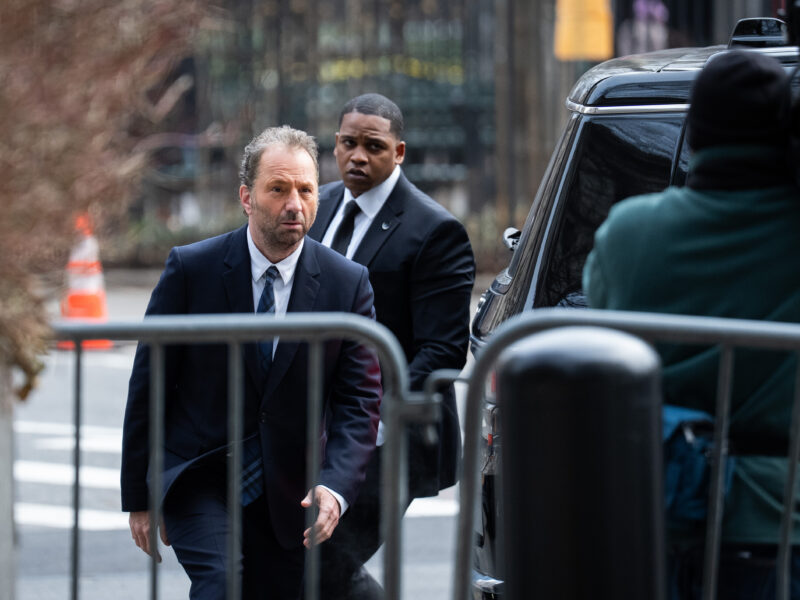
MANHATTAN (CN) — The president and CEO of concert promotion titan Live Nation was peppered with questions on Thursday about the company’s pricing tactics and ticketing fees, which have drawn the ire of concertgoers, artists and around 30 states suing over antitrust claims.
Michael Rapino, the longtime frontman of Live Nation and its ticketing subsidiary Ticketmaster, testified that he approved a recent controversial move to ban fans from bringing folding chairs into certain Live Nation amphitheaters. The company started charging $15 for rentals instead and forked in $7 million since the change.
“You don’t think that’s outrageous?” asked Jeffrey Kessler, a Winston & Strawn lawyer trying the case on behalf of the states.
“No, I don’t think it is. The price of the lawn has been reduced dramatically, so the net price is still very low,” Rapino replied, noting that fans bringing their own chairs to his venues was a “safety issue.”
The 60-year-old Canadian-American businessman has been the head of Live Nation since its inception more than two decades ago. But according to the coalition of states, accusing his brand of holding an unlawful monopoly over the concert business, Live Nation’s remarkable growth has come in part by fostering an anticompetitive environment that pressures artists and venues into business.
As a result, the states claim Live Nation has been free to gouge fans with high ticket prices and add-on fees.
“You’ve made public comments that concert prices are too low?” Kessler prodded.
Rapino admitted he had but that Kessler was “missing the context” — he actually meant that high-end concert experiences are underpriced when compared with high-end sports tickets, which could run for tens of thousands of dollars.
Kessler invoked several of Rapino’s past comments in painting Live Nation and Ticketmaster as a dominant global force, with power to wield.
Rapino once called Live Nation “recession-proof.” He said the company had “incredible market power around the world” and proclaimed over a decade ago that his promotion business “was larger than every other promoter business in the world combined.”
But the executive denied he ever used that power to pressure venue and team owners into using their ticketing platform, as the states claim.
“All these smart billionaires that own these teams look at all their options,” Rapino said.
Earlier in the trial, a former executive of the Brooklyn Nets and their arena, Barclays Center, told jurors that Live Nation retaliated against his venue for dropping Ticketmaster by pulling concerts out of Barclays Center. Rapino denied the accusation.
Kessler also hammered Rapino over the rising cost of Ticketmaster’s fees, which he said have risen significantly in the past five years — to the detriment of fans. Rapino claimed he was unaware of this trend.
“You’re the CEO of the company, correct?” Kessler barked. “You don’t remember the fact that service fees have gone up since 2020?”
“I don’t know the number,” Rapino replied.
“I didn’t ask the number, I asked the direction,” Kessler shot back.
Rapino insisted he still didn’t have an answer. He later conceded that total cost to fans has probably risen, telling Kessler: “Over the past five years, I’d assume prices have gone up.”
But Rapino’s testimony revealed high Ticketmaster fees were a thorn in his side for longer than that. Kessler reminded him of several complaints he got from artists, from Adele to The Cure, about the costly experience for fans.
In 2016, the manager of rock band Alabama Shakes told Rapino that the fees were exorbitant.
“Our fees are too high. We can’t defend them,” Rapino wrote back, according to his testimony.
Time will tell if the jurors buy into the states’ depiction of Rapino as a money-hungry monopolist, whose beefy bonus is dependent on him “solving the DOJ problem” — a representation Rapino rejected.
The states were hoping to make more of Rapino’s compensation as a whole. But the presiding judge, U.S. District Judge Arun Subramanian, a Joe Biden appointee, limited them from digging into the specific numbers amid fears of prejudicing the jury.
Rapino’s yearly pay has fluctuated over the years; in 2022, he raked in $139 million. That sum plummeted to $23.4 million the following year, still 831 times the median employee pay at Live Nation that year, according to reports.
The Department of Justice initially brought the sprawling antitrust case against Live Nation and Ticketmaster in 2024, with the District of Columbia and 39 states joining the lawsuit. But many of the states were left to try the case on their own after the DOJ unceremoniously settled with the companies in the middle of trial.
The $280 million settlement orders several changes to Live Nation and Ticketmaster’s respective business models but does not require the brands to split. Unsatisfied with those terms, roughly 30 states are resuming the trial without the federal government’s backing.
They’re expected to rest their case next week.
 Follow @Uebey
 Follow @uebey.bsky.social
Subscribe to our free newsletters
Our weekly newsletter Closing Arguments offers the latest about ongoing trials, major litigation and rulings in courthouses around the U.S. and the world, while the monthly Under the Lights dishes the legal dirt from Hollywood, sports, Big Tech and the arts.