
 Search Articles


(CN) — Streetlights, billboards and glowing skylines may be doing more than obscuring the stars. New research shows artificial light is stretching out birds’ daily songs, with some species vocalizing nearly an hour longer than they would under dark skies.
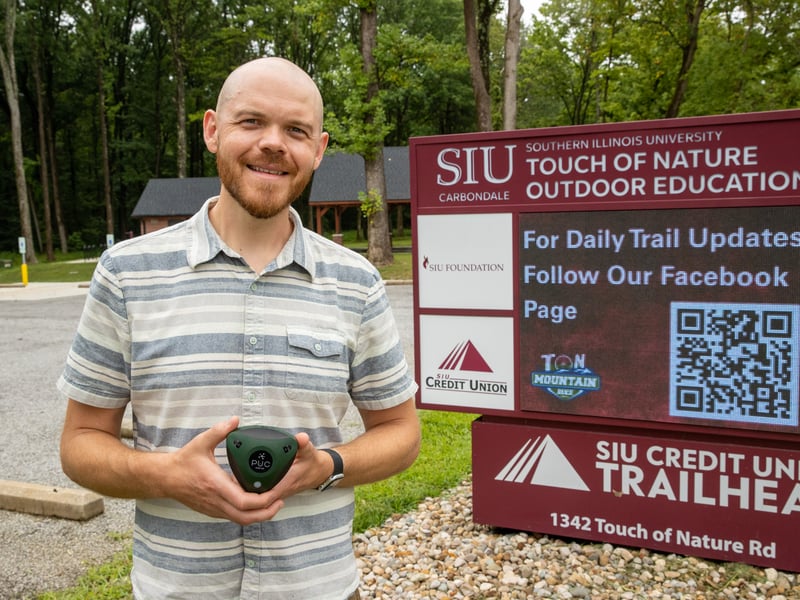
A study led by Brent Pease of Southern Illinois University and Neil Gilbert found that, on average, birds sing 50 minutes longer each day in light-polluted areas. Using data from more than 500 species, the researchers say the findings reveal a broad, global impact of light pollution on bird behavior.
“Natural light cycles are highly predictable and are thought to be the most important cue for biological timings, including daily, seasonal, or even annual events,” Pease said in an email. “Light pollution is disrupting the biological timings that organisms have evolved in response to the light-dark cycles of the day and night.”
The team analyzed more than 2.6 million recordings of morning bird vocalizations and 1.8 million recordings of evening calls. The data came from the BirdWeather project, which crowdsources audio from volunteers using backyard devices, as well as automated monitoring and machine learning.
The study, published Thursday in the journal Science, is the first to document the phenomenon across species and habitats. Scientists already knew that artificial light affects circadian rhythms, but the researchers say this analysis shows just how widespread the disruption is.
According to Pease, what this extra singing means for birds is still uncertain. On one hand, more time awake could mean more time for foraging or feeding young. On the other, it may come at the cost of rest and recovery during critical times.
“Fifty minutes of additional activity a day may represent a notable loss in resting time, which is primarily occurring during the breeding season — an already demanding period for birds,” Pease said. “This loss of resting time may result in additional caloric needs, which may be challenging for some groups of species, such as aerial insectivores, whose food source has been in rapid decline.”
However, the extra activity could also help some species.
“Previous research has documented parent birds feeding their young at night in light-polluted areas, and this showed increased foraging time may lead to increased fledging success,” he said.
According to researchers, not all birds are equally vulnerable. Species with larger eyes, such as American robins, tend to be more affected than small-eyed species, likely because they are better adapted to low-light conditions and more sensitive to artificial cues.
Open-nesting birds also showed stronger responses than cavity nesters, whose nests shield them from ambient light. Migratory species, which often fly at night, also seemed more prone to altered singing patterns.
According to Pease, larger eyes and open nests were among the biggest factors.
“We documented a number of species traits that may explain why a given species responds differently to light pollution,” he said.
Light pollution already affects 23% of the planet, with rates increasing by an estimated 7% to 10% each year, researchers say. About 80% of the world’s population lives under light-polluted skies, and the number climbs to 99% in the U.S. and Europe.
While habitat loss remains the leading threat to bird populations, Pease said light pollution is a rare case of an environmental stressor that is relatively easy to reverse.
“We think this is an important point: we can much more easily turn off a light switch than reverse land conversion from forest to urban environments,” he said.
What people can do
Researchers say solutions range from international campaigns to personal action.
Programs like the National Audubon Society’s “Lights Out” initiative encourage cities to dim or switch off nonessential lighting during migration seasons. Residents can also make their homes more bird-friendly by using motion-sensing lights and shielding fixtures.
“We additionally support the expansion of the Dark Sky International, an important conservation effort for humans and wildlife alike,” Pease said. “Mitigating light pollution would not only mitigate potential harm to wildlife; it would also save money for cities and other entities that pay for lights.”
For Pease, one of the biggest surprises was simply how large the effect was.
“On average, under the brightest night skies, a bird’s day is extended by nearly an hour,” he said. “While we expected some behavioral adjustment to the lights at night, we didn’t anticipate that it would be this impactful.”
Subscribe to our free newsletters
Our weekly newsletter Closing Arguments offers the latest about ongoing trials, major litigation and rulings in courthouses around the U.S. and the world, while the monthly Under the Lights dishes the legal dirt from Hollywood, sports, Big Tech and the arts.